
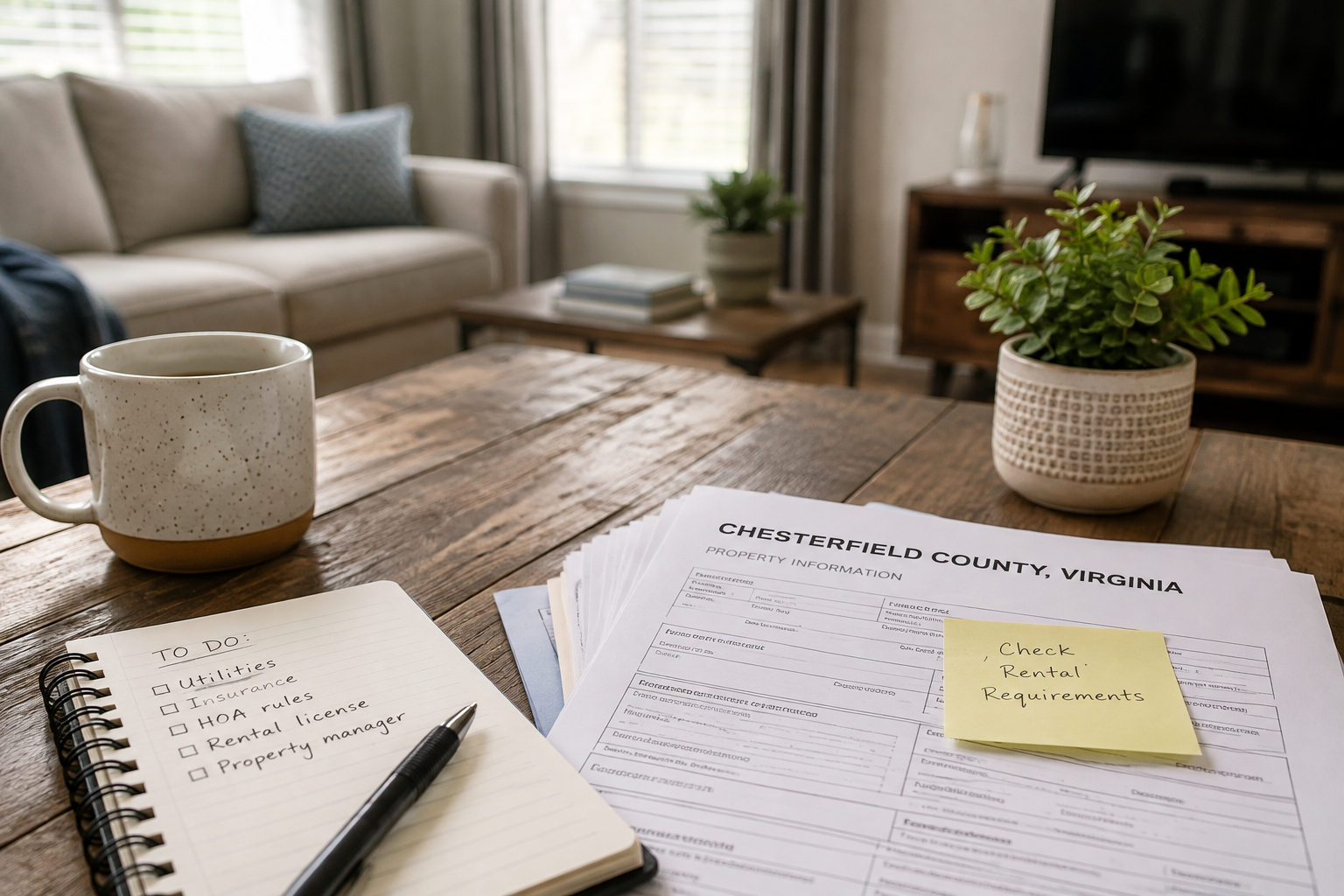
Many accidental landlords in Chesterfield County start with a home they bought for themselves, not a rental selected as an investment. Relocation, inheritance, a household change, or the decision to keep a former residence can create the landlord role quickly.
The financial decision comes first, but Chesterfield also has local operating details that should be resolved before marketing. PMI James River's Owner Resources provide the broader owner framework, while the Richmond Metro accidental-landlord guide covers the overall decision to rent, sell, or hold.
This Chesterfield guide focuses on the county utility process, community rules, property condition, and operating structure that should be settled once renting becomes a serious option.
Key Takeaways
- Compare the cost of holding with the cost of exiting before committing the property to rental use.
- Chesterfield tenants establishing County water or wastewater service must provide the signed lease.
- Current HOA or civic-association rules should be identified before the lease is finalized.
- A former home needs a documented rental-condition baseline rather than informal homeowner workarounds.
- PMI James River generally recommends professional management rather than building a DIY operation after the property has already become a rental.
Decide Whether the Chesterfield Home Is a Sensible Hold
Estimate supportable rent and likely leasing time, then account for mortgage payments, taxes, landlord insurance, association expenses, maintenance, vacancy, turnover, reserves, and foreseeable capital work.
Compare that holding picture with likely net sale proceeds and the equity that would become available through a sale.
Decision rule: Compare holding costs with exit costs over the period the owner actually expects to keep the property.
Chesterfield is too varied for a county average to answer that question. A detached house, townhome, and property inside a planned community may have very different rent, maintenance, yard, association, and capital-cost profiles.
Midlothian is a good example. A former home there may compete in a very property-specific rental market and may also sit in a community with private rules. Those facts belong in the analysis, but they do not require a separate accidental-landlord process from the broader Chesterfield framework.
Settle Chesterfield Utility Responsibility Before Move-In
Chesterfield County's Moving In or Out guidance states that residential tenants establishing County water or wastewater service must provide a signed lease. Adults listed as occupants on the lease are also listed as responsible parties on the utility account.
That makes utility responsibility part of lease preparation, not an item to resolve after the resident is ready to move in.
The owner should determine which utilities the resident will establish, which services remain owner-paid, and whether any property-specific arrangement needs to be documented in the lease.
Separate County Procedures From Community Rules
Chesterfield's Good Landlord/Tenant guidance emphasizes a written lease, condition documentation, and clear responsibilities. It also tells landlords to provide applicable HOA or civic-association rules and to clarify responsibilities such as yard care, trash, filters, and other maintenance items.
That is particularly important for a former personal residence. While the owner lived there, many property expectations may have been obvious from habit. A resident should not have to infer parking rules, yard responsibilities, trash procedures, association access, or community restrictions.
When an association applies, review the current governing documents for rental restrictions, minimum lease terms, registration procedures, parking, resident access, and other provisions that affect occupancy.
Convert the Home From Personal Standards to Rental Standards
A homeowner may tolerate a sticky window, worn appliance, minor plumbing issue, weak railing, damaged screen, or aging HVAC concern because it is familiar. A prospective resident sees the property without that history and compares it directly with other available rentals.
Before marketing, confirm rental insurance, keys and access devices, utilities, association information, major-system history, condition photographs, warranties, manuals, yard responsibilities, and known maintenance needs.
Virginia Code § 55.1-1220 requires necessary repairs, fit and habitable premises, and supplied systems and facilities maintained in good and safe working order.
The objective is a reliable starting condition, not unnecessary renovation. The owner should know what is working, what needs attention, and what will be part of the resident's lease and maintenance experience.
Choose the Management Structure Before Marketing
An accidental landlord should decide who will handle screening, showings, leasing, rent collection, resident communication, maintenance, accounting, documentation, renewals, and vendor coordination before applications arrive.
PMI James River generally recommends professional management. The work does not disappear when the owner self-manages. It moves to the owner, along with the need to keep each system consistent over the life of the tenancy.
Professional management allows the owner to focus on whether the property should be retained, how it should be funded, and what significant improvements make sense while routine operations follow an established process.
PMI James River provides full-service residential property management for Chesterfield rental owners who want that structure in place from the beginning.
Frequently Asked Questions
What Does a Chesterfield Tenant Need to Start County Water or Wastewater Service?
Chesterfield requires a signed lease from residential tenants establishing service. Utility responsibility should therefore be settled before move-in.
Do HOA Rules Matter if the Owner Lived in the Home?
Yes. Rental use can trigger leasing, registration, parking, access, or other procedures that were irrelevant during owner occupancy. Current governing documents should be checked before the property is advertised.
Should a Chesterfield Accidental Landlord Self-Manage?
PMI James River generally recommends professional management. One property still requires a complete leasing, maintenance, financial, documentation, vendor, and resident-communication system.
Turn the Chesterfield Home Into an Intentional Rental
Once retaining the home makes sense, resolve the County utility process, community rules, condition, insurance, reserves, and management structure before the first resident takes possession.
A free rental analysis from PMI James River can help establish the supportable rent and condition assumptions for a Chesterfield property.
Published: August 23, 2026