
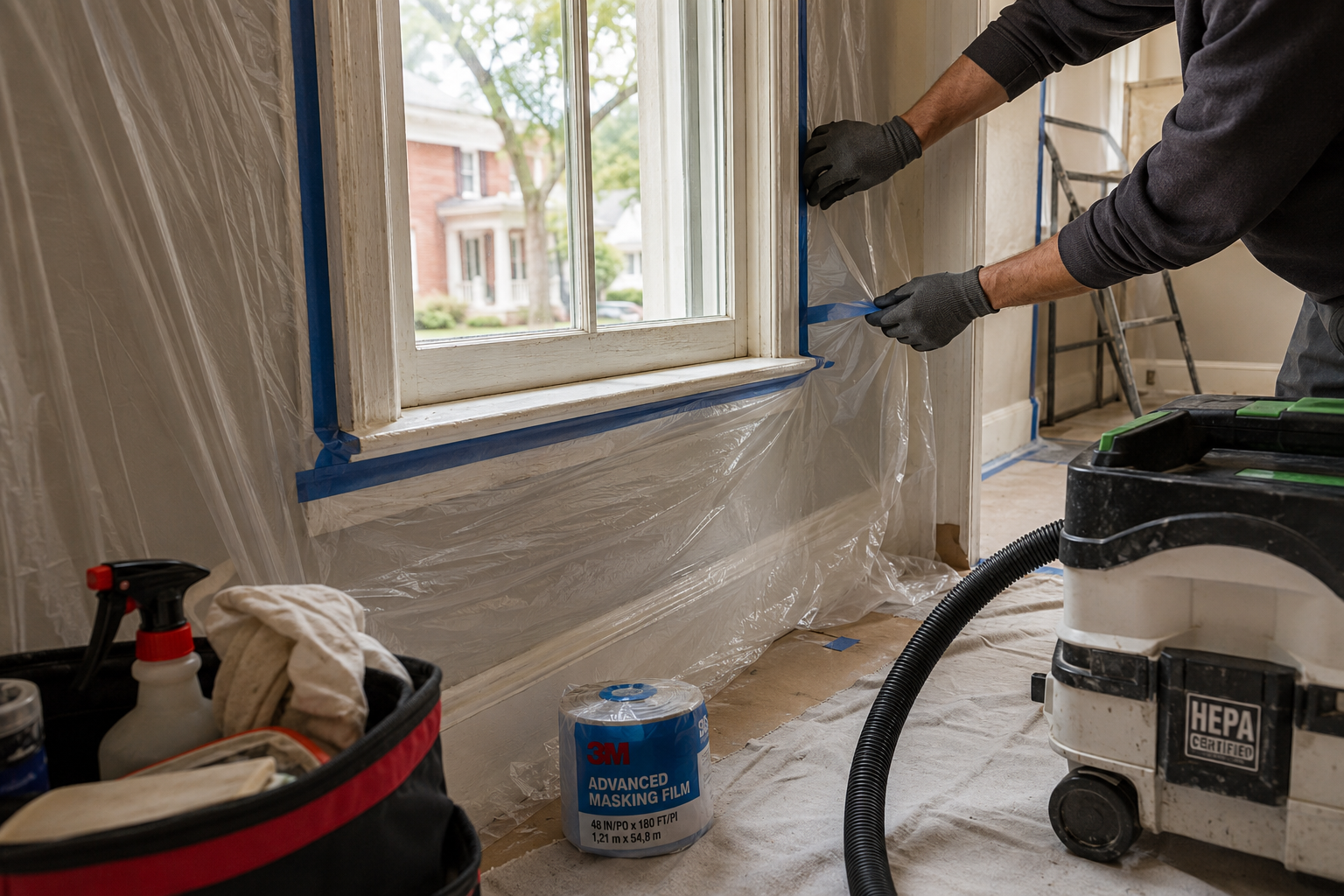
For a Richmond rental owner, a pre-1978 house can turn an ordinary maintenance call into a federal lead-compliance question. The repair may have nothing to do with "lead work." A painter sands a wall, an electrician cuts an access hole, a plumber opens a painted chase, or a contractor replaces a window. A good rental maintenance coordination process should catch that issue before work begins.
The rule is the EPA Renovation, Repair and Painting Rule, usually shortened to RRP. It is narrower than the broader landlord maintenance responsibilities in Virginia, but the consequences can affect contractor selection, testing, containment, cleanup, documentation, and repair cost.
This is a specialized rule, and most rental owners will not deal with it every week. Owners of older Richmond-area housing should still know the trigger: pre-1978 property, paid work, and disturbance of a painted surface. When those three things come together, RRP should be checked before the contractor starts.
Key Takeaways
- Ordinary repairs can trigger RRP even when nobody considers the job a lead-paint project.
- Testing is often worth doing before committing to the added containment and cleanup of a full RRP job.
- The minor repair exception has important limits, especially for windows, demolition, and multiple small jobs performed within 30 days.
- Plumbers, electricians, HVAC contractors, handymen, painters, roofers, flooring installers, and other trades can all encounter RRP.
- EPA has published extensive FAQs covering surprisingly specific situations, many of which are useful for rental maintenance decisions.
In This Guide
- What Actually Triggers RRP
- Why Testing Often Makes Economic Sense
- The Minor Repair Exception
- A Practical RRP Check Before Dispatching A Contractor
- Why This Gets Missed In Richmond
- 30 RRP Questions That Catch Owners And Contractors Off Guard
What Actually Triggers RRP
The EPA Renovation, Repair and Painting Program applies to covered renovation work that disturbs painted surfaces in most pre-1978 housing and child-occupied facilities. For rental owners, that can include work that would normally be described simply as maintenance, turnover, repair, remodeling, or painting.
RRP is different from lead abatement. Abatement is work specifically intended to permanently eliminate lead-based paint hazards. RRP can be triggered by an ordinary repair that happens to disturb a covered painted surface.
Examples can include:
- sanding or scraping before turnover painting
- window replacement or repair
- cutting access holes for plumbing or electrical work
- removing painted trim, molding, doors, cabinets, or other components
- weatherization work that cuts through painted surfaces
- roofing work that disturbs painted building components
- some HVAC and heating-equipment replacement
The rule also treats rental-property work differently from ordinary DIY work in an owner-occupied home. EPA says a landlord personally performing covered work on a rental may need both firm and renovator certification. If the landlord hires the work out instead, the landlord does not personally need those certifications, but the hired renovation firm must be properly certified. EPA addresses that distinction directly in its RRP guidance for landlords.
This issue can also arise during turnover. PMI James River's Richmond rent-ready standards separately flag paint disturbance in pre-1978 housing because deciding that a wall needs painting is different from deciding how the preparation work may legally be performed.
Why Testing Often Makes Economic Sense
EPA allows a renovation firm to proceed without testing by treating the affected surface as though regulated lead-based paint is present and following the applicable RRP requirements. In actual rental maintenance, that can be an expensive default.
In my own experience, when full RRP containment and cleanup are required, the additional work can add roughly 30 percent to what would otherwise be a straightforward repair. I have not seen contractors simply choose the more expensive full RRP process without first testing when testing could actually answer the question.
That makes testing a practical cost-control step. If an appropriate negative determination means RRP work practices do not apply to the affected components, the cost of testing may be far less than unnecessary containment, HEPA cleanup, cleaning verification, documentation, and the additional labor that goes with a full RRP job.
The testing still has to count for RRP purposes. EPA says a certified renovator using an EPA-recognized lead test kit or paint-chip sampling generally must test every affected component. A certified lead inspector or risk assessor has additional testing options and may use representative sampling when the applicable inspection methodology permits it. EPA explains the distinction in its RRP testing guidance.
Good records can also pay off later. EPA allows later renovation firms to rely on valid prior negative results for the same components as long as the records remain available. A lead-based-paint-free determination by a certified inspector or risk assessor does not expire for RRP purposes.
The Minor Repair Exception
Some small jobs fall outside RRP as minor repair and maintenance. Under the current federal definition, qualifying work can disturb up to six square feet of painted surface per room for interior work or up to 20 square feet of painted surface for exterior work. But the numbers are only the beginning.
The exception does not apply when the work involves window replacement, demolition of painted surfaces, or certain prohibited or restricted work practices. EPA's minor repair guidance also explains two rules that are especially easy to overlook:
- When a painted component or part of a component is removed, the entire surface area removed counts toward the disturbed area.
- Non-emergency jobs performed in the same room during the same 30-day period are combined when determining whether the work is minor repair and maintenance.
The practical question is therefore not just whether a hole looks small. The contractor needs to consider how much painted surface is actually disturbed, whether a component is being destroyed or removed, what other work occurred in that room recently, and whether one of the specific exclusions applies.
A Practical RRP Check Before Dispatching A Contractor
RRP is much easier to deal with before a work order is assigned. For an older rental, a practical intake looks like this:
- Confirm the construction year. If the property was built before 1978, keep RRP in the decision tree.
- Define the real scope. "Repair wall" or "replace window" is not enough. Determine what will actually be cut, scraped, sanded, drilled, removed, or replaced.
- Identify the painted components that may be disturbed. A job can involve several separately testable components even when everything is in the same room.
- Test when a negative result would materially change the job. In many routine repair situations, this is the fastest way to avoid unnecessary RRP labor and containment costs.
- Check the minor repair exception. Measure the affected area and check for window replacement, demolition, restricted work practices, and other work performed in the same room during the prior 30 days.
- Verify the renovation firm when RRP applies. EPA provides a Lead-Safe Certified Firm search for this purpose.
- Handle the pre-renovation information requirements. For covered work, the renovation firm has responsibilities involving EPA's Renovate Right information and documentation. The precise requirements depend in part on whether the unit is occupied, vacant, or a common area.
- Keep the records. Testing results, certification information, required notices, and renovation records can answer the same questions years later and prevent paying to solve the same compliance issue twice.
This is one reason the contractor-selection part of PMI James River's maintenance process involves more than finding a trade that can physically perform the repair. The property, scope, contractor, authorization, and applicable rules all need to line up before work starts.
Why This Gets Missed In Richmond
In my Richmond-area vendor network, the only vendors I have encountered who already knew what I meant when I mentioned RRP were my painter and cleaner. That is a field observation, not evidence that Richmond contractors generally do not know the rule. It has been consistent enough, however, that I do not assume a skilled tradesperson automatically knows RRP.
That is understandable. A plumber is thinking about the leaking pipe. An electrician is thinking about access to the circuit. An HVAC technician is thinking about the failed equipment. A flooring installer is thinking about the new floor. The person coordinating the property has to know that the house was built in 1948 and recognize when the method used to complete the trade work may disturb an older painted component.
The useful operating rule is simple:
Pre-1978 property + paid work + disturbance of a painted surface = check RRP before work begins.
That check does not mean every old Richmond rental repair becomes a lead project. Quite often the answer will be that the affected component tests negative, the work falls within the minor repair exception, or no painted surface is being disturbed at all. The value is catching the issue before the contractor has already opened the wall, pulled the window, or started sanding.
30 RRP Questions That Catch Owners And Contractors Off Guard
EPA has an unusually extensive library of RRP questions because the rule becomes very fact-specific once real repair methods are involved. The agency's current Lead-Based Paint Program Frequent Questions runs far beyond the basic six-square-foot and 20-square-foot rules.
The following are 30 of the less obvious examples that can actually change a rental repair decision. They are condensed for practical use, so unusual scopes should still be checked against the EPA guidance and the regulation itself.
1. Does RRP Still Apply When The Rental Is Vacant Between Residents?
Yes. A temporarily vacant rental is not exempt simply because no resident is living in the unit while the work is being performed. Vacancy may change some of the pre-renovation information requirements, but it does not make otherwise covered renovation work disappear.
2. Is Repainting At Turnover Automatically An RRP Job?
No. Applying a new coat of paint without disturbing the existing painted surface is not a renovation for RRP purposes. Sanding, scraping, or other surface preparation that disturbs existing paint can change the answer.
3. What If Several Newer Coats Of Latex Paint Cover The Old Lead Paint?
The newer coats do not create an automatic exemption. EPA says RRP can still apply when the renovation disturbs the painted surface even if the work does not visibly reach the older lead-containing layer underneath.
4. Do Ceramic Tile And Porcelain Bathtubs Count As Painted Surfaces?
Not simply because they have their original glaze or porcelain finish. EPA specifically says ceramic tile glaze is not a painted surface or surface coating for RRP purposes. HUD similarly treats unpainted ceramic tile and porcelain bathtubs as non-paint surfaces, although HUD notes that they can contain lead and that abrasion, breaking, or demolition can create a separate lead-exposure concern.
A bathtub or tile surface that was later actually painted or refinished presents a different question. The federal RRP definition of a painted surface includes a component covered in whole or in part with paint or another surface coating, so a later-applied refinishing coating should be evaluated separately before it is disturbed.
5. Does Stucco Count?
It depends on whether it is painted. EPA says disturbing unpainted stucco does not trigger RRP merely because the material is stucco. Disturbing painted stucco can.
6. Does A 100-Year-Old Unfinished Basement Automatically Fall Under RRP?
No. Age alone is not enough. If the work area truly has no painted surface to disturb, RRP does not apply to the work merely because the building is old.
7. Does Removing An Unpainted Roof Trigger RRP?
Not by itself. EPA says removal of an unpainted roof does not trigger RRP where there is no painted surface being disturbed.
8. Can Roofing Work Trigger RRP Even If The Roofer Never Touches The Painted Side?
Yes. EPA gives the example of hammering the unpainted side of lumber from above. If the hammering causes paint on the other side of the component to chip or create dust, the painted surface has been disturbed.
9. Does Replacing A Furnace Or Radiator Count?
Furnaces, radiators, and heating elements can be building components for RRP purposes. Replacing one does not automatically trigger the rule, but if the surface coating is disturbed during removal or replacement, RRP can apply unless an appropriate determination shows the component is free of regulated lead-based paint.
10. Is Repairing A Window The Same As Replacing A Window?
No. EPA distinguishes full window replacement from repairs such as replacing a pane of glass, fixing hardware, or repairing a balance system. Window repair may qualify as minor repair and maintenance if the amount and method of paint disturbance fit the exception.
11. Is Replacing Only The Window Sash Considered Window Replacement?
Not necessarily. EPA says removing and replacing a sash by unscrewing hinges or releasing it from a jamb liner is not automatically "window replacement." If only a very small amount of paint on hinges or screws is disturbed, the work may qualify as minor repair and maintenance.
12. What If The Entire Window Being Replaced Is Smaller Than Six Square Feet?
The size does not save it. Full window replacement is specifically excluded from the minor repair and maintenance exception, even when the entire window is smaller than six square feet.
13. Can An Electrician Or Plumber Cut A Small Access Hole Without Triggering Full RRP?
Potentially. EPA says a hole can qualify as minor repair and maintenance when the total painted surface disturbed in that room stays within the six-square-foot limit during the applicable 30-day period and the work does not involve demolition, window replacement, or prohibited practices.
14. Can The Tool Used To Make The Same Hole Change The RRP Answer?
Yes. EPA gives an example involving a two-foot-by-two-foot wall opening. Smashing the section out with a hammer is considered demolition, so the minor repair exception does not apply. Cutting the section out in a way that does not destroy the removed piece can produce a different result.
15. Is Removing Crown Molding Always Demolition?
No. EPA says the method matters. Removing a painted component in a way that destroys or ruins it is demolition. Careful removal that preserves the component may be analyzed differently under the minor repair rules.
16. Does Replacing Carpet Trigger RRP?
Not automatically. The relevant question is how much painted surface is disturbed during the flooring work. Tack-strip work, baseboards, door casings, transitions, and other painted components can matter even though the product being installed is carpet.
17. Does Drilling Into A Painted Window Frame For Blinds Or Shutters Count?
It does disturb painted surface, but EPA says this type of installation can qualify as minor repair and maintenance when the total disturbance remains within the six-square-foot per-room limit during the 30-day period.
18. How Is Paint Disturbance Measured When A Flooring Installer Undercuts A Door Casing?
EPA does not simply use the width of the saw blade. If a strip is removed from a painted component, the amount of painted component actually removed is used. EPA gives the example of removing a one-inch strip across a 36-inch door and counting 36 square inches of disturbed painted surface.
19. Is The Six-Square-Foot Interior Limit For The Entire House?
No. The interior minor repair threshold applies per room. However, all non-emergency work in the same room during the same 30-day period must be combined when determining whether the exception still applies.
20. Is The 20-Square-Foot Exterior Limit Available On Each Side Of The House?
No. EPA says the exterior limit is based on the total exterior painted surface disturbed by the job, not 20 square feet on each side of the property.
21. If Only A Small Part Of A Painted Component Chips, Is That The Only Area That Counts When The Component Is Removed?
No. When a painted component or a portion of one is removed, the federal definition says the entire surface area removed counts as the amount of painted surface disturbed.
22. How Are Many Small Holes For Blown-In Insulation Counted?
EPA looks at the combined area of painted surface actually disrupted by the holes. It does not automatically count the entire wall area that receives insulation. The holes still have to be aggregated under the applicable minor repair rules.
23. What If The House Was Built In 1950 But The Addition Being Renovated Was Built In 1980?
The construction date of the addition does not automatically remove the work from RRP. EPA treats the home as target housing unless the affected components are properly determined to be free of regulated lead-based paint. A certified inspector or risk assessor may be able to establish that components were installed after 1978 as part of that determination.
24. Are Detached Garages And Sheds At A Pre-1978 Rental Covered?
They can be. EPA interprets target housing to include pre-1978 detached structures located on the residential portion of the property and associated with the residential use of the property. A detached garage or shed should not automatically be ignored merely because nobody lives inside it.
25. What If The Detached Garage Or Storage Building Was Built After 1978?
EPA treats that differently. A detached post-1978 building or structure is not covered by RRP merely because it sits on the same residential property as an older house or apartment building.
26. Does An Emergency Repair Get A Complete RRP Exemption?
No. EPA provides limited relief when immediate action is necessary to address a safety or public-health hazard or prevent significant property damage. Some certification, notice, containment, and related requirements may be relaxed only to the extent necessary to address the emergency. Cleaning, cleaning verification, and recordkeeping still apply, and the remaining restoration work returns to the normal RRP rules after the emergency itself has been addressed.
27. Does RRP Apply When An Entire Building Is Being Demolished?
EPA distinguishes total demolition of an entire freestanding structure from renovation of part of a structure. Total demolition is not a renovation for RRP purposes. Partial demolition, deconstruction, or removal of portions of a building can still be covered renovation work.
28. Is Pressure Washing Prohibited On An RRP Project?
No. EPA allows pressure washing, but the containment standard still applies. The firm has to prevent dust, debris, and contaminated wastewater from leaving the work area and handle the wastewater appropriately.
29. How Windy Is Too Windy For Exterior RRP Work?
EPA does not provide a single wind-speed cutoff. The standard is performance-based. If the certified renovator cannot maintain containment well enough to keep dust and debris from leaving the work area, the exterior work has to stop until conditions improve.
30. Can One Negative Lead Test Clear An Entire Renovation?
Usually not when a certified renovator is using an EPA-recognized test kit. EPA generally requires that renovator to test each affected component because renovator training does not cover representative sampling protocols. Windows, doors, and staircases can have additional component-specific testing considerations.
A certified inspector or risk assessor has a different scope of training and may use representative sampling when an accepted methodology permits it. Valid prior negative results can also be reused for the same components as long as the required records remain available. A lead-based-paint-free determination made by a certified inspector or risk assessor does not expire for RRP purposes.
Those 30 examples are still only a portion of EPA's guidance. When a repair does not fit neatly into the usual rules, the full EPA Lead-Based Paint Program FAQ is worth searching before assuming how RRP applies.
Next Step: Catch The RRP Question Before The Work Order Goes Out
RRP does not need to turn ownership of an older Richmond rental into a compliance project. The useful habit is simply to identify the issue early. When a pre-1978 property needs a repair, determine whether painted surfaces will be disturbed, whether testing can resolve the question, and whether the contractor and work method fit the result.
That small amount of work at the beginning can prevent an ordinary repair from becoming much more complicated after demolition or sanding has already started. Owners who prefer not to manage that decision tree themselves can have PMI James River handle contractor coordination, scope review, documentation, and the other moving pieces through our rental maintenance services.
Published: August 21, 2024