
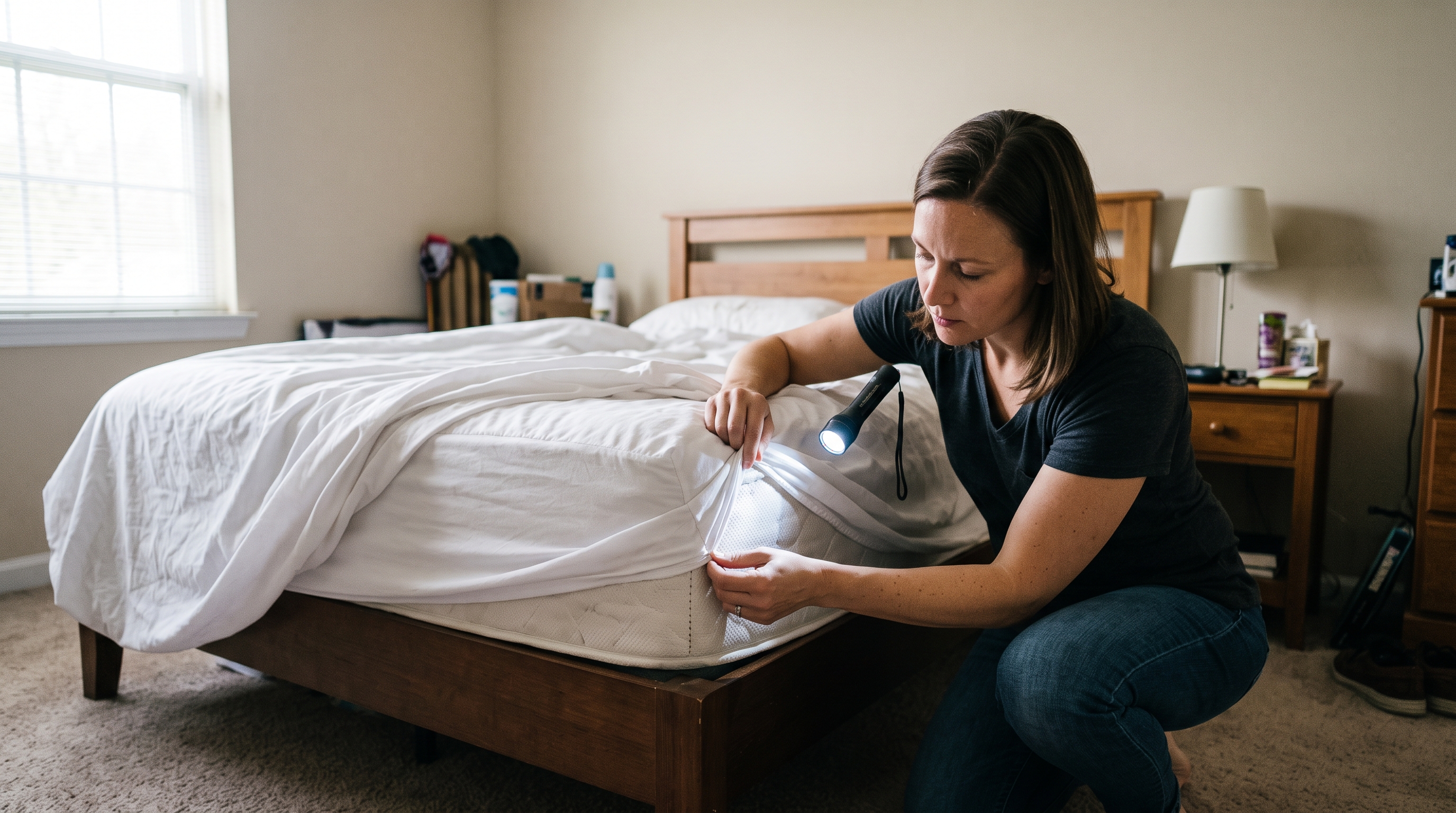
If you suspect bed bugs in your Richmond rental, start by looking for physical signs around the bed and other nearby resting areas. Bites by themselves are not enough to identify bed bugs because many other insects and skin conditions can produce similar marks.
Keep belongings in the affected room rather than moving them around the home, photograph or safely capture a suspected bug when possible, and submit a maintenance request when you find physical evidence or continue to suspect bed bug activity.
Look for Physical Signs Around the Bed
The EPA recommends looking for physical evidence rather than relying on bites alone. Possible signs include a live bed bug, rusty or reddish staining, small dark spots, eggs or eggshells, and shed skins. See the EPA's bed-bug identification guidance.
Use a flashlight and check readily accessible areas around where people sleep or rest. Start with:
- mattress seams, piping, and labels;
- accessible edges of the box spring;
- visible bed-frame joints and headboard edges;
- nearby upholstered furniture; and
- the visible baseboard area around the bed.
Keep the inspection to areas you can reach normally. Do not take furniture apart, remove electrical covers, or dismantle the bed to chase possible hiding places.
The video shows the signs and areas commonly checked during a bed-bug inspection. For resident troubleshooting, keep your inspection to the accessible areas described above and stop before disassembly.
If you find a suspected bug and can capture it safely, place it in a small clear sealed bag or secure it with clear tape so it can be identified. A clear close-up photo is also useful.
Keep Belongings From Spreading to Other Rooms
Do not move furniture, bedding, clothing, or loose belongings from the affected room into other rooms simply because bed bugs are suspected.
Do not throw away a mattress, sofa, or other furniture just because you found a suspected bug. Moving or discarding affected items can spread bed bugs through the home or building.
Reduce loose clutter carefully where practical, but keep items in the same room unless they are being moved in a sealed bag for laundering or another specific treatment step.
Use the Dryer for Items That Can Safely Take High Heat
For clothing, bedding, and similar items that can safely tolerate a household dryer on high heat, the dryer can kill bed bugs and eggs.
Place the items in a sealed bag before carrying them through the home. Transfer them directly from the bag into the dryer and run the dryer on high heat for at least 30 minutes, provided the item's care instructions allow that temperature. This follows the EPA's current bed-bug guidance.
After drying, place the clean items in a clean sealed bag or container rather than returning them immediately to the affected area.
Do not try to heat an entire room with the thermostat, space heaters, fireplaces, or other improvised heat sources. Whole-room heat treatment requires controlled equipment and temperatures.
Avoid Random Pesticide Treatment
Do not start spraying different household pesticides around the bedroom or use a total-release fogger or bug bomb as a first response.
Bed bug control typically uses a coordinated combination of inspection, containment, heat or other nonchemical measures, monitoring, and, when appropriate, correctly selected pesticide treatment. Once a specific treatment plan is established, follow the preparation instructions for that treatment.
Submit a Maintenance Request
If you find a suspected bed bug or other physical signs, or the suspected activity continues after your initial inspection, submit a maintenance request.
Tell us what you found, where you found it, when you first noticed it, and include clear photos when available. If you captured a suspected bug in a clear sealed bag, mention that in the request.
Keep belongings contained in the affected area while the next steps are being determined.
Submit a maintenance request through the PMI James River resident portal.
For other household pest problems, see Pest Control in Richmond Rentals. You can also return to the Resident Troubleshooting Library or the Resident Maintenance hub.
Published: September 2, 2026