
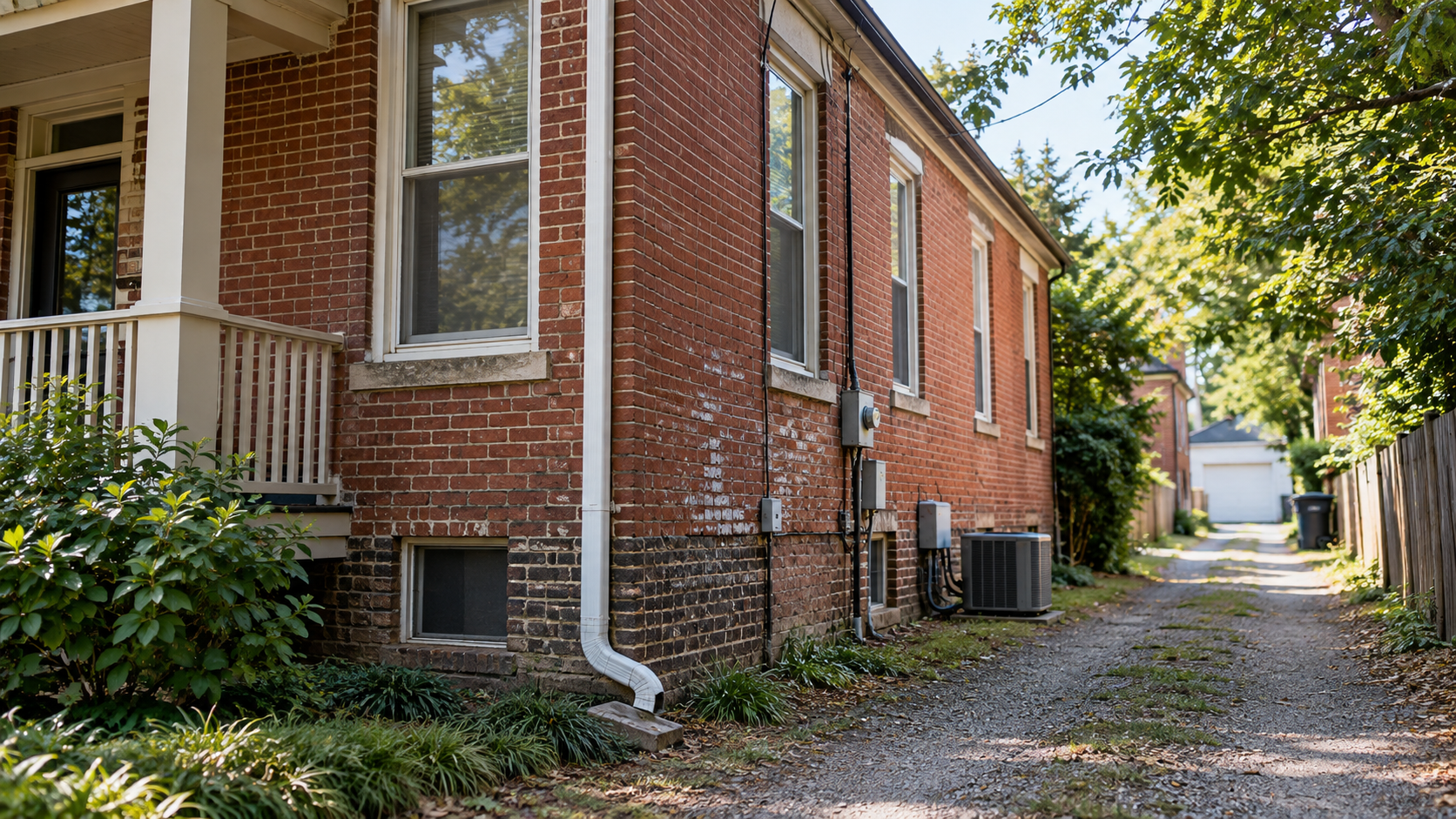
If you already have a Richmond City rental under consideration, the useful question is no longer whether Richmond is a market worth exploring. The question is whether this property works at this price after the rent, operating costs, financing, condition, and local property records are tested together. PMI James River's Richmond real estate investment services are built around that property-level decision.
This article starts where the broader Richmond rental acquisition framework leaves off. It does not rank Richmond neighborhoods or tell an investor where to buy. It assumes a specific City property is already on the table and asks whether the numbers and due diligence support the offer.
Key Takeaways
- Start with a supportable rent for the actual property, not a citywide average or the seller's pro forma.
- Use the current Richmond City real estate tax rate, actual utility exposure, insurance, management, maintenance, vacancy, turnover, and reserves in the operating model.
- Check the parcel, current zoning, special approvals, permit history, flood exposure, and site conditions before treating the intended rental use or renovation plan as settled.
- Richmond's Code Refresh is still a draft process as of September 30, 2026. Current zoning controls today's deal analysis.
- A strong deal should still make sense when rent is a little lower, lease-up takes longer, or near-term repairs cost more than the first estimate.
Start With the Rent This Property Can Actually Support
Purchase price does not create rent. The rental market does. Build the rent assumption from the homes a prospective resident could realistically choose instead, then adjust for the subject property's condition, layout, parking, laundry, outdoor space, pet policy, utility arrangement, and timing.
Online estimates and broad Richmond averages can be useful screening tools, but PMI James River does not treat them as a property-specific rent recommendation. The current competitive set matters more. Our guide to pricing a Richmond rental in the current market explains why the rent decision should be based on live competition and property-level evidence rather than the mortgage or the number needed to make a purchase look attractive.
For an occupied property, review the existing lease, concessions, utility responsibilities, deposit records, payment history, and current condition. Contract rent may be relevant today, but the acquisition model should also ask what the property is likely to support when the current tenancy eventually turns over.
Build the Operating Model Before Debating the Offer Price
Once the rent range is credible, put the recurring costs on the same annual model. Include property taxes, insurance, management, routine maintenance, vacancy, turnover, owner-paid utilities or services, association costs when applicable, and a reserve plan for larger future work. Keep financing and identified near-term capital projects visible rather than hiding them inside a generic expense percentage.
PMI James River's Richmond rental property budgeting guide goes deeper on separating normal operating costs, reserves, vacancy, turnover, and debt service. That separation matters during acquisition because a deal can look healthy when irregular costs are treated as surprises instead of planned ownership expenses.
Use the Actual Richmond City Tax and Utility Exposure
The City's current base real estate tax rate is $1.20 per $100 of assessed value. Use the parcel's current assessment and tax record rather than assuming the purchase price and assessed value are identical. The City explains the rate and assessment calculation on its real estate tax page.
Utility exposure is property-specific too. Richmond DPU's rates effective July 1, 2026 include monthly water and wastewater service and volume charges, while residential stormwater charges vary with impervious area. The underwriting question is not whether those charges exist in the abstract. It is which services apply to this parcel and which costs the owner expects to carry under the intended lease. Use the current Richmond utility rate schedule and, when available, recent property bills.
Run the Richmond City Property-Record Check
Local records cannot replace a professional inspection, title work, an insurance quote, or specialist evaluation. They can expose assumptions that deserve an answer before closing.
| Check | Why It Matters to the Deal | Richmond Source |
|---|---|---|
| Parcel and current zoning | Confirm parcel data, zoning classification, special use permits, and other parcel-specific approvals before assuming the intended use or expansion works. | Richmond Parcel and Zoning Mappers |
| Permits and inspections | Search for records tied to additions, electrical, plumbing, mechanical, site, or other work when the visible property and the documented history do not line up. | Richmond Online Permit Portal |
| Planning changes | The City's Code Refresh can inform future planning context, but Draft Three is not a reason to underwrite a proposed zoning outcome as though it already governs the parcel. | Richmond Code Refresh |
| Flood and drainage exposure | Address-specific flood exposure can affect insurance, renovation scope, and future property risk. Check the property rather than making a neighborhood-level assumption. | Richmond Floodplain Management |
Translate Condition Into Cash Required After Closing
A property can be financially attractive and still require a large amount of cash before it is ready to operate. Separate cosmetic work from system work, and separate known work from unresolved defects. A priced roof replacement is different from recurring water intrusion with an unknown source. A localized plumbing repair is different from a sewer problem whose underground scope has not been defined.
The Richmond rental due-diligence guide provides the deeper fixer-versus-money-pit framework. Use inspections and specialist evaluations to turn important defects into credible scopes and costs, then put those amounts into the acquisition model before deciding what the property is worth to you.
Stress-Test the Deal at the Price You Are Considering
Do not ask only whether the base-case spreadsheet is positive. Ask what the deal looks like when one or two assumptions move against you. A practical stress test can include:
- rent modestly below the initial target;
- one additional month of vacancy or a slower initial lease-up;
- a higher insurance quote;
- a larger repair scope after inspection or specialist review;
- higher cash required at closing because repairs, reserves, or lender requirements change; and
- a major system replacement arriving earlier than expected.
The investment objective matters when interpreting the result. Some owners prioritize current distributable cash. Others accept lower current cash flow because the property serves a longer-term wealth strategy. Those are different scoreboards, and our cash flow versus long-term rental wealth guide explains why one monthly number should not decide the entire investment case.
Know What This Richmond City Page Does Not Decide
This page does not tell an investor which Richmond City neighborhood to target, whether Richmond City should be chosen over Henrico or Chesterfield, or which submarket will appreciate most. Those are market-selection questions. This page begins after a property has been identified and tests whether that particular rental, at that particular price, has a supportable operating plan.
A lower purchase price can still be a weak deal if the rent is overstated, the tax or utility assumptions are incomplete, major work is hidden, or the intended use depends on a zoning assumption that has not been verified. A higher purchase price can still be rational when the property's rent, condition, operating costs, and long-term role support it.
Frequently Asked Questions
What is the current Richmond City real estate tax rate?
The City's current base rate is $1.20 per $100 of assessed value. Underwrite the actual parcel from its current assessment and tax record, then update the model when new assessment information becomes available.
Should I use Richmond's draft Code Refresh map to value a property?
Use it as planning context, not as current entitlement. As of September 30, 2026, Draft Three remains part of an active zoning rewrite. Verify the parcel's current zoning and approvals for today's acquisition decision.
How much cash flow should a Richmond City rental produce?
There is no universal number that fits every investor. The target depends on financing, capital invested, holding period, reserve needs, and the owner's objective. The first test is whether the rent and costs are realistic enough that the result means what the spreadsheet says it means.
Next Step: Test the Rent Before You Defend the Deal
If you are evaluating a Richmond City property, PMI James River can prepare a free property-specific rental analysis to help establish a supportable rent range before you commit to the acquisition. That rent assumption can then be tested against the taxes, operating costs, property condition, and financing that belong to the actual deal.
Published: October 2, 2026