
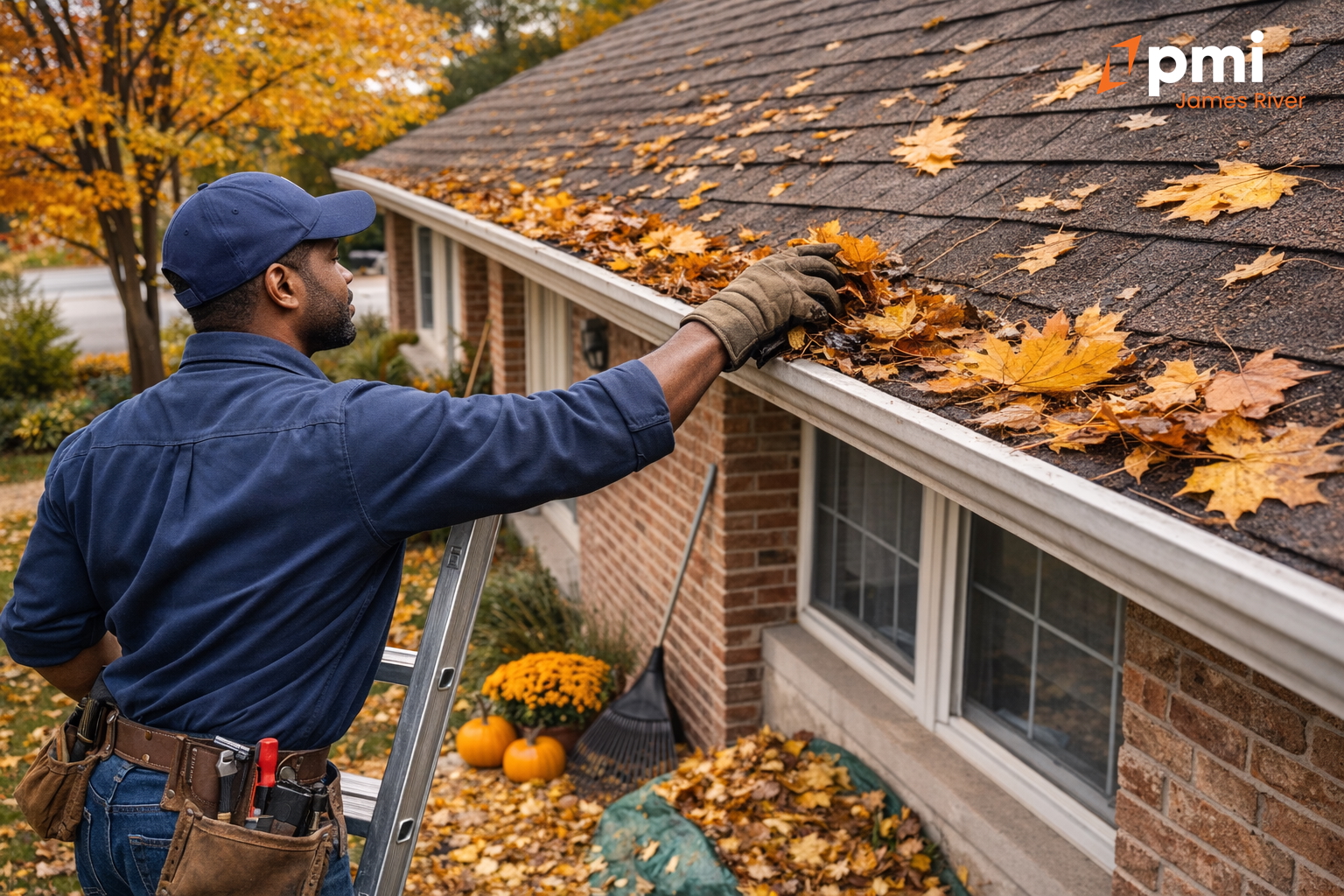
Fall is one of Richmond’s highest-leverage maintenance windows because two different risks land on the same calendar. Leaf drop can obstruct drainage while colder nights narrow the window for plumbing and heating preparation. The most useful fall plan prioritizes the items that can create secondary damage instead of treating the season as a cosmetic cleanup.
For rental owners, that means tying fall work to a documented maintenance coordination process and the broader Richmond seasonal maintenance map. Across Richmond City, Henrico County, Chesterfield County, and Hanover County, the sequence is similar: keep water moving away from the property, make freeze decisions before freezing weather arrives, verify heat before demand rises, then address lower-priority comfort and finish items.
The exact work still depends on the property. Tree coverage, roof shape, drainage history, crawlspace or basement exposure, heating equipment, and prior work orders should determine what gets done first and whether a second visit is warranted.
Key Takeaways
- Leaf control is a drainage task first. Cleaning should follow actual leaf load, and flow should be checked after rain.
- Outdoor hoses, shutoff access, and vulnerable plumbing runs should be addressed before the forecast creates urgency.
- Heating readiness is easier to verify before the first sustained cold stretch than during a no-heat call.
- If a fireplace or chimney will be used, inspection and cleaning decisions belong in the fall plan.
- Weatherstripping and door sealing can improve comfort, but they should not substitute for heating-system evaluation.
In This Guide
- Why Fall Creates a Short Decision Window in Richmond
- Tier 1: Leaf Load and Water Diversion
- Tier 1: Pre-Freeze Plumbing Decisions
- Tier 2: Heating Readiness
- Fireplace and Chimney Safety
- Tier 3: Draft Reduction and Finish Protection
- Two Fall Scenarios That Change the Work Plan
- Common Fall Maintenance Mistakes
Why Fall Creates a Short Decision Window in Richmond
Richmond fall is not simply a transition between summer and winter. The National Weather Service’s 1991 to 2020 Richmond climate normals show 11.06 inches of normal precipitation across September through November, while the normal November low is 38.8°F. That combination keeps drainage active while colder weather steadily reduces the time available for winter preparation.
The result is a short decision window. A gutter that overflows in October can keep sending water toward the structure through later fall rain. An exterior hose or exposed plumbing run that is still unresolved when freezing weather arrives becomes a time-sensitive problem. A marginal heating system may not reveal itself until demand increases.
A good fall plan therefore uses triggers instead of one calendar date. Leaf load, rainfall, prior moisture history, equipment condition, and the forecast should determine the sequence.
Tier 1: Leaf Load and Water Diversion
Water diversion is the first fall priority because the damage rarely stops at the gutter. The University of Georgia Extension’s moisture-prevention guidance specifically recommends cleaning gutters and downspouts and making sure water drains away from the home.
For a rental property, a one-time gutter cleaning is not always enough. An early visit can be undone by the next major leaf drop. A better decision rule is to clean when leaf load justifies it, confirm that downspouts discharge properly, then recheck after later leaf drop when the property’s tree coverage or prior history warrants another pass.
High-Leverage Fall Checks.
- Gutters and roof valleys are clear enough to carry water.
- Downspouts are connected and discharging away from foundation lines.
- Splash blocks or extensions are not creating pooling or erosion channels.
- Water is not spilling over fascia during rainfall.
- New staining, dampness, or resident reports after rain are documented and compared with prior conditions.
The strongest verification happens after real rain. A clean-looking gutter on a dry day does not prove that the system handles runoff. At PMI James River, repair closeout is meant to show what was checked, what was completed, and whether the original condition was resolved. That verification-first approach is part of proactive rental property maintenance.
If the property has several deferred systems beyond seasonal work, the Richmond rental maintenance checklist helps keep a fall visit from becoming a substitute for a broader condition review.
If severe weather is in the forecast, the Richmond rental storm-readiness plan covers water intrusion, drainage failures, and power-related damage beyond routine fall maintenance.
Tier 1: Pre-Freeze Plumbing Decisions
Freeze preparation is most valuable before the forecast removes options. The City of Richmond Department of Public Utilities advises that temperatures below 32°F can freeze water in pipes and specifically recommends disconnecting hoses from outdoor faucets, insulating exposed pipes in unheated areas, and sealing openings around pipe penetrations.
For owners and property managers, the practical fall job is to know the property before a freeze alert arrives. That means confirming which exterior hoses must be removed, whether interior shutoffs exist and are accessible, where vulnerable plumbing runs are located, and what resident communication is needed for that home.
Richmond’s guidance also identifies outdoor piping, unheated basements, crawlspaces, and garages as vulnerable areas. Those are property-specific conditions, so a generic winterization checklist is less useful than a documented plan for the actual home.
Once winter arrives, the decision shifts from preparation to response. The winter maintenance plan for Richmond rentals covers the shorter timelines that apply once freeze conditions and active problems are present.
Tier 2: Heating Readiness
Heating readiness belongs in fall because it is easier to diagnose a weak system before the first sustained cold stretch. ENERGY STAR’s HVAC maintenance guidance recommends annual pre-season checkups and specifically notes that fall is the appropriate time to check heating systems before contractors become busy during winter.
A qualified heating check should address the equipment that actually serves the property, while the owner or property manager should also review thermostat response, filter condition, prior heating complaints, repeat work orders, and any known airflow problems. A property with a history of weak heat or recurring service calls deserves more attention than a system with a clean recent record.
The operational distinction matters. Fall heating readiness is preventive planning. Once an actual no-heat condition exists, the issue should move into the property’s repair-response process and be handled in light of the applicable Virginia landlord maintenance responsibilities.
Fireplace and Chimney Safety
A fireplace does not need to become a fall project if use is not permitted or expected. When it will be used, however, the inspection decision should be made before seasonal use begins rather than after a problem appears.
The U.S. Fire Administration recommends having heating equipment and chimneys cleaned and inspected each year by a professional. Its heating fire safety guidance also emphasizes keeping combustible materials away from fireplaces and other heat sources.
For a rental owner, the fall decision is straightforward: confirm whether fireplace use is allowed, whether the chimney or appliance is ready for that use, and whether the resident-facing expectations are clear.
Tier 3: Draft Reduction and Finish Protection
Draft reduction has practical value after the higher-priority water, freeze, and heating items are under control. The U.S. Department of Energy’s air-sealing guidance notes that air sealing reduces air leakage and that weatherstripping is used around movable components such as doors and operable windows.
For rental properties, that can mean checking worn weatherstripping, door sweeps, latch alignment, and obvious gaps that allow cold air into the home.
These fixes should not be used to explain away an actual heating problem. Their value is narrower: better sealing can improve comfort and reduce the number of complaints that initially sound like HVAC failure.
Finish-preservation items come after those controls. Exterior caulk renewal at known water-entry points, removal of leaves piled against the structure, and similar seasonal cleanup can protect materials, but they should not displace drainage or heating work that carries a higher cost of delay.
Two Fall Scenarios That Change the Work Plan
Scenario 1: The Gutters Were Already Cleaned Once.
That may be enough for a lightly treed property, but it may not be enough after a second heavy leaf drop. The better path is to check actual canopy conditions, confirm flow after rain, and schedule another pass only when the property warrants it.
Scenario 2: The Heat Worked Last Winter.
That history is useful, but it is not the only factor. Equipment age, prior service calls, weak-room complaints, filter condition, and recent repairs can justify an earlier check. The goal is not to dispatch a contractor unnecessarily. It is to avoid learning about a known risk for the first time during peak demand.
Common Fall Maintenance Mistakes
- Treating leaf removal as curb appeal instead of water-diversion work.
- Cleaning gutters without checking where the downspouts discharge.
- Assuming one early fall cleanout will survive the rest of leaf drop.
- Waiting for a freeze forecast to identify exterior plumbing and shutoff access.
- Waiting for the first cold week to think about heating readiness.
- Allowing fireplace use without a clear inspection and maintenance decision.
- Closing a work order without documenting what was checked and whether the original condition was resolved.
FAQ
When Should Fall Gutter Cleaning Be Scheduled in Richmond?
Schedule it around actual leaf load, not a fixed date. Heavily treed properties may need a second pass after major leaf drop, especially when prior work orders show overflow, staining, or drainage problems. The final check should confirm where the water goes during or after rain.
Does Every Richmond Rental Need a Fall HVAC Visit?
ENERGY STAR recommends annual pre-season checkups, with heating systems checked in the fall. The exact scope and timing should still reflect the equipment, maintenance history, manufacturer guidance, and prior complaints at the property.
Does Every Rental With a Fireplace Need Chimney Service?
If the fireplace or chimney will be used, the U.S. Fire Administration recommends annual professional cleaning and inspection of heating equipment and chimneys. If use is not permitted, the owner should make the property’s expectations clear rather than treating it as an active amenity.
What Should an Owner Prioritize if the Fall Budget Is Limited?
Start with conditions that can create secondary damage or urgent winter problems: water diversion, known freeze vulnerabilities, heating readiness where risk is present, and any safety-critical item. Lower-priority finish work can follow.
Is Fall Maintenance the Same as Winter Maintenance?
No. Fall is primarily a preparation window. Winter maintenance is more likely to involve active freeze risk, no-heat response, leaks, storm effects, and compressed vendor timelines. A strong fall plan reduces avoidable winter urgency without pretending that every failure can be prevented.
Conclusion
Fall maintenance does not need to become a long list of equal-priority tasks. The useful sequence is simpler: keep water moving away from the property, make plumbing decisions before freeze weather, verify heating before sustained cold, address fireplace safety where use is expected, then reduce drafts and protect finishes.
That order keeps owner attention on the items most likely to become more expensive when delayed. It also gives residents and vendors clearer expectations before winter compresses the timeline.
Next Step
PMI James River helps Richmond-area owners coordinate seasonal maintenance, document repair decisions, and keep follow-up work from disappearing between service calls. Owners who want a more consistent process can use our Richmond rental maintenance services to keep fall preparation and year-round repair coordination organized.
Published: September 1, 2026