
An unexpectedly high water bill or unexplained increase in water use can sometimes point to a leak that is not immediately obvious. Start with the plumbing you can safely see, then check toilets and an accessible water meter if available.
If you find active leaking water, a wet ceiling or wall, soft flooring, or another visible water problem, stop the hidden-leak checks and use the Water Leaks & Shutoffs guide.
Check Readily Accessible Areas for Visible Water
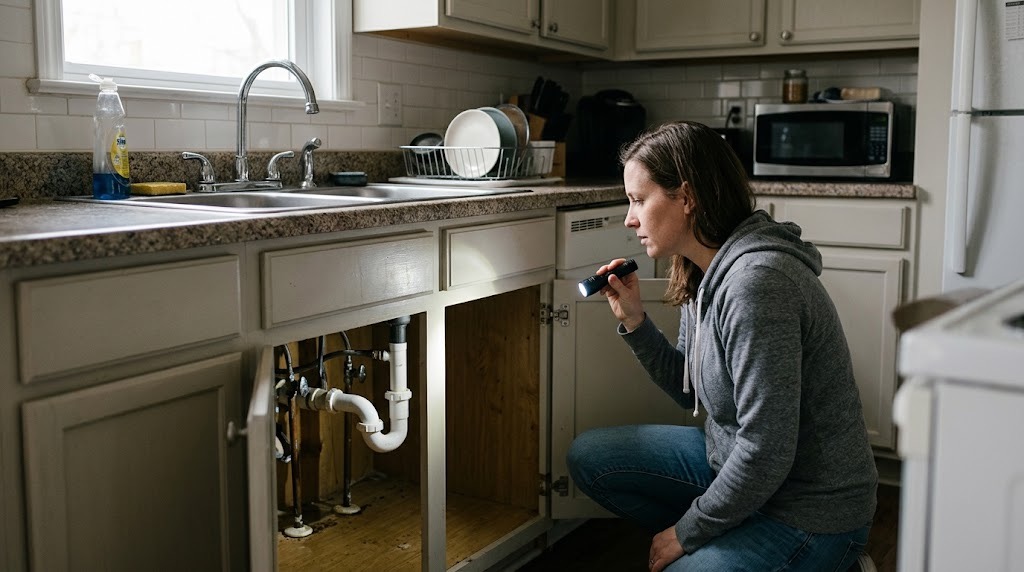
Look around toilets, beneath sinks, around tubs and showers, near the water heater, and around other normally accessible plumbing areas.
Look for dripping water, moisture on the outside of a pipe or fitting, water around a fixture, or another plainly visible sign of a leak. You may also listen for a toilet that runs, trickles, or refills when it has not recently been flushed.
Keep the check to areas that are already readily accessible. Do not open walls, remove plumbing, enter crawlspaces or concealed areas, or take fixtures apart to search for a leak.
Use a Toilet Dye Test for Silent Leaks
A toilet can lose water into the bowl without making the problem obvious. The U.S. Environmental Protection Agency recommends a simple food-coloring test:
- Remove the toilet tank lid carefully.
- Place a few drops of food coloring in the tank.
- Wait 10 minutes without flushing.
- Check the toilet bowl. If colored water appears in the bowl, the toilet is leaking internally.
- Flush the toilet after the test so the coloring does not stain the tank or bowl.
If the test shows a leak, note which toilet was tested and the result. You can also use the Toilet Problems guide for other running-toilet symptoms.
Check an Accessible Water Meter
If your home's water meter is readily accessible and you can observe it without opening locked, utility-controlled, buried, or unsafe equipment, it can provide another useful check.
Make sure faucets, toilets, showers, washing machines, dishwashers, irrigation, and other known water uses are off. The EPA recommends comparing the meter reading before and after a period of about two hours when no water is intentionally being used. A change in the reading may indicate water is being used somewhere in the system.
Skip this step if the meter is not readily accessible or if reaching it would require opening a utility-owned box or entering an unsafe area.
Consider Known Changes in Water Use
A higher bill does not automatically mean there is a hidden plumbing leak. Before reporting unexplained usage, consider whether there has been a recent change such as more occupants or guests, increased laundry, outdoor watering, hose use, or another known increase in water consumption.
If the increase still does not make sense after the safe checks above, report the issue with the information you have.
What to Include in Your Maintenance Request
Tell us how the water use or bill changed, whether you found any visible leaks, the result of each toilet dye test, and whether an accessible water meter changed during a no-use period. Include photos of any visible moisture or leaking fixture when they can be taken safely.
Submit the unresolved problem through your resident portal. For other water-related symptoms, return to Plumbing & Water Problems.
Published: September 2, 2026