
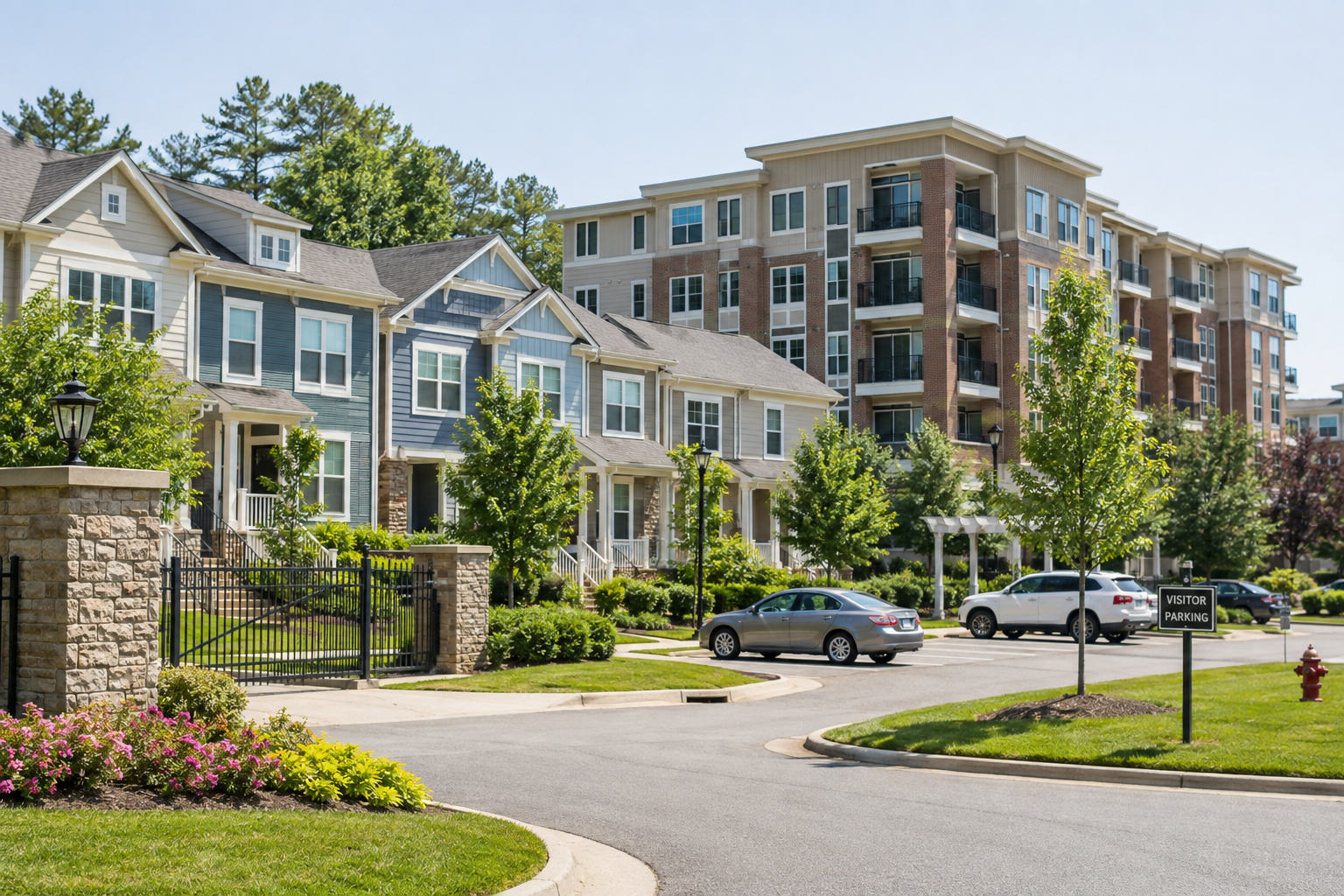
If you rent in a Richmond-area community with an HOA, condo association, or another community association, your lease may not be the only set of day-to-day rules that affects the home. The association may control parking, common areas, exterior changes, pools, clubhouses, gates, trash procedures, or building access.
Virginia uses the broader term common interest community for property owners' associations, condominium associations, and real estate cooperative associations. For a resident, the important part is practical: understand what the association handles, what PMI James River handles, and what you should check before assuming the lease tells the whole story.
That extra layer can also be one of the benefits of the home. Association communities may provide pools, trails, maintained common areas, controlled entrances, clubhouses, or other amenities that become part of everyday life. Knowing how the system works makes it easier to enjoy those features and avoid unnecessary confusion. It is one part of living well in a Richmond rental.
Key Takeaways
- An HOA is only one kind of association a Richmond renter may encounter. Condo associations and other common interest communities can create a similar extra layer.
- The association may control shared spaces and community procedures even though PMI James River manages the rental itself.
- Rules can look very different in a Mechanicsville single-family community, a Midlothian planned community, and a Richmond City condo building.
- Pool, gate, clubhouse, parking, or building access may depend on association registration or owner paperwork.
- If a notice or rule is unclear, send it to PMI James River rather than guessing which document or organization controls the issue.
What Association Living Looks Like Around Richmond
Association living is not one uniform experience across the Richmond Metro. The type of property and the way the community is organized change what you actually notice as a resident.
Mechanicsville and Hanover. A single-family rental in a planned community may feel like any other house most of the time, but the association can become very visible around neighborhood amenities. At Kings Charter in Mechanicsville, for example, the current pool process requires the owner to complete association paperwork when a rental resident changes before the new resident can register for pool access. PMI James River has dealt with exactly this kind of issue when association records did not reflect paperwork that had already been submitted.
Midlothian and Chesterfield. Large planned communities can be more layered. Brandermill's residential guidance describes homes, condos, townhomes, and several neighborhoods with their own sub-associations. That is a useful Richmond-area example of why one rental can sometimes sit inside both a larger community association and a smaller neighborhood or condominium association. The rules or contacts may not all come from the same place.
Richmond City. Condo living can put more of the association experience inside the building. Instead of thinking mainly about lawns or exterior appearance, a resident may notice controlled entrances, elevators, garages, hallways, package areas, trash rooms, balconies, or shared building services. The practical question is still the same: which part belongs to the rental, and which part belongs to the association or building?
Key point: An association problem is not always a resident-rule problem. Sometimes the issue is registration, owner authorization, a missing form, or an access system that needs to be corrected.
The Extra Rules and Services You May Actually Notice
The easiest way to understand association living is to focus on the parts that affect ordinary routines.
| Area | What the Association May Affect |
|---|---|
| Parking and vehicles | Guest spaces, permits, garages, trailers, commercial vehicles, inoperable vehicles, or where a vehicle may be left. |
| Trash and recycling | Collection procedures, designated disposal areas, when containers may be placed out, and where they must be stored. |
| Exterior and shared space | Signs, decorations, satellite dishes, window equipment, balconies, patios, yards, landscaping, or anything attached to the exterior. |
| Amenities and access | Pools, clubhouses, fitness rooms, trails, gates, key fobs, parking credentials, guest access, or registration steps. |
| Shared services | Some communities coordinate water, trash, landscaping, snow removal, internet, or other services. Check the property-specific setup before opening or changing an account. |
If you are unsure which utilities you are expected to establish yourself, our utilities setup guide for PMI James River rentals explains why the answer can vary from one property to another.
Exterior changes deserve the same caution. Something that is acceptable inside the home may still need property approval or association approval if it changes the outside of the property or a shared area. Our guide to renter-safe upgrades in Richmond covers the rental side of that decision.
When Access, Notices, or Common Areas Create Confusion
If a pool badge stops working, a gate will not open, or a clubhouse registration is missing, tell us what happened before assuming you violated a rule. Include the amenity or access point, what the association or system told you, and whether you previously had access. Sometimes PMI James River can solve the problem directly. Sometimes the property owner must authorize something with the association. Sometimes the association needs to correct its own records.
If you receive an association notice, send us a copy. If the issue is clear and easy to correct, such as moving a vehicle or bringing in a trash container, handling it promptly usually keeps a small issue small. If the notice concerns a common area, a condition you did not create, a rule you have never seen, or a responsibility that is unclear, tell us that too.
Common-area maintenance can create the same uncertainty. A light out in a condo hallway, a damaged community gate, a pool problem, or landscaping in shared space may belong to the association rather than the rental owner. Report what you see and where it is located. We can help route the issue to the right party instead of making you guess.
Make Association Living Easier
Association living can add rules, but it can also add amenities, maintained common spaces, and services that are part of why you chose the home in the first place. The easiest approach is to keep the community information with your lease documents, read notices when they arrive, and ask before making an exterior or shared-space change when you are unsure.
If PMI James River manages your home and you need association rules, help with a notice, or assistance with an access problem, start with our Resident Resources page or send us the specific document or message you received. We can help sort out whether the next step belongs with PMI James River, the property owner, or the association.
Published: August 21, 2026