
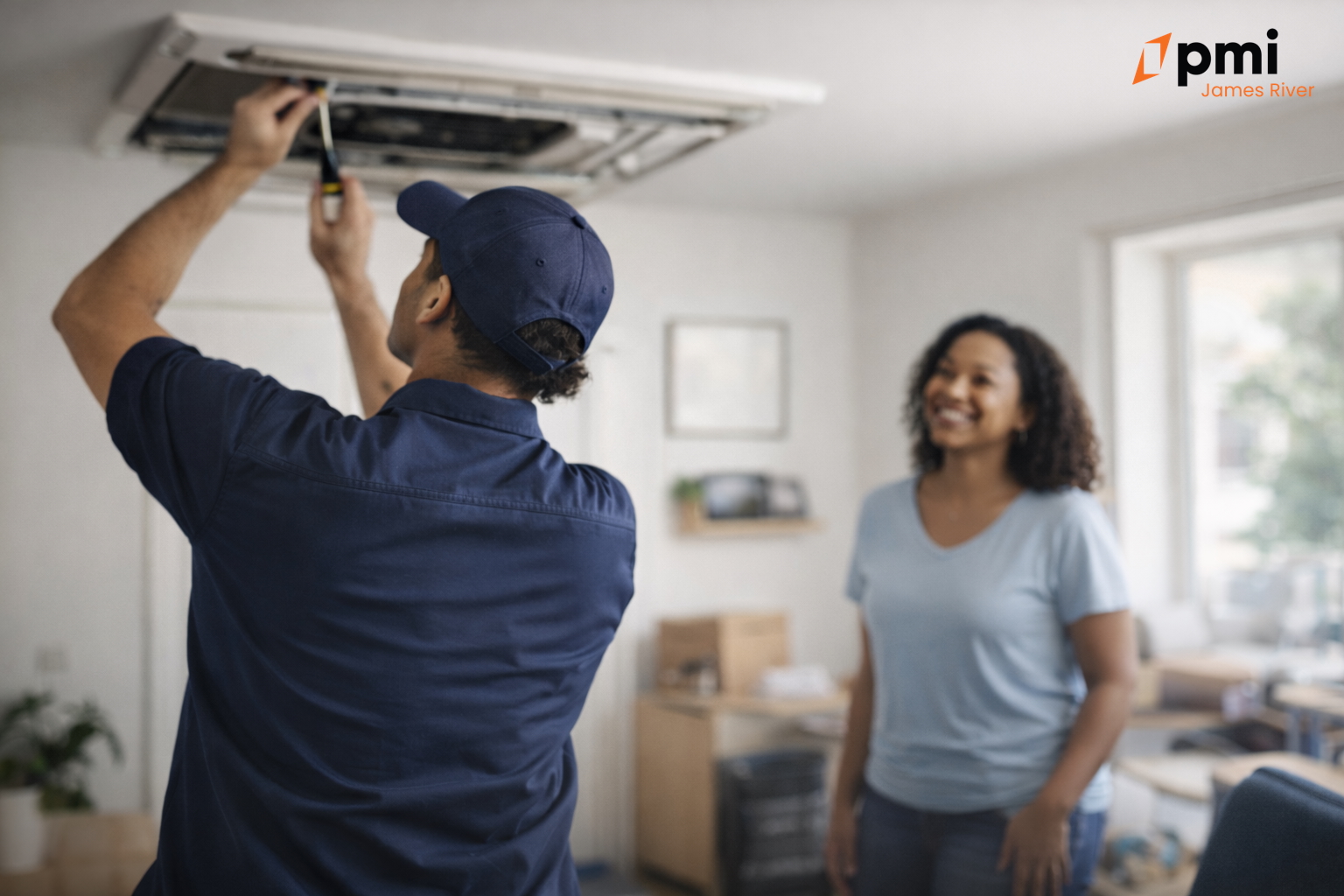
Rent gets most of the attention in renewal conversations, but maintenance experience can independently shape the decision to stay. A resident considering another lease term is also judging whether the next year is likely to bring reliable repairs, clear communication, and problems that stay fixed.
For Richmond rental owners, the goal is not to treat every request as an emergency. It is to use consistent maintenance workflows that identify real risk, keep residents informed, and finish the correct scope. Those workflows fit within the broader repair controls PMI James River uses to protect both the resident experience and the owner's financial position.
Key Takeaways
- Maintenance quality is not just speed. Residents notice whether a request is acknowledged, the next step is clear, and the repair actually holds.
- Repeat failures, silent delays, and unexplained changes create avoidable frustration that can influence renewal decisions.
- Owners and residents often benefit from the same maintenance discipline: correct scope, faster containment, fewer callbacks, and better documentation.
Why Maintenance Quality Can Affect Renewal Decisions
Maintenance does not control every renewal. Rent, employment, homeownership, household changes, and other factors can matter more. But maintenance is one part of the resident experience that owners and property managers can directly influence.
AppFolio's 2026 survey of 3,002 United States renters found that 56% of residents who were satisfied with maintenance planned to renew or stay, compared with 31% of residents who were dissatisfied with maintenance. Zego's 2026 resident-experience research likewise found that renters identified poor maintenance among the controllable reasons for leaving.
The practical point: Good maintenance cannot guarantee a renewal, but poor repair handling can create an avoidable reason to move. Sources: AppFolio 2026 Renter Preferences Report and Zego 2026 Resident Experience Management Report.
PMI James River has also received resident referrals specifically tied to fast maintenance handling. That does not prove a future renewal, but it is a useful field signal: residents notice how repairs are handled, and they remember the experience after the work order closes.
What Residents Actually Judge When Something Breaks
Residents usually do not know whether a repair needs several trades, whether a part is delayed, or whether a proposal is waiting on an owner decision. They judge what they can see:
- Was the request acknowledged?
- Was the next step explained?
- Was the resident told when the timeline or scope changed?
- Did the completed work solve the problem?
Speed still matters, especially when active damage or essential services are involved. But a quick visit that does not resolve the issue can create more frustration than a slightly longer process with a clear plan and a durable result.
Three Maintenance Moments That Matter Most
A Cold-Snap HVAC Complaint
A heating complaint during a cold snap creates immediate concern. The useful response is not to jump from "the resident is uncomfortable" to either "nothing is wrong" or "the system needs replacement." It is to turn the complaint into measurable facts.
Indoor temperature, thermostat settings, filter condition, equipment behavior, recent service history, and vendor findings can help determine the next step. The resident needs to know what is being checked and what happens next. The owner needs a diagnosis before making a major spending decision.
Retention lesson: Clear diagnosis and communication build more confidence than promising an instant answer that the facts do not support.
A Small Leak
A small leak is one of the clearest places where resident service and owner protection align. Early containment can keep the scope limited. Delay can expand the same problem into cabinets, drywall, flooring, insulation, or subfloor work.
The resident needs a clear plan for access, containment, repair, and follow-up. The owner needs photos, a cause summary when available, and an invoice that matches the completed scope.
Retention lesson: Prompt containment protects the resident's confidence and the property at the same time.
The Same Minor Issue Keeps Returning
A recurring clog, door problem, intermittent outlet, or appliance issue can create more frustration than one well-managed major repair. Once the same symptom returns, the next work order should not start from zero.
Prior notes, photos, vendor findings, access history, and completed scope should guide the next decision. A repeat report may mean the original diagnosis was incomplete, the scope was too narrow, or the repair could not be properly verified.
Retention lesson: Residents lose confidence when they must repeatedly prove that the same unresolved problem still exists.
Where Owners Lose Retention Without Realizing It
Preventable frustration often develops through small process failures rather than one dramatic event:
- The resident receives no update while a quote, part, appointment, or approval is pending.
- The repair scope changes without an explanation.
- No one confirms whether the completed work solved the reported problem.
- A repeat issue is handled as a brand-new complaint instead of a failed prior outcome.
There is also a quieter risk. A resident who stops reporting small issues is not necessarily satisfied. The resident may have decided that reporting is not worth the effort, while the underlying condition continues to develop. That is one of the overlooked costs of a low-complaint resident.
A Maintenance Standard for Richmond Rentals
Richmond Metro rentals do not all create the same maintenance problems. Older Richmond City homes can require more diagnostic judgment because systems and renovations may have accumulated over decades. Across Henrico, Chesterfield, and Hanover, housing age, construction type, tree cover, drainage, crawl spaces, and private utilities can change the scope from one property to the next.
The property may change, but the maintenance standard should stay consistent:
- Classify the risk. Decide whether the issue involves active damage, health or safety, an essential service, or a routine defect.
- Define the next step. Identify what information, access, approval, troubleshooting, or vendor work is needed.
- Keep the resident informed. Communicate the expected next step and explain material changes to the timeline or scope.
- Verify the result. Record what was found and completed, then give repeat failures added scrutiny.
A regular rental property evaluation schedule can also identify slow-developing conditions before they become resident complaints or larger repair scopes.
Frequently Asked Questions
Does better maintenance always mean faster maintenance?
No. Speed matters most when active damage, health or safety, or essential services are involved. For routine matters, clear acknowledgement, a credible next step, and a lasting repair can matter more than immediate dispatch.
Will residents renew just because maintenance is handled well?
No. Residents move for many reasons management cannot control. Good maintenance removes one avoidable source of frustration rather than guaranteeing a renewal.
Should owners approve every request to improve retention?
No. Resident retention does not require unnecessary upgrades or unsupported work. It requires timely judgment, clear communication, and competent completion of legitimate repairs.
Conclusion
Resident retention is not won by treating every work order as an emergency. It is supported by making the maintenance process reliable when something breaks.
Owners benefit when residents receive clear communication, repairs are scoped correctly, repeat failures receive added attention, and documentation supports both cost control and the resident experience. Rental owners who want that consistency without personally coordinating every work order can review PMI James River's Richmond property management services.
Published: March 12, 2026 | Updated: August 23, 2026