
If you see a mouse or rat in your Richmond rental, find possible droppings, notice gnawing, or hear scratching or movement, start with what you actually observed. Some signs are less certain than they first appear.
PMI James River has had scratching reports that turned out to be birds, suspected mouse droppings that were actually from skinks, and even small beetles that were mistaken for droppings.
Once the signs reasonably point to a mouse or rat, secure food, use an appropriately sized snap trap when it can be placed safely, check the accessible area for an obvious small opening, and use the proper wet-cleanup method for possible rodent waste.
Check What You Are Actually Seeing or Hearing
An actual mouse or rat sighting is the clearest sign. Other possible signs include repeated droppings, gnawing, damaged food packaging, nesting material, or recurring activity in the same area.
Small dark pellets or specks are not always mouse droppings. PMI James River has had suspected mouse reports where the material was actually from small reptiles such as skinks, and another case where small beetles themselves were mistaken for droppings.
Scratching or scurrying sounds can also come from more than one kind of animal. If you hear activity but have not seen an animal, note where you hear it and roughly when it occurs.
If you find possible droppings or another visible sign, take a clear photo before cleaning the area if you can do so safely.
Remove Food Sources and Use a Snap Trap
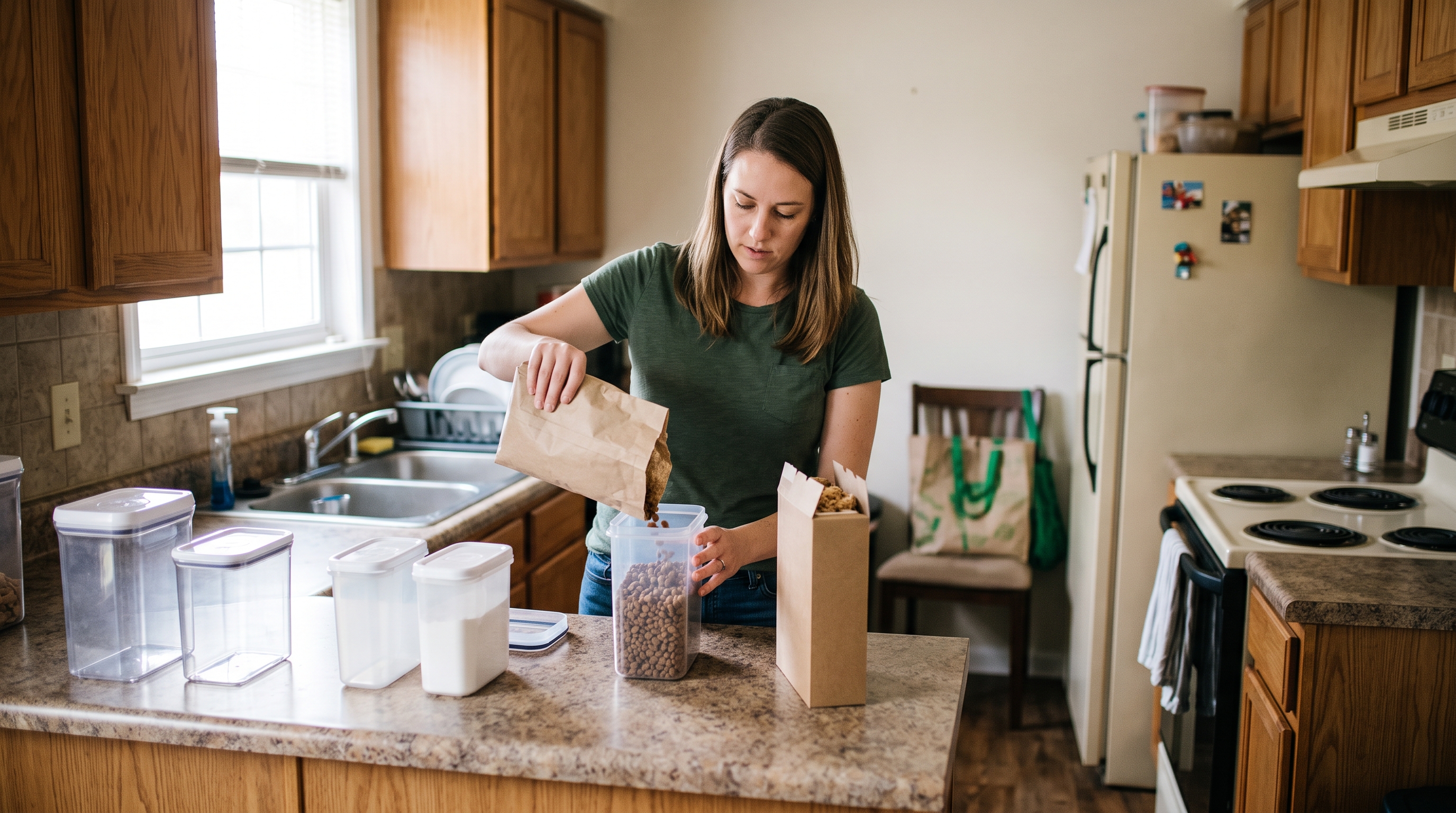
- Store pantry food in closed containers.
- Clean crumbs and food spills.
- Keep trash contained and remove it regularly.
- Keep pet food in a closed container and avoid leaving food out overnight while activity is occurring.
- Reduce loose cardboard, paper, and similar clutter around the affected area where practical.
If the evidence reasonably points to a mouse or rat, a traditional snap trap is an appropriate household control. The CDC recommends using the correct size because mouse and rat traps are different. Follow the manufacturer's instructions and keep every trap where children and pets cannot reach or trigger it.
The video below demonstrates how to set a conventional mouse snap trap.
After setting a mouse trap, place it on the floor against the wall with the baited or trigger end next to the wall so the trap forms a T with the wall. This follows the CDC's current snap-trap guidance.
If you are dealing with a rat, use a properly sized rat trap rather than a mouse trap and follow the instructions supplied with that trap.
Check traps daily while activity continues.
Seal Small Accessible Openings
Take a quick look around the readily accessible area where you saw the animal or found signs of activity. Check places such as baseboard and cabinet edges, around visible plumbing penetrations, and nearby doors or windows.
If you find a small opening that is easy to reach, ordinary household gap sealing is reasonable when you can do it without taking anything apart or damaging the property.
For a rodent opening, steel wool or copper mesh is a good starting material because rodents have more difficulty chewing through it than softer sealants. You can press the material securely into a small opening and, when appropriate for the location, use caulk or a ready-to-use pest-blocking foam sealant to secure and seal it.
The EPA identifies caulk, copper mesh, steel wool, and spray foam insulation among the materials commonly used to close pest-entry openings. It also notes that rodents can gnaw through softer materials, which is why mesh or steel wool is especially useful for rodent gaps. See the EPA's pest-exclusion guidance.
If you use pest-blocking foam, caulk, weatherstripping, or another household sealing product, follow its label and use it only where the opening is readily accessible. Keep foam and other sealants out of outlets, electrical boxes, exposed wiring, and moving door or window components.
Keep the job within ordinary gap sealing. Do not remove trim, enlarge or cut into an opening, cut into or dismantle walls or cabinet assemblies, move built-in components, or patch structural damage. If the opening is too large for a simple household seal or appears to involve damaged building material, take a photo and include it with your maintenance request.
Clean Possible Rodent Droppings Safely
Do not sweep or vacuum dry mouse or rat urine, droppings, or nesting material. For a small amount of possible rodent waste in an accessible area, follow the CDC wet-disinfection cleanup method.
- Put on rubber or plastic gloves.
- Spray the material with a household disinfectant until it is thoroughly wet.
- Allow the disinfectant to sit for five minutes or for the contact time stated on the product label.
- Wipe up the material with paper towels and place them in a covered garbage can that is regularly emptied.
- Clean the hard surface again with disinfectant.
- Wash your gloved hands before removing the gloves, then wash your bare hands with soap and warm water.
If the amount of contamination is more than a small accessible household cleanup or the affected area cannot be reached safely, stop and submit a maintenance request.
If a snap trap catches a mouse or rat, put on gloves and thoroughly wet the rodent, trap, and immediate surrounding area with disinfectant. After the required contact time, place the rodent and disposable trap into a plastic bag, seal it inside a second plastic bag, and place it in a covered garbage can.
You can discard an inexpensive snap trap with the rodent rather than removing the animal from the trap.
If the Activity Continues
If reasonable household trapping, food control, cleanup, and simple gap sealing do not resolve the activity, the problem returns or continues, or you cannot proceed safely, submit a maintenance request.
Include what you saw, heard, or found; where and when it happened; any clear photos you have; what traps or other steps you tried; and any visible opening you found or sealed.
Submit a maintenance request through the PMI James River resident portal.
For other household pest problems, see Pest Control in Richmond Rentals. You can also return to the Resident Troubleshooting Library or the Resident Maintenance hub.
Published: September 2, 2026