
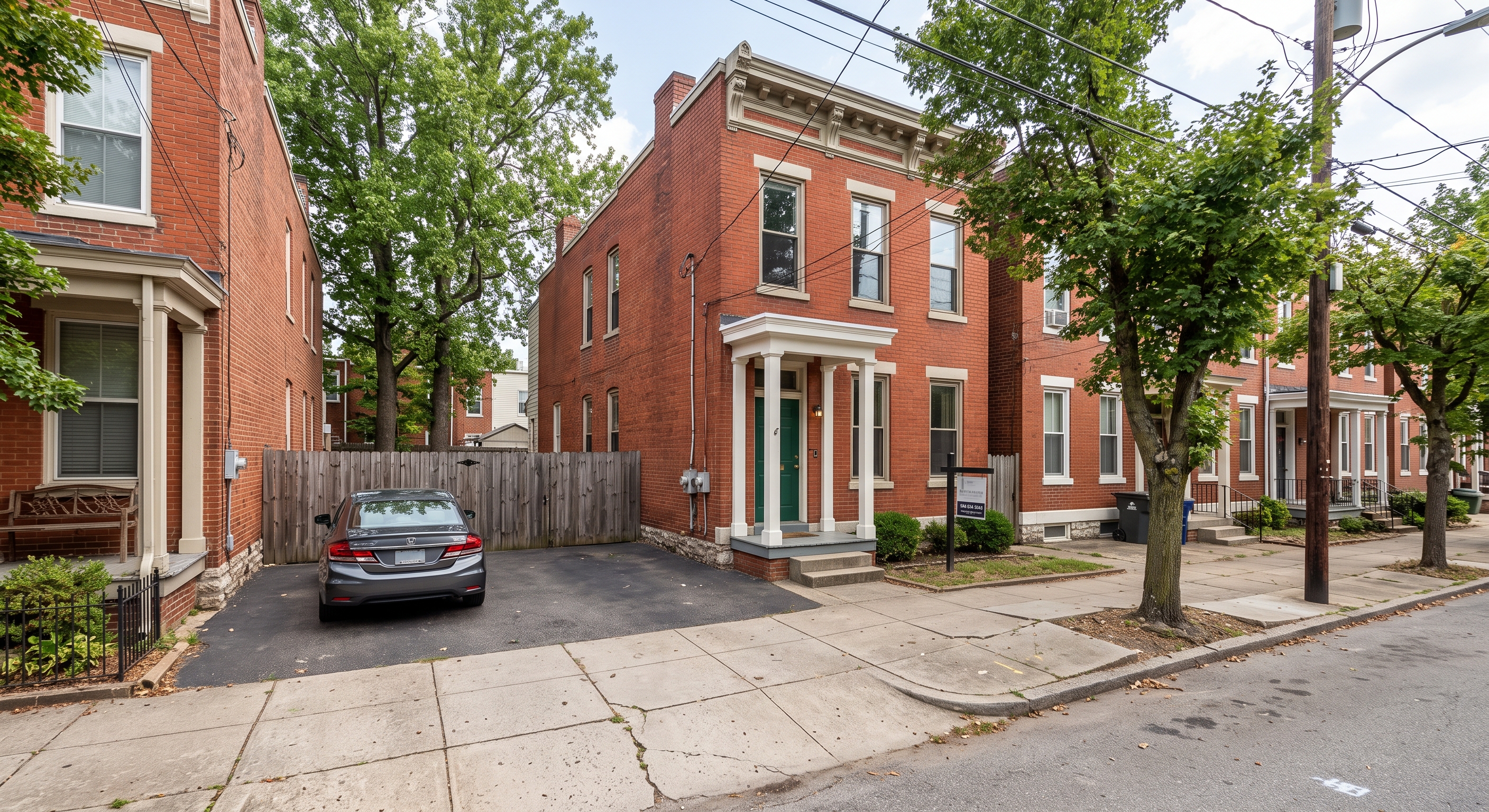
Off-street parking can be a materially different rental feature in Richmond City than it is in a suburban market. A private driveway, parking pad, or garage may compete against rentals where residents depend on street parking, and some parts of the city operate within residential parking districts.
PMI James River's Richmond City rental marketing process looks at whether a feature changes renter response, while the Richmond rental analysis framework determines whether comparable properties support a higher rent. Parking needs both tests because its value can appear in demand even when the local rent premium cannot be isolated cleanly.
Key Takeaways
- Richmond City's own parking program recognizes limited parking in several neighborhoods and restricts designated streets through Residential Parking Districts.
- Private off-street parking can therefore solve a locally meaningful renter constraint without automatically supporting a fixed monthly premium.
- Zillow's national rental data shows unusually strong listing engagement for off-street parking.
- A garage, driveway, parking pad, and residential parking permit are different products and should not receive the same adjustment.
- No verified Richmond City-specific dollar premium is currently strong enough for PMI James River to recommend a universal parking adjustment.
Parking Is a Local Scarcity Question in Richmond City
The City of Richmond explicitly describes limited parking as a concern in some neighborhoods and operates Residential Parking Districts to restrict parking on designated streets.
The City's current Parking Enterprise information lists districts in the Fan, Carver, Randolph, South Mulberry, and Jackson Ward. Renters applying for residential permits must provide a signed lease and obtain the required property-owner or landlord approval.
That does not mean every rental in those areas has a parking problem or that private parking guarantees more rent. It does establish a local condition that a national amenity list cannot capture: street-parking access can involve limited supply and an administrative permit system.
A private parking space removes some of that dependence. The owner still needs comparable rental evidence before assigning it a dollar premium, but the feature can have real demand value even when the rent difference is difficult to isolate.
Demand Evidence Is Stronger Than a Fixed Rent Adjustment
National renter data strongly supports off-street parking as a demand feature.
Zillow's 2024 analysis of nearly 5.6 million rental listings found that listings mentioning off-street parking received 85% more saves and 103% more shares per day after controlling for home type, region, listing month, rent, rent per square foot, and hundreds of other listing features.
A 2026 Apartments.com survey of 14,066 renters found that 42% considered off-street parking or a garage a must-have.
Those studies do not establish how many dollars a Richmond City renter will pay for a driveway. They show that parking can affect whether a listing remains in consideration.
PMI James River sees the same distinction in Richmond single-family rentals. When comparable homes provide dependable off-street parking, a property without it can face a narrower prospect pool even when there is no clean monthly rent adjustment.
The broader Richmond rental-feature framework treats that demand effect as economically important without converting engagement statistics into an unsupported local rent premium.
A Garage, Driveway, Parking Pad, and Permit Are Not the Same Feature
Parking value should be described precisely.
An attached garage provides enclosed parking and storage. A driveway or parking pad provides a dedicated off-street space without the same storage or weather protection. A residential parking permit provides access to eligible street parking under City rules, not a guaranteed private space.
National apartment research suggests that the distinction matters. ApartmentAdvisor's 2024 analysis of more than 250,000 listings associated garage parking with an 8.02% higher listing rent and generic parking with a 1.46% increase after its statistical controls.
Those national apartment percentages should not be applied to Richmond City houses. They reinforce a narrower point: an owner should identify exactly what type of parking the property provides before comparing it with another rental.
A useful Richmond City comp review should ask:
- Is the space private and reserved for the rental?
- Is it a garage, driveway, parking pad, or another configuration?
- How many usable spaces are available?
- Do the closest competing rentals rely on street parking?
- Is the property inside or near a Residential Parking District?
- Do otherwise similar rentals with private parking consistently price or lease differently?
Parking Value May Show Up as Vacancy Protection
An owner may not find a clean $50, $100, or $150 monthly parking premium in direct Richmond City comps. That does not make the feature economically irrelevant.
If prospects repeatedly ask about parking, filter for it, or choose otherwise similar homes that provide a dedicated space, parking is affecting the competitive set. The effect can appear as more inquiries, fewer objections, or a larger pool of renters willing to consider the property.
The owner should look at the leasing funnel rather than forcing a dollar adjustment. If a well-priced Richmond City rental generates interest but parking repeatedly becomes an objection, the property may need to compete through another strength or through price. If private parking is one of the home's stronger differentiators, the listing should present it clearly and the rent analysis should compare it against homes with similar parking utility.
This approach also prevents overpricing. Strong renter preference does not prove that the entire demand advantage can be converted into higher monthly rent.
Frequently Asked Questions
How Much More Rent Is Off-Street Parking Worth in Richmond City?
PMI James River does not currently have strong enough Richmond City-specific evidence to recommend one universal monthly adjustment. The value should be estimated from direct comparable rentals and from the parking conditions surrounding the specific property.
Does a Richmond Residential Parking Permit Replace Private Parking?
No. A residential permit allows eligible parking under the City's district rules. It is not the same as a private garage, driveway, or reserved parking pad.
Which Richmond City Neighborhoods Have Residential Parking Districts?
The City's current Parking Enterprise information lists the Fan, Carver, Randolph, South Mulberry, and Jackson Ward districts. Owners should verify the current district boundaries and rules for the specific property before relying on permit availability.
Should an Owner Charge More Just Because a Rental Has a Driveway?
Not automatically. A driveway can improve renter demand, but the asking rent still needs support from comparable properties. If otherwise similar rentals with private off-street parking consistently achieve more rent, that local evidence can support an adjustment.
Richmond City Parking Value Depends on the Block and the Competition
Off-street parking has a stronger local case in Richmond City because some renters are choosing among homes where street parking is limited or regulated. That makes private parking more than a generic amenity label.
The correct value still comes from the property itself. Owners should compare the type of parking provided, the surrounding street-parking conditions, and the closest competing rentals before translating the feature into an asking-rent decision.
Next Step
PMI James River can compare a Richmond City rental against current competing properties, parking configuration, likely rent, and vacancy exposure. Start with a free rental analysis before assigning a monthly premium to off-street parking.
Published August 23, 2026