
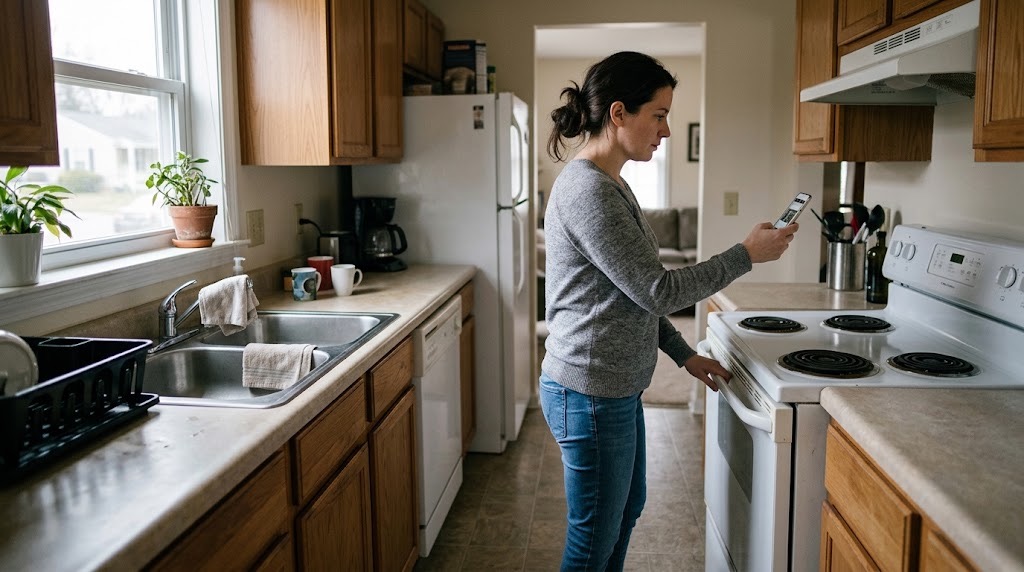
If your oven will not heat, an electric burner stays cold, a gas burner will not light, or the cooktop keeps clicking, start by identifying whether the appliance is gas or electric and whether the problem affects one cooking area or the entire appliance. Normal controls, removable burner parts, and recent spills can sometimes explain the problem without any repair work.
This guide covers the safe checks PMI James River residents can make before submitting a maintenance request. If you smell gas, see smoke or sparking, or have another immediate safety concern, stop troubleshooting. For other household issues, use our resident troubleshooting library or the broader Resident Maintenance page.
Start by Checking What Is Affected
Before changing anything, note whether the problem affects the oven, one burner or element, several burners, or the entire appliance.
- Confirm whether the range or cooktop is gas or electric.
- Check the normal control panel for Control Lock, Delay Start, Sabbath, Demo, or another selected mode.
- Take a photo of any error code, blinking light, or unusual control-panel message.
- Note whether the problem began after cleaning, a spill, a power interruption, or another obvious event.
- If only one burner or element is affected, note which one.
Do not remove panels, access wiring, open gas components, bypass safety devices, or attempt internal repairs.
If You Smell Gas
If you smell natural gas or suspect a gas leak, stop using the appliance and do not continue troubleshooting burners or ignition.
Leave the area and follow our gas smell safety guidance. Do not repeatedly try to ignite the burner, operate electrical switches in the affected area, or attempt to locate or repair a gas leak yourself.
If a Gas Burner Keeps Clicking or Will Not Light
If there is no gas odor and the clicking began after cooking, cleaning, or a spill, moisture around the burner can interfere with normal ignition.
- Turn the affected burner control fully off.
- Allow the burner area to cool completely.
- If the burner cap is an ordinary removable part, confirm that it is sitting flat and correctly centered on the burner head.
- If the burner area is damp from cleaning or a spill, allow it to dry completely before trying it again.
- Wipe away ordinary accessible residue only after the cooktop is off and cool.
Whirlpool demonstrates ordinary gas burner cap placement. The cap should sit normally and evenly rather than being forced into position.
Do not insert pins, needles, wire, or other objects into burner ports. Do not work on the igniter or any gas component. If the burner still does not ignite normally after the cap is seated and the area is fully dry, report the problem.
If an Electric Burner or Element Is Not Heating
For an electric range, first determine whether the problem affects one element or the entire appliance.
- Make sure the correct control is being used for the affected element.
- Check for a normal control lock or other user setting.
- If the cooktop uses an ordinary removable coil element, wait until everything is completely off and cool and confirm that the coil is seated normally in its receptacle.
- Do not force a loose element or continue using one that sparks, appears damaged, or will not sit normally.
Do not remove a glass cooktop, open receptacles, expose wiring, or perform electrical repairs. If you see sparking, smoke, a burning smell, a scorched connection, or another electrical warning sign, stop using the appliance.
If the Oven Will Not Heat or Finish a Cycle
If the cooktop works but the oven does not, start with the oven controls.
- Confirm that Bake or another intended cooking mode is selected.
- Check the set temperature.
- Look for Control Lock, Delay Start, Sabbath, Demo, or another mode that can change normal operation.
- Take a photo of any error code or control-panel message.
- Note whether the oven appears to start but never heats, heats only partially, or stops during the cycle.
Do not remove oven panels, touch heating elements, attempt to access an igniter, or troubleshoot internal gas or electrical components.
When to Stop Using the Appliance
Stop using the oven, range, or cooktop if you notice:
- a gas smell;
- smoke or an active fire;
- sparking that is not normal burner ignition;
- a burning electrical smell;
- an unusually hot cord, plug, outlet, or electrical connection; or
- an abnormal flame condition that appears unsafe.
Do not continue testing the appliance to see whether the condition repeats.
What to Include in a Cooking Appliance Maintenance Request
If the safe checks above do not resolve the problem, the issue returns, or you cannot proceed safely, submit a request through the PMI James River resident portal.
Include:
- whether the appliance is gas or electric;
- whether the problem affects the oven, one burner or element, several burners, or the entire appliance;
- a photo of the controls and any error code;
- whether the problem began after cleaning, a spill, or a power interruption;
- for a gas burner, whether it clicks, lights briefly, or does not ignite at all;
- whether a removable burner cap is seated normally and the burner area is fully dry;
- for an electric appliance, whether other elements or oven functions still work; and
- when the problem began and whether it happens every time.
Those details help us understand which part of the cooking appliance is affected and route the request appropriately without asking you to repeat troubleshooting you have already completed.
Published: September 2, 2026