
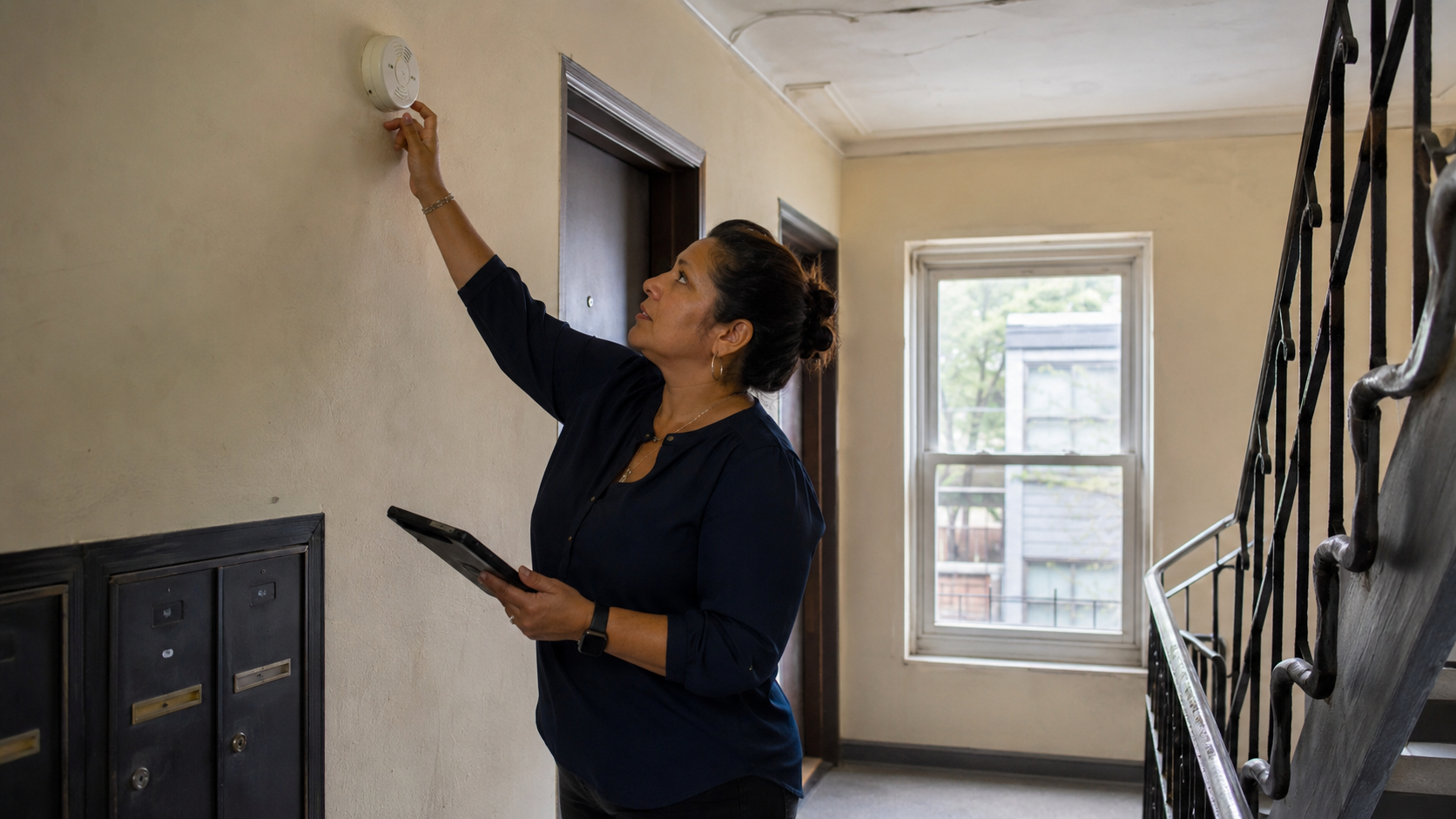
Richmond City has a residential rental inspection framework, but it does not create routine municipal inspections for every rental property in the city. City Council adopted Ordinance 2025-161 on November 10, 2025, creating the Residential Rental Inspection Program, or RRIP. The ordinance itself did not designate a rental inspection district, and our August 28, 2026 review did not locate a later Council action establishing one.
For Richmond City owners, inspection readiness fits alongside the same condition documentation and repair follow-up handled through structured rental maintenance and inspection services. The underlying Virginia legal framework is part of the broader landlord-tenant law framework for Virginia owners.
The practical questions are narrower: which Richmond properties can be included in a district, how Council creates one, how quickly inspections can begin, what happens after a property passes, and what an owner may be charged.
Key Takeaways
- Richmond adopted its RRIP framework in November 2025, but the ordinance itself did not establish an inspection district.
- A Richmond rental inspection district cannot include a building containing fewer than three dwelling units.
- If a district includes more than one parcel, those parcels must have a common owner or common manager.
- An initial inspection cannot occur sooner than 90 days after the applicable district is established.
- Initial and periodic inspections carry no fee under the Richmond ordinance, but follow-up inspections after cited violations can carry a reinspection fee.
- New and compliant units can receive 48-month exemptions, although a sale can change the inspection picture.
In This Guide
- What Richmond City Actually Adopted
- Which Properties Can Be Included
- What Happens After a District Is Created
- Inspection Frequency and Exemptions
- What Richmond's Fee Rules Say
- Municipal Inspections Versus Routine Evaluations
- What Richmond City Owners Should Do
What Richmond City Actually Adopted
Richmond City Council adopted Ordinance 2025-161 to establish the legal framework for a Residential Rental Inspection Program.
Creating the program and creating an inspection district are separate actions. Council must separately establish a qualifying district before the district inspection provisions apply there.
Before establishing a district, Council must make findings that inspections are needed to protect health, safety, and welfare; that the rental units are blighted, deteriorating, or need inspection to prevent deterioration; and that inspection is necessary to maintain safe, decent, and sanitary conditions.
The ordinance also requires a public hearing before a district is established or amended. A district created under the Richmond ordinance expires after five years unless Council later reestablishes it.
For owners who want the statewide context and a comparison with Henrico, Chesterfield, Hanover, and other Virginia approaches, the broader Richmond Metro rental inspection guide now owns that material.
Which Properties Can Be Included
One of Richmond's most important local limitations is the building-size threshold. The ordinance states that a rental inspection district cannot include a building containing fewer than three dwelling units.
A triplex therefore meets the unit-count threshold. A fourplex or larger multifamily building can also potentially qualify. Under the district limitation in Ordinance 2025-161, a single-family rental or duplex cannot be included in a rental inspection district.
There is another local limitation when Council proposes a district containing multiple parcels. Those parcels must have a common owner or common manager. The ordinance also addresses related entities that share a parent entity or the same person managing day-to-day operations.
That makes Richmond's framework much narrower than a general neighborhood inspection program covering every unrelated rental property in a geographic area.
What Happens After a District Is Created
Once Council establishes a rental inspection district, the Building Department must make reasonable efforts to notify owners of residential rental dwelling units in that district, or their designated managing agents, and provide information about the program and the owner's responsibilities.
The City cannot immediately begin initial inspections. Richmond's ordinance provides that the initial inspection may occur no sooner than 90 days after the district is established.
The inspection determines whether the dwelling is being used for residential rental purposes and whether it complies with Building Code provisions affecting safe, decent, and sanitary living conditions.
For a multifamily development containing more than 10 dwelling units, the ordinance uses sampling. The inspection includes at least two units but no more than 10 percent of the total development.
That sample does not necessarily cap the City's review. If qualifying Building Code violations are found, the Building Official may inspect additional units as necessary to enforce the code. Preparing only the units an owner expects to be sampled is therefore weak risk control.
Inspection Frequency and Exemptions
After the initial inspection, Richmond may conduct periodic inspections of a nonexempt unit, generally no more than once each calendar year. Follow-up inspections needed to correct cited violations are separate from that periodic-inspection limit.
New Dwelling Units
A newly constructed residential rental dwelling unit receives a 48-month exemption beginning on the date its certificate of occupancy is issued.
Units That Pass Inspection
If an initial or periodic inspection finds no Building Code violation affecting safe, decent, and sanitary living conditions, the owner receives a 48-month exemption for that unit.
The exemption can be revoked if a qualifying Building Code violation develops during the exemption period.
A Sale Can Change the Inspection Picture
After the sale of a residential rental dwelling unit in an inspection district, Richmond may conduct a periodic inspection notwithstanding an exemption granted to the prior owner.
Inspection status should therefore be part of acquisition due diligence for a property located in a designated district rather than something a buyer assumes transfers unchanged with the property.
Professional Management Is Not an Automatic Exemption
Virginia law permits localities to create certain exemptions for professionally managed rentals. Richmond's adopted ordinance does not create an automatic professional-management exemption.
Professional management can still improve inspection readiness through consistent records, repair follow-up, vendor coordination, and property-condition oversight. It should not be confused with a legal exemption from the program.
What Richmond's Fee Rules Say
Richmond's ordinance is more precise than saying the program is simply "free."
- Initial inspection: no fee.
- Periodic inspection: no fee.
- Follow-up inspection after cited violations: the City's applicable reinspection fee may apply.
The distinction matters because the financial consequence is concentrated on follow-up after violations rather than the initial or routine periodic inspection.
For an owner, the practical response is not to manage toward an inspection date. It is to address known Building Code, safety, and property-condition problems through the normal maintenance process so repeat City visits are less likely to become necessary.
Municipal Inspections Versus Routine Evaluations
Richmond's RRIP is a government Building Code enforcement process. A routine owner or property manager evaluation serves a different purpose: documenting condition, identifying maintenance risk, and deciding what requires follow-up. RRIP is also only one part of the City's broader local compliance layer; zoning, permits, property-maintenance enforcement, short-term-rental rules, and other Richmond-specific requirements are covered in our Richmond City rental-property codes and zoning guide.
Our guide to rental property evaluation frequency addresses the normal cadence and triggers for condition reviews. The broader proactive maintenance framework explains why maintenance should be managed before an outside inspection becomes the deadline.
A municipal inspection notice is easier to handle when the owner already has current condition records, a maintenance history, documented vendor work, and clear repair closeout.
What Richmond City Owners Should Do
- Confirm the building's unit count. Buildings with fewer than three dwelling units are outside the district limitation adopted in Ordinance 2025-161.
- Check current Council activity. The program framework and an actual inspection district are separate things.
- Read any City notice against the exact property. Confirm the district, establishment date, inspection timing, and any existing exemption rather than relying on a general description of the program.
- Keep property-condition records current. A City inspection should not be the first time an owner learns about an unresolved leak, unsafe railing, electrical concern, common-area issue, or deferred repair.
- Close repair loops. Records should show what was reported, what was inspected, what work was authorized, and when the work was completed.
- Review inspection status when buying or selling. A transfer can affect inspection exposure even when the property previously qualified for an exemption.
Prepare the Property Before an Inspection Becomes the Deadline
Richmond's Residential Rental Inspection Program is narrower than a citywide rental inspection mandate. The ordinance creates a process for Council to establish qualifying districts, limits those districts in important ways, delays initial inspections for at least 90 days after district creation, and provides substantial exemptions for new and compliant units.
The best preparation is ordinary good property management: know the condition of the building, document issues, address needed repairs, and preserve the record showing that work was completed.
PMI James River coordinates maintenance, property evaluations, documentation, vendor work, and local compliance through its Richmond property management process. That does not create an automatic RRIP exemption, but it gives owners a functioning compliance and maintenance system before an inspection notice arrives.
Published: August 24, 2026
Updated: September 23, 2026