
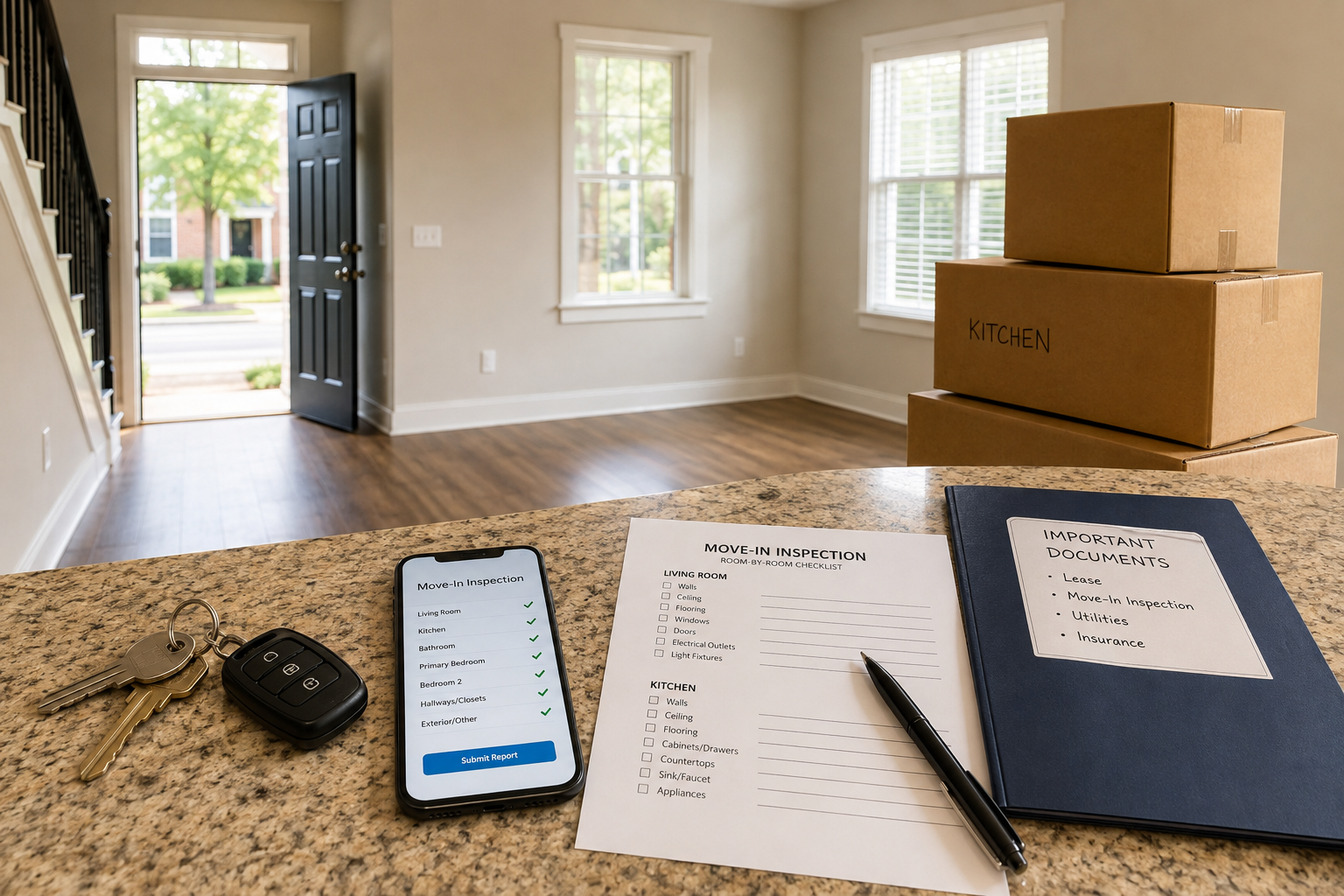
Move-in day gets busy fast. Keys, boxes, movers, Wi-Fi, groceries, and a dozen small decisions all arrive at once. Before you start unpacking your Richmond rental, take a few minutes to document the home and make sure the basics work.
If you are moving into a PMI James River home, bookmark our Resident Resources page and make sure you can access your resident portal. Those are the two places you are most likely to need once the lease is underway.
Your first five move-in priorities are simple:
- Complete the move-in inspection report before unpacking.
- Check every key, remote, fob, and access code.
- Confirm utilities and basic systems are working.
- Locate the breaker panel, water shutoff, thermostat, and alarms.
- Set up the resident systems and records you will use during the lease.
1. Complete the Move-In Inspection Before You Unpack
Do this before furniture placement and most unpacking. Empty rooms make it much easier to see floors, walls, cabinets, appliances, fixtures, doors, and windows clearly.
PMI James River lets residents complete the move-in inspection electronically through an app or on paper. The format may differ, but the job is the same: work through the home consistently and create a clear record of the condition in which you received it.
Photos are part of that same record. As you move room by room, note and photograph anything that was already there, such as scratches, stains, chips, dents, wall marks, worn flooring, damaged blinds, cabinet damage, or appliance condition. Small cosmetic items are still worth recording even when they do not need repair.
If you prefer a paper guide, PMI James River also provides a room-by-room move-in checklist to help you work through the home systematically.
PMI James River uses a resident-prepared move-in report process and gives residents five days to complete and return the report. Follow the instructions that came with your move-in materials, and do not wait until boxes and furniture hide the surfaces you are trying to document.
Key point: The move-in inspection documents condition. If something actually needs repair, also submit a maintenance request through the resident portal so there is a separate work order for us to act on.
A clear starting record makes later comparisons much easier. It also keeps two different things separate: what the home looked like when you received it, and what needs maintenance attention now.
2. Check Every Key, Remote, Fob, and Code
Before the movers leave, make sure every access item you were given actually works.
Check the front and back doors, mailbox key, building or gate fobs, garage remote, storage areas, and any other access devices that came with the home. Finding a bad key or dead remote in the middle of the afternoon is much easier than finding it late at night with a car full of belongings.
If the home has a garage keypad, change the garage access code when you move in. Keep the new code somewhere secure and make sure the people in your household who need it have the correct one.
3. Confirm Utilities and Basic Systems Are Working
Your required utilities should already be active according to your move-in instructions. Move-in day is still the right time to confirm that the home is actually functioning as expected.
Turn on lights. Run hot and cold water. Flush the toilets. Check that the refrigerator is cooling. Make sure the thermostat responds. If the home has gas service, confirm that the systems that depend on it are operating normally.
Utility setup is one of the places where Richmond-area rentals can differ substantially. Richmond City, Henrico, Chesterfield, Hanover, and Petersburg do not all handle water, sewer, gas, trash, and other services the same way, and HOA or condo arrangements can add another layer. If anything about your setup is unclear, use our Richmond-area utilities setup guide rather than guessing.
4. Find the Controls and Alarms Before You Need Them
You do not need to become an expert on the house. You should know where the basic controls are before a routine problem sends you searching through closets and utility rooms.
Find the thermostat and learn its basic settings. Locate the main water shutoff if it is accessible. Find the electrical breaker panel and look over the labels so you have a general idea of which breakers serve the kitchen, bedrooms, HVAC equipment, garage, and other major areas. You do not need to flip breakers just to test them.
Also locate the smoke and carbon-monoxide alarms. The U.S. Consumer Product Safety Commission recommends pressing the test button to make sure smoke and CO alarms are working properly. Its smoke and CO alarm guidance is a useful reference if you need a refresher.
Richmond-area rental homes vary widely in age and layout. Panels, shutoffs, utility equipment, and controls are not always in the same places from one property to the next. Five minutes spent locating them now can save a lot of searching later.
5. Set Up Your Resident Systems and Make the First Night Easy
Make sure you can log into your resident portal before you actually need to pay rent or submit a request. Check that your email address and phone number are current, and decide whether you want to set up recurring rent payments.
Keep your lease, completed move-in inspection report, move-in photos, utility confirmations, insurance information, and property-specific instructions together. A cloud folder works well because you can still find it if the paper copy disappears into a moving box.
It is also worth writing down the little details that become surprisingly hard to remember during a move: trash and recycling days, mailbox location, assigned parking, HOA or building instructions, package-delivery location, and any gate or amenity information that applies to your home.
Then make the first night easy. Keep one clearly marked bag or box with sheets, towels, toiletries, chargers, medications, a change of clothes, trash bags, paper towels, pet supplies if needed, and whatever you want for breakfast the next morning. Decorating and perfect furniture placement can wait.
Start With the Record, Then Settle In
The best time to document your rental is before the furniture covers the floors and walls. Complete the move-in report first. Then check access, utilities, controls, alarms, and your resident systems. Once those pieces are handled, you can unpack knowing the important first-day work is done.
For portal access, maintenance requests, move-in resources, payment information, pet information, and other resident tools, keep the PMI James River Resident Resources page handy throughout your lease.
Published: August 7, 2026
Updated: August 8, 2026