
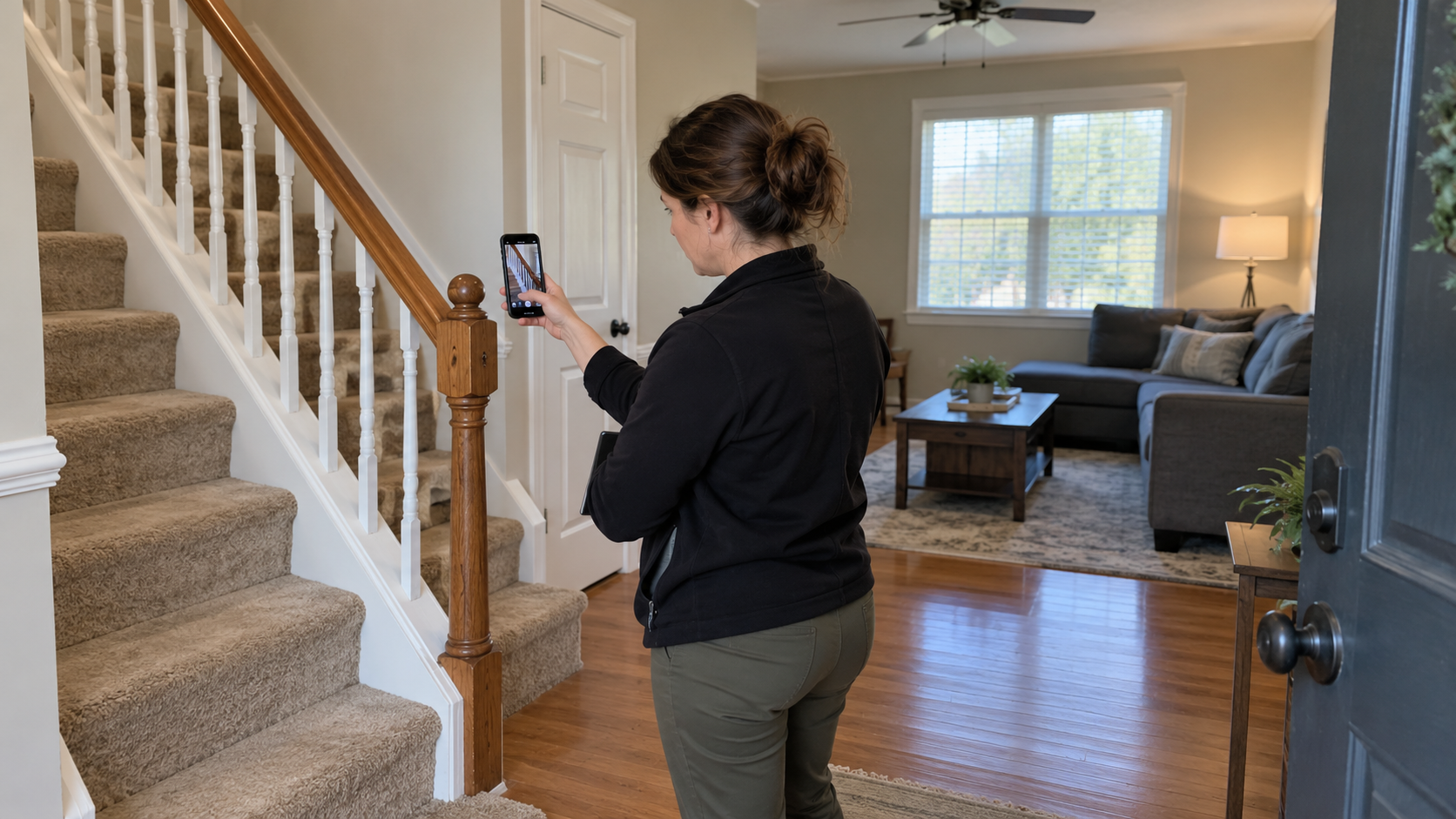
A useful rental property inspection checklist should do more than produce a long list of rooms and fixtures. It should help the owner answer three questions: What is the observable condition today? What changed from the last reliable record? What needs a next step?
This checklist is for an ordinary occupied-property condition evaluation, not a professional home inspection or technical diagnosis. PMI James River's maintenance services connect condition information to a broader repair process, while the Rental Maintenance Operations framework explains why material findings should move into a work order, vendor review, owner decision, monitoring plan, or documented closeout.
Key Takeaways
- Start with the prior condition record and recent maintenance history before walking the property.
- Use wide photographs for context, then close-ups for specific conditions.
- Pay particular attention to water, moisture, drainage, HVAC, plumbing, electrical, stairs and rails, doors and windows, appliances, and other property-specific systems.
- Describe observable facts rather than guessing at cause.
- A material finding is not complete until it has a documented next step.
In This Guide
- Before the evaluation
- Exterior and site checklist
- Interior checklist
- How to document findings
- What happens after something is found
- Scope and boundaries
Before the Property Evaluation
The strongest evaluations start with the file, not the front door. Review the last useful condition record, recent work orders, repeat repair history, and any known property-specific concerns before deciding what deserves special attention.
- Most recent move-in or occupied-condition record
- Open or recently completed work orders
- Known leak, moisture, drainage, pest, HVAC, appliance, or electrical history
- Recent storm, freeze, or water events
- Property-specific systems such as wells, septic, crawl spaces, sump equipment, fireplaces, or detached structures
- The lawful access and notice plan for the visit
Virginia Code § 55.1-1229 permits landlord entry for inspection while limiting abuse of access and generally requiring notice of intent to enter except in emergencies or when notice is impractical. PMI James River's separate guide to Virginia rental access and documentation covers that issue in more depth.
Exterior and Site Checklist
Water Routing and Roofline
- Look from the ground for obvious roofline changes or visible damage.
- Check gutters and downspouts for separation, overflow evidence, or discharge toward the structure.
- Look for erosion, ponding, washout, or grading changes that could hold water near the home.
- Document visible staining or deterioration around exterior penetrations.
Walls, Trim, Doors, and Windows
- Look for visible siding, masonry, trim, or paint deterioration.
- Check exterior doors and accessible windows for damage or changed condition.
- Note vegetation contacting siding, roofs, windows, or equipment.
Walkways, Steps, Decks, and Rails
- Look for changed walking surfaces, damaged steps, loose components, or obvious trip conditions.
- Observe porch, deck, stair, guard, and handrail condition without making structural conclusions beyond what is visible.
- Document fence and gate damage when it affects the property.
Site and Equipment
- Check exterior HVAC equipment for obvious obstruction, impact damage, or vegetation interference.
- Look for visible tree or limb conditions affecting the structure or access.
- Document detached structures, exterior lighting, drainage features, and other property-specific items when relevant.
Interior Checklist
Ceilings, Walls, Floors, Doors, and Windows
- Take wide room photographs before close-ups.
- Look for new staining, discoloration, damaged finishes, loose materials, or changed floor conditions.
- Check doors and windows for readily visible damage, deterioration, or water-related clues.
- Compare known prior conditions instead of relying on memory.
Kitchens and Bathrooms
- Look under accessible sinks for visible leaks, staining, swelling, or deterioration.
- Observe faucet, drain, toilet, tub, and shower areas for visible leakage or moisture.
- Check visible caulk or sealant deterioration where it affects water control.
- Document cabinet or flooring changes near plumbing.
HVAC and Ventilation
- Document the visible condition of supplied equipment that can be safely observed.
- Look for visible condensate, staining, blocked airflow, or another changed condition.
- Note filter condition when review is relevant and the filter is safely accessible.
- Do not diagnose system performance from appearance alone.
Water Heater and Plumbing Areas
- Look for visible leakage, corrosion, staining, or changed conditions around accessible equipment and piping.
- Confirm that important service access has not become blocked.
- Route technical questions to the appropriate plumbing professional rather than guessing at failure cause or remaining life.
Electrical and Life-Safety Items
- Look for damaged or missing switch and outlet covers, visible scorching, loose fixtures, or another observable change.
- Keep electrical panels accessible for qualified service.
- Document supplied smoke and carbon monoxide alarm presence and readily visible damage or missing devices.
- Do not remove electrical covers or perform technical diagnosis during an ordinary condition walkthrough.
Appliances and Connections
- Document visible condition of owner-supplied appliances.
- Look for visible supply-line, drain-line, or connection concerns around dishwashers, washing machines, refrigerators, and other applicable equipment.
- Record make, model, or serial information when it improves the property asset record.
Moisture and Pest Clues
- Document visible moisture, staining, or mold-like material without guessing at source or making unsupported health conclusions.
- Look for readily visible pest evidence or entry conditions.
- Route the underlying condition to the appropriate maintenance or specialist process.
How to Document the Evaluation
- Start wide. Establish where the condition is located before taking close-ups.
- Compare consistently. Reuse useful viewpoints from earlier reports where practical.
- Describe what is visible. “Brown staining at lower cabinet panel” is stronger than guessing that a hidden pipe is leaking.
- Record change. Note whether the condition appears new, unchanged, improved, or unresolved when the prior record supports the comparison.
- Respect privacy. The purpose is documenting the rental property, not searching personal belongings.
The companion article on what routine property evaluations can reveal explains why comparable records are useful beyond the walkthrough itself.
What Happens After Something Is Found?
An inspection note is not closure. A material condition should be routed to the appropriate next step. That may be a work order, qualified vendor diagnosis, owner decision, request for more information, monitoring note, or documented closure when no further action is warranted.
The practical rule is simple: if a condition matters enough to flag, the record should show who owns the next step and what closes the loop.
Do Not Confuse This Checklist With Other Types of Inspection
This article is about an ordinary owner or property-manager condition evaluation. It is not a substitute for:
- a professional pre-purchase home inspection;
- a municipal rental inspection;
- a specialist diagnosis;
- a move-in condition report governed by Virginia law; or
- a move-out process governed by Virginia security-deposit requirements.
HUD's NSPIRE framework is useful as a completeness reference because it organizes physical conditions across units, interiors, and exterior areas. It should not be read as a statement that ordinary private Richmond rentals are universally governed by HUD's inspection program.
Government rental inspections are addressed separately in PMI James River's Richmond Metro rental inspection program guide.
How Often Should This Checklist Be Used?
The checklist does not create the cadence. Timing should reflect the property, existing records, maintenance history, prior findings, changed conditions, and other legitimate property touchpoints. See the companion guide to rental property evaluation frequency in Richmond.
Can a Resident Complete Part of This Evaluation?
Potentially. A guided resident submission can capture photographs and condition information without requiring every review to be performed in person. It has limits when a condition requires diagnosis, access to an area the resident should not enter, or independent observation. Those tradeoffs are covered in resident-led rental property evaluations.
Turn Observations Into Decisions
The strongest checklist is not the longest one. It is the one that consistently captures material property conditions, compares them with the existing record, and produces an appropriate next step.
Owners who want condition documentation, vendor coordination, and maintenance follow-up managed inside a full-service system can review PMI James River's Richmond property management services.
Published: October 27, 2026