A routine rental property evaluation is useful because some of the most important property information never becomes a maintenance request. A slow leak may be hidden inside a cabinet. A prior repair may have stopped the immediate problem but left a related condition to watch. Drainage may have changed after a storm. A resident may notice a small issue and decide it is not worth reporting.
The value is not simply “catch problems early.” The real value is better decision information: what changed, what needs follow-up, what can be monitored, what should be routed to a specialist, and what belongs in the owner’s longer-term plan. PMI James River's maintenance services fit into that broader operating system, while the Rental Maintenance Operations framework explains why observations only matter when they lead to clear next steps and documented closeout.
Key Takeaways
- Routine evaluations can reveal maintenance conditions that residents did not notice, did not understand, or did not report.
- Comparable photographs and notes help distinguish a new condition from something that was already present.
- Property-condition records can reveal whether a repair appears resolved, still needs monitoring, or deserves specialist follow-up.
- Current condition information can improve renewal, maintenance, vendor, reserve, and capital-planning decisions.
- An evaluation is not a technical diagnosis and is not proof that no hidden defect exists.
In This Guide
- Unreported maintenance
- Changes that memory misses
- Repair follow-up
- Owner and renewal decisions
- Richmond-area property differences
- What an evaluation cannot tell you
1. Maintenance Problems That Were Never Reported
Residents live in the property every day, so they are an important source of condition information. But silence is not the same as a verified property condition.
Some issues are easy to miss: staining behind stored items, a small leak under a sink, moisture in a closet, a damaged downspout, slow deterioration around a tub or shower, or HVAC condensate that appears first as a small discoloration. Other issues are noticed but not reported because the resident assumes they are minor or does not want to create a maintenance visit.
That distinction matters because quiet properties can still develop expensive problems. PMI James River's article on low-complaint residents and unreported maintenance explains why owners should not use complaint volume as a proxy for property condition.
2. Changes That Are Hard to Judge From Memory
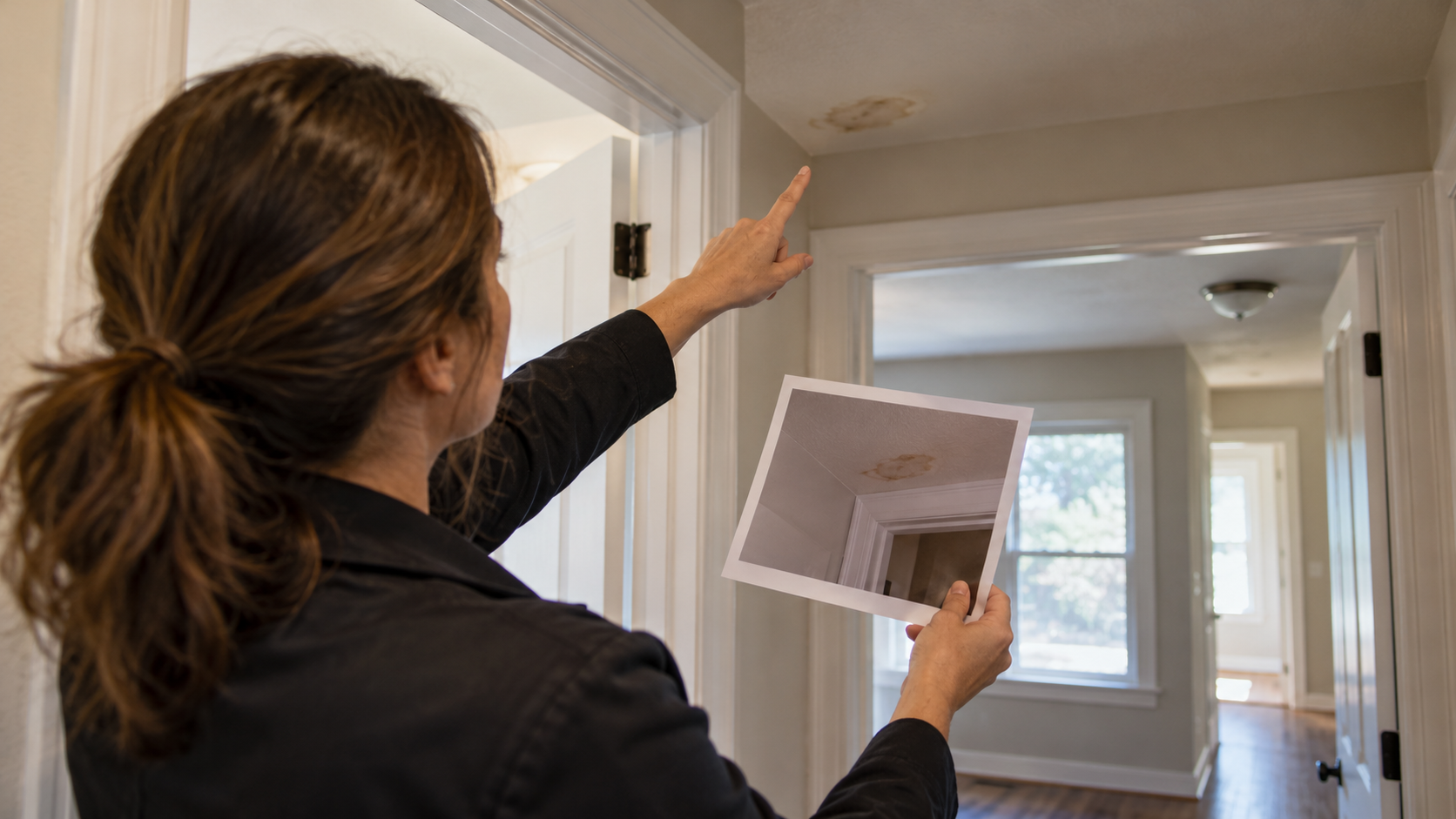
Gradual deterioration is difficult to evaluate from memory. A ceiling stain may look familiar, but is it larger? A floor seam may have been imperfect at move-in, but has it opened? Was the deck rail already loose? Was discoloration around a plumbing fixture present before the last repair?
A consistent condition record makes those questions easier to answer. Wide photographs establish location and context. Close-up photographs document the specific issue. Repeating useful viewpoints over time can show whether a condition is stable, improving, or changing.
The companion Rental Property Inspection Checklist for Richmond Landlords focuses on what to observe and how to create a usable record.
3. Repairs That Need Another Look
A completed work order usually means the immediate service request was addressed. It does not automatically answer every related property question.
A plumber may stop an active leak while damaged cabinet material still needs a decision. A drainage correction may need observation during a later rain event. An appliance may work during a technician visit and fail again under normal use. A recurring HVAC or plumbing symptom may look very different when the latest report is compared with earlier service history.
The goal is not to reinspect every repair. It is to recognize when the repair history itself creates a reason for follow-up.
A good property record should make it possible to see what was reported, what the vendor found, what was approved, what was completed, and whether another action remained open.
4. Information That Improves Owner and Renewal Decisions
Property condition is one input in a larger ownership decision. It should not be treated as a stand-alone verdict about a resident or a lease.
For renewal decisions, PMI James River considers factors such as payment history, lease compliance, property condition, maintenance history, current market rent, and lease-expiration timing together. A current condition record can show whether work should be planned before another term, whether a recurring maintenance issue needs a different solution, or whether the property is entering the next year with an unresolved item.
The same information can improve other choices. An owner deciding whether to repair, replace, monitor, budget, or obtain specialist advice benefits from knowing what has actually changed instead of working from a vague recollection of the property.
5. The Useful Clues Change With the Richmond-Area Property
The baseline evaluation can stay consistent while the highest-value clues change by property.
- Richmond City: older housing can make water routing, plumbing history, older building systems, and prior renovations more important to compare over time.
- Henrico and Chesterfield: lot drainage, crawl-space conditions, exterior water routing, and property-specific utility systems can materially change what deserves attention.
- Hanover: larger lots, private well or septic systems, drainage, trees, and utility configuration can add questions that are irrelevant to a fully served urban property.
Those are not assumptions about every home in a locality. They are examples of why a useful evaluation starts with the actual property rather than a generic national checklist.
6. What a Routine Evaluation Cannot Tell You
A routine property evaluation is not a substitute for a qualified specialist.
A visual review can document staining without proving whether the source is a roof leak, plumbing leak, condensation, or an old resolved event. It can document visible electrical damage without diagnosing an electrical system. It can show movement, deterioration, or moisture without determining the underlying technical cause.
Sometimes the correct conclusion is simply: the condition changed, the record is clear, and the next step belongs to the appropriate vendor or specialist.
Resident-led digital evaluations have the same basic boundary. They can provide useful photographs and notes, but they do not automatically replace independent observation or technical diagnosis. Our guide to resident-led versus in-person rental property evaluations explains where each method fits.
How Often Should a Rental Property Be Evaluated?
That is a separate question. Timing should reflect the property’s history, existing records, prior findings, maintenance activity, resident reporting, and changed conditions. The companion guide to rental property evaluation frequency in Richmond addresses the cadence decision directly.
Frequently Asked Questions
Are routine property evaluations mainly for finding lease violations?
No. Lease compliance can matter when something is readily observed, but the broader operating value is property-condition information, including maintenance, deterioration, repair follow-up, and documentation.
Does a clean evaluation prove that nothing is wrong?
No. An evaluation documents observable conditions at a point in time. Hidden defects, future failures, and conditions requiring specialist diagnosis can still exist.
Can vendor visits provide useful condition information?
Yes. A vendor working on one system may observe an adjacent condition that deserves follow-up. That observation can trigger another step, but it should not be treated as a diagnosis outside the vendor’s scope.
Can an owner request an additional evaluation?
Yes. An owner may want additional condition information after a repair, weather event, insurance question, or other property-specific concern. With professional management, scope, timing, access, and any applicable charge can be handled for the particular request.
The Benefit Is Better Information, Not More Inspections
The strongest reason to evaluate an occupied rental is to reduce the number of important property decisions being made from assumptions. Current photographs, observable-condition notes, repair history, and documented follow-up give owners a better basis for deciding what needs action now, what can be monitored, and what should be planned for later.
Owners who want property condition and maintenance information managed inside a broader operating system can review PMI James River's Richmond property management services.
Published: October 27, 2026