
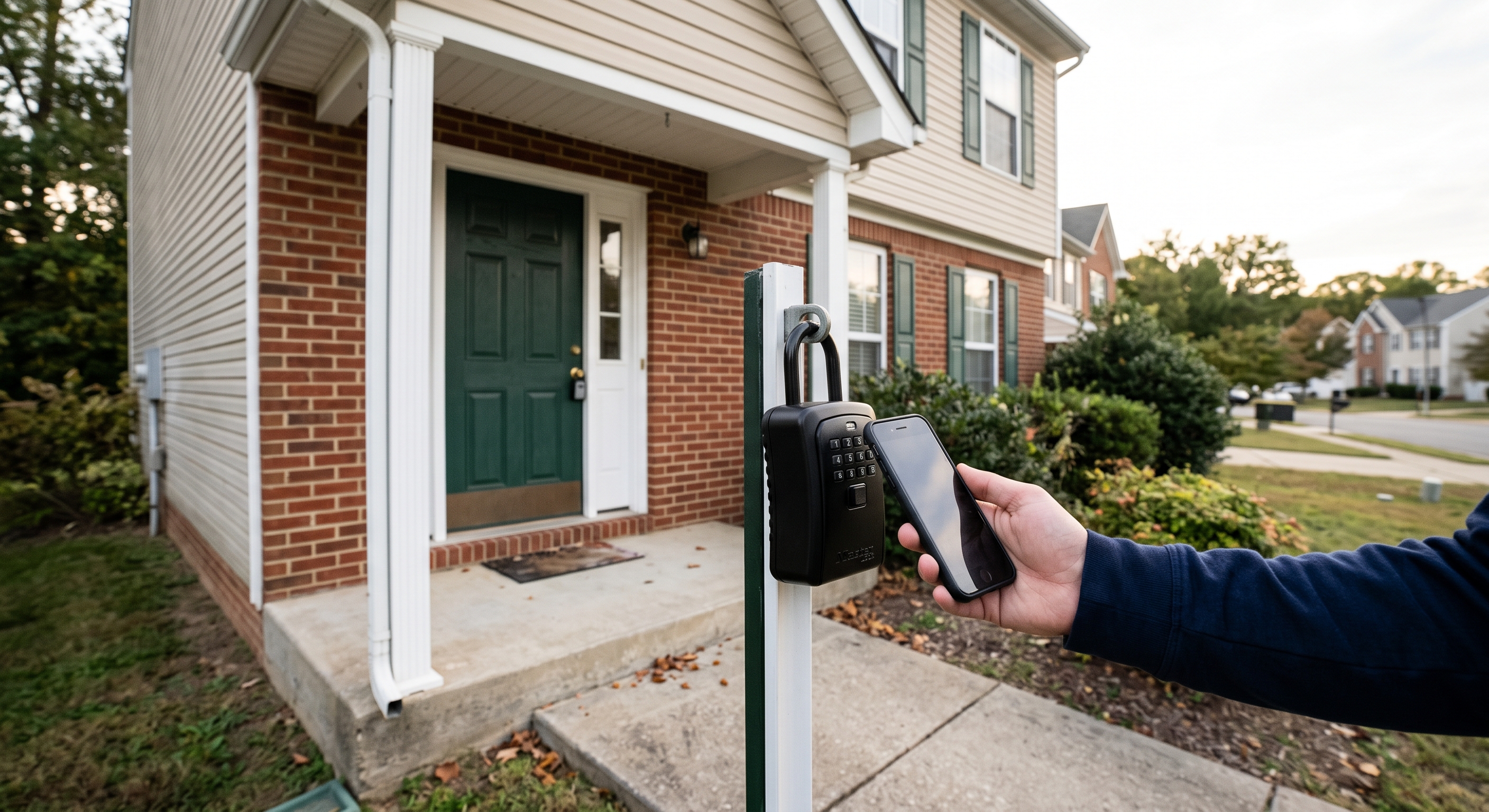
For many vacant Richmond rentals, self-guided tours are a strong option when the showing system verifies the prospect, limits access to a defined window, and follows up after the visit. The main benefit is faster, more flexible access, not a guarantee that the home will lease faster. PMI James River's Richmond property management process uses self-showing and 24/7 online access for pre-screened prospects, with a driver's license and credit card required before access.
Self-guided tours work best as one part of a complete leasing system. The broader rental marketing and vacancy strategy still controls price, presentation, exposure, response time, and screening. Self-showing improves one specific part of that system: getting an interested prospect through the door while interest is still high.
Key Takeaways
- The clearest advantage of self-guided tours is speed from inquiry to showing.
- Secure self-showing should use identity verification, time-limited access, and a record of who entered and when.
- Faster access cannot fix unsupported rent, unfinished condition, weak listing media, or other property-positioning problems.
- Showing data helps separate an access problem from a tour-to-application problem.
- Accompanied showings still make sense when the property or access process needs direct guidance.
The Main Advantage Is Faster Access
Self-guided tours make it easier for interested prospects to see a vacant rental without waiting for an agent's calendar. That can matter when renters are comparing several available homes and are ready to tour now.
RentEngine's Q2 2026 scattered-site leasing analysis found a median 2.3 hours from inquiry to a self-guided showing, compared with 43.4 hours for an accompanied showing. It also reported that showings scheduled more than four days out rarely completed. Self-guided properties rented in a median 27 days versus 28 days for accompanied showings.
The one-day difference in median days on market is useful context because it keeps the claim in proportion. The strongest measured advantage was the much shorter inquiry-to-tour time, not a dramatic guarantee of faster leasing. Property condition, asking rent, season, location, and applicant demand still affect the final result.
Zillow is also reducing scheduling friction. In June 2026, Zillow Rentals expanded Instant Tour Scheduling so more renters can book self-guided, virtual, or in-person tours directly from listings with real-time availability.
Secure Self-Guided Tours Need Controlled Access
Self-guided should not mean anonymous or uncontrolled access. A professional system should verify the prospect, restrict entry to a defined time window, and create a record of the showing.
PMI James River's current process uses pre-screening and requires a driver's license and credit card before self-showing access. That keeps convenience from replacing accountability. The prospect gets a faster path to the property, while the management process still controls who receives access.
Current self-tour platforms show what that control layer can include. Rently's self-guided tour system describes ID verification and renter screening before a tour, time-restricted one-time access codes, and a full audit trail showing who entered, when, and for how long.
An owner evaluating self-showing should ask practical questions: How is identity verified? Is the access code unique and time-limited? Can the manager see whether the prospect actually entered? What happens if verification fails? Who follows up after the tour? A reusable code shared broadly is not the same operating model.
Fast Tours Do Not Fix a Weak Listing
Self-guided access solves a scheduling problem. It does not correct unsupported rent, poor condition, inaccurate listing information, weak photos, confusing lease terms, or restrictions that materially narrow the applicant pool.
This distinction matters because owners can misread a busy showing calendar as proof that the leasing strategy is working. A property may receive plenty of tours and still produce few applications because the in-person experience does not support the asking rent or the listing created the wrong expectation.
PMI James River's Richmond vacancy diagnosis process separates those failure points. Inquiries that do not become completed showings point toward response, scheduling, verification, or access. Completed tours that do not produce applications point the review back toward price, condition, layout, restrictions, and repeated prospect feedback.
Use Showing Data to Decide What to Fix Next
Self-guided tours are useful partly because they create cleaner evidence about where the leasing funnel is breaking. The owner and manager can see whether prospects are scheduling, whether they are completing the tour, and whether completed tours are turning into applications.
If inquiry volume is healthy but few prospects complete a showing, test the path from inquiry to entry. Check the scheduling link, verification steps, available tour windows, confirmations, and access instructions before assuming the asking rent is the problem.
If prospects tour but do not apply, the access method probably did its job. The next review should focus on the property itself and how it compares with alternatives. That may mean price, cleanliness, small unfinished repairs, room flow, parking, pet policy, lease terms, or another repeated objection.
Listing media and physical access also perform different jobs. PMI James River's rental listing media options help prospects understand the home before visiting. Self-guided access lets a serious prospect verify the actual property in person. Strong leasing uses both stages rather than expecting one to replace the other.
When Accompanied Showings Make More Sense
Self-guided tours are not automatically the best access method for every vacant property. An accompanied showing can make more sense when access cannot be automated reliably, the property has a complicated shared-entry or amenity process, or repeated self-tour failures show that prospects need more direct guidance.
A manager may also choose an accompanied walkthrough when the property's layout or access sequence is unusually complicated and explaining it in person would materially improve the prospect's understanding. The decision should be based on what helps qualified prospects complete a useful tour while keeping access controlled.
For a straightforward vacant home, secure self-showing can be an efficient default. If the access method itself creates confusion, missed tours, or control problems, the process should change.
Conclusion
For many vacant Richmond rentals, self-guided tours are a practical way to reduce the delay between inquiry and physical tour. The strongest setup combines flexible access with prospect verification, time-limited entry, showing records, prompt follow-up, consistent screening, and a clear way to read what happens next.
PMI James River uses both in-person and self-showings for pre-screened prospects as part of its professional leasing process. Richmond City, Henrico, Chesterfield, and Hanover owners who want showing access, follow-up, screening, and vacancy diagnosis handled as one coordinated system can start with PMI James River property management.
Published: August 31, 2026