
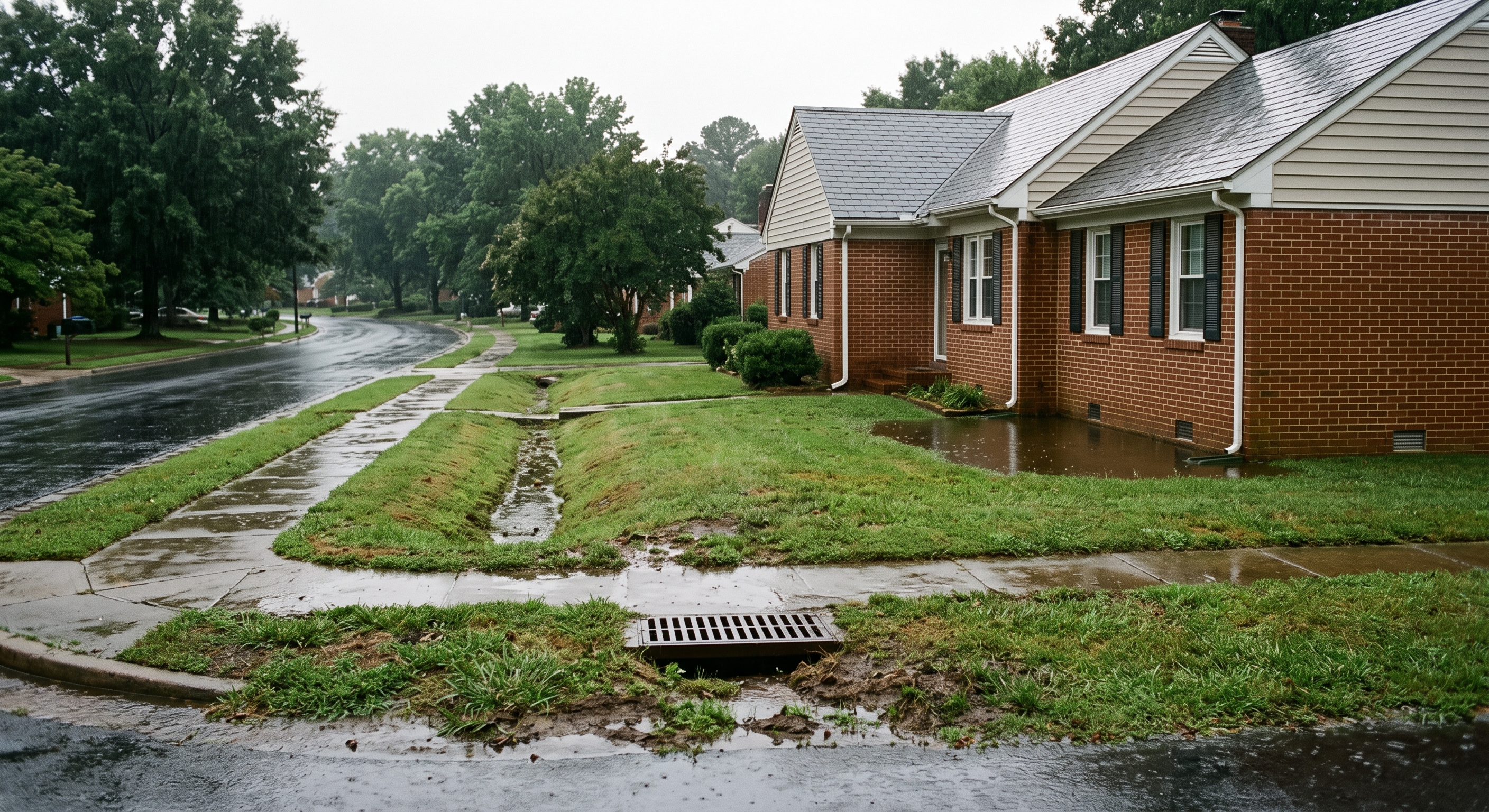
Storm readiness in Henrico County starts with the rental itself, but the county's drainage and floodplain systems add useful context. Water may be moving through a private yard, a roadside ditch, a stormwater structure, a mapped floodplain, or several of those at once. The owner's job is to know which part of the problem belongs to the property and which part belongs to the public system.
PMI James River handles that distinction inside a broader Richmond rental maintenance system. The same approach runs through our proactive property maintenance framework: understand the property's failure path before heavy weather turns a known weakness into an urgent repair.
Key Takeaways
- Henrico County maintains a significant drainage network and has dedicated contacts for residential drainage and floodplain concerns.
- Flood exposure should be checked at the parcel level. Henrico's mapping includes both FEMA floodplains and additional County-identified floodplain areas.
- A flooded road, blocked public storm drain, or drainage-structure problem may require a different response from a clogged gutter, poor grading, or private-yard drainage failure.
- Power outages become property problems when a rental depends on pumps or other equipment to prevent water accumulation or maintain essential systems.
- After water intrusion, stabilize the source, begin drying promptly, and preserve a clear timeline before the next rain changes the evidence.
In This Guide
- Start With Henrico's Drainage And Floodplain Context
- Prepare The Property's Water Path
- Separate Public Drainage From Private Drainage
- Plan For Power-Dependent Systems
- After The Storm: Stabilize, Dry, And Document
- Use Triggered Property Evaluations
Start With Henrico's Drainage And Floodplain Context
Henrico Public Works describes its role as developing, improving, and maintaining the county's transportation and drainage network. The County also provides separate contacts for road flooding, blocked storm drains, drainage concerns, residential drainage, and floodplain questions. That matters because a storm report may involve both a rental condition and a public drainage condition.
Flood risk also deserves parcel-level review rather than assumptions based on neighborhood or ZIP code. Henrico's floodplain program reports nearly 24,000 acres of floodplain and about 1,500 residential and commercial structures within those areas. The County also maps some floodplain areas in addition to FEMA-designated areas.
The broader Richmond Metro storm-readiness framework provides the regional operating sequence. Henrico adds a local question before the storm: where does the property sit in relation to roadside drainage, streams, mapped floodplain, and the county drainage network?
Prepare The Property's Water Path
The owner still starts at the structure. Clear accessible gutters, valleys, downspout outlets, and private drains when debris is restricting flow. Confirm downspouts discharge away from vulnerable foundation areas. Review low doors, crawlspace openings, basement walls, window wells, and any other location with a history of seepage or staining.
Then look outward. Does the rear lot hold water? Does runoff cross the property toward the house? Does a ditch or swale appear obstructed? Is the property close to a mapped floodplain or stream corridor? Those observations help separate an on-lot maintenance decision from a broader public drainage concern.
Prior work orders should guide the order of attention. The Richmond rental maintenance checklist covers recurring execution. Storm preparation should narrow that list to the locations most likely to fail under heavy rain.
Separate Public Drainage From Private Drainage
Henrico gives owners and residents several public channels for drainage problems, but public reporting should not delay property mitigation. A blocked public storm drain, roadway flooding, or drainage-structure issue may belong with Public Works. A short downspout, clogged private drain, roof leak, or water entering through a foundation opening belongs in the property response.
Some road and drainage systems in Henrico involve different public entities, so the correct contact can depend on the location and system involved. Henrico Public Works can help route many road and drainage concerns. The practical management rule is simple: document the public condition and the property condition separately, then send each to the party that can actually act on it.
Repeated property drainage behavior should then move into the normal maintenance calendar. The Richmond rental maintenance seasons guide is the better place to schedule recurring gutter, drainage, vegetation, and exterior work before the next event.
Plan For Power-Dependent Systems
A utility outage and a property electrical failure are not the same event. Residents should first check the serving utility's outage information. If nearby service is restored but the rental remains without power, or if a property-specific system fails after power returns, the next step may be property-level service.
The owner should know what stops working when electricity is lost. Sump pumps, sewage ejectors, well pumps, condensate pumps, refrigerators, and other powered equipment can create secondary damage or service problems during an extended outage. A Henrico property with a known sump or well dependency needs that vulnerability recorded before storm season, not discovered during the outage.
For current severe-weather information, the National Weather Service Wakefield preparedness page provides regional guidance for flooding, severe thunderstorms, tropical weather, winter weather, and other hazards.
After The Storm: Stabilize, Dry, And Document
Active water entry, a structural opening, sewage, a serious electrical concern, or a fallen tree affecting the structure needs stabilization first. Once the source is controlled, drying should begin promptly. The EPA's current moisture and mold guidance recommends drying wet or damp materials within 24 to 48 hours when practical.
Photograph what changed: water locations, staining, damaged roof or siding, ponding, blocked drainage paths, displaced downspouts, debris, or tree damage. Record when the resident noticed it and whether active entry was still occurring. That timeline helps the owner separate storm damage from an older condition and decide what needs immediate work.
Virginia Code § 55.1-1220 remains the landlord-maintenance baseline. It requires landlords to make repairs needed to keep rental premises fit and habitable, maintain supplied building systems in good and safe working order, and maintain the premises to prevent moisture accumulation and mold growth.
Use Triggered Property Evaluations
A countywide storm does not mean every Henrico rental needs an interior visit. Use property-specific triggers: new water intrusion, staining, visible damage, a resident report, a failed pump or other system, or a known vulnerability that the event directly tested.
That approach keeps follow-up focused on evidence. Our guide to rental property evaluation frequency and triggers explains how event-based evaluations fit alongside normal condition tracking.
Henrico County Storm Readiness FAQ
Should A Henrico Rental Owner Check Floodplain Status Before A Storm?
Yes, especially when the property is near a stream, drainage corridor, or known low area. Henrico provides floodplain information that includes FEMA and County-identified areas. The map does not replace property history, but it adds useful context for preparation and documentation.
Who Handles A Blocked Storm Drain Or Road Flooding In Henrico?
Henrico Public Works lists contacts for road flooding, blocked storm drains, drainage concerns, residential drainage, and floodplain questions. The correct public contact can depend on the exact road or drainage system. Property-level water entry still needs a separate maintenance response.
When Should A Storm Trigger A Property Evaluation?
Use a change in condition as the trigger. New water entry, visible exterior damage, a failed power-dependent system, or a known drainage weakness that was directly tested are stronger reasons to evaluate than the storm itself.
Conclusion
Henrico storm readiness is easier when the owner understands both the property and the public drainage context around it. Parcel-level floodplain information, County drainage contacts, property history, and clear resident reporting make it easier to classify a problem and act before the next rain event compounds it.
Next Step
PMI James River can help Henrico County owners connect drainage history, resident reporting, vendor response, and post-storm documentation inside a consistent rental maintenance process.
Published: August 23, 2026