
A real damage condition can still turn into a losing dispute if the charge reads like the resident paid for an upgrade. That “betterment” fight shows up most in paint and flooring after longer tenancies, when ordinary decline and business-driven replacement decisions collide.
Across the Richmond metro, betterment conflict is predictable because materials age differently and move-out photos compress years of ordinary living into a single snapshot. Older Richmond City interiors can show layered repaint history that makes a reset feel inevitable. Many Chesterfield County townhomes have newer finishes where one localized defect feels like it should justify a full replacement bill. Hanover County and Henrico County homes often fall in between, with ordinary wear patterns that still look dramatic in photos.
Betterment disputes shrink fastest when the file can prove starting condition, age in service, and why the chosen scope matches the loss rather than bundling elective improvement into a damage charge. The classification line that separates time-driven decline from cause-driven loss is established in cause-based closeout classification, and the record quality that makes proportional pricing possible usually comes from maintenance documentation workflows.
Table Of Contents
Key Takeaways
What Betterment Looks Like In Real Disputes
Useful Life As A Pricing Guardrail
The Inputs A Proration Claim Must Prove
Paint, Carpet, And Flooring Examples
Scenarios With Real Tradeoffs
Edge Cases That Flip The Outcome
How To Write A Proportional Charge
FAQ
Conclusion
Next Step
Key Takeaways
Betterment risk is highest when full replacement materially improves the unit beyond what existed at move-in.
Useful life helps keep deductions proportional by separating remaining value loss from full reset cost.
Proration is only as defensible as proof of age, starting condition, and scope feasibility.
Scope discipline often reduces disputes more than aggressive math because scope controls credibility.
Local housing stock changes how fast surfaces age across Richmond City, Henrico County, Hanover County, and Chesterfield County, but it should not change proportionality logic.
What Betterment Looks Like In Real Disputes
Betterment disputes usually have a real condition at the center. The problem is the leap from that condition to a full replacement bill.
A localized carpet stain can justify work, but it does not automatically justify purchasing the next decade of a new floor. A few torn drywall sections can justify patching, but they do not automatically justify repainting an entire unit that was already near a repaint cycle. Residents often concede the condition and still contest the bill because the charge reads like new value, not restored value.
Betterment risk climbs when invoices mix two scopes that should be separated.
Damage Restoration. Work that restores the home to the prior condition without upgrading.
Elective Improvement. Work that improves the home beyond what existed, even when the improvement is a smart owner decision.
When those scopes are bundled, the dispute becomes harder to resolve because the file cannot show what the resident actually caused versus what the owner chose to improve.
Useful Life As A Pricing Guardrail
Useful life is not a statutory formula. It is a reasonableness tool that stabilizes the question owners actually need answered.
What is the remaining value that was lost, given age and starting condition.
Two commonly cited references help keep assumptions stable.
The HUD estimated useful life reference lists useful life categories used in HUD capital needs planning tools.
The InterNACHI life expectancy chart provides typical lifespan ranges many owners recognize intuitively.
These sources do not decide liability. They help prevent a full replacement charge from reading like betterment when the item was already heavily aged.
The Inputs A Proration Claim Must Prove
Proration fails when it becomes opinion math. It holds when the inputs can be shown.
- Age In Service. Installation date is best. If unknown, prior invoices, turnover notes, or documented estimates are still better than silence.
- Starting Condition. Move-in photos and notes should show whether the surface was new, average, already worn, or already stained.
- Damage Mechanism. The record should show why the loss is cause-driven, not only that the surface looks bad at move-out.
- Scope Feasibility. If partial work was not feasible due to discontinuation, pattern mismatch, blending limits, or system construction, the constraint should be documented as a fact.
When these inputs cannot be proven, the most dispute-resistant alternative is usually scope discipline rather than invented proration.
Paint, Carpet, And Flooring Examples
Paint
Full repaint charges are most dispute-prone when the unit already needed repainting due to age and ordinary decline. Discrete damage can still be chargeable, but the charge reads strongest when scope maps to affected walls and the record identifies mechanism indicators such as adhesive tear-out, oversized holes, or unauthorized paint changes.
Chargeable increment logic. In many Richmond City and Henrico County interiors, ordinary repaint cycles are expected after longer tenancies. The safer approach is treating ordinary repaint as owner cost and charging only for incremental work driven by discrete, documented damage.
Carpet
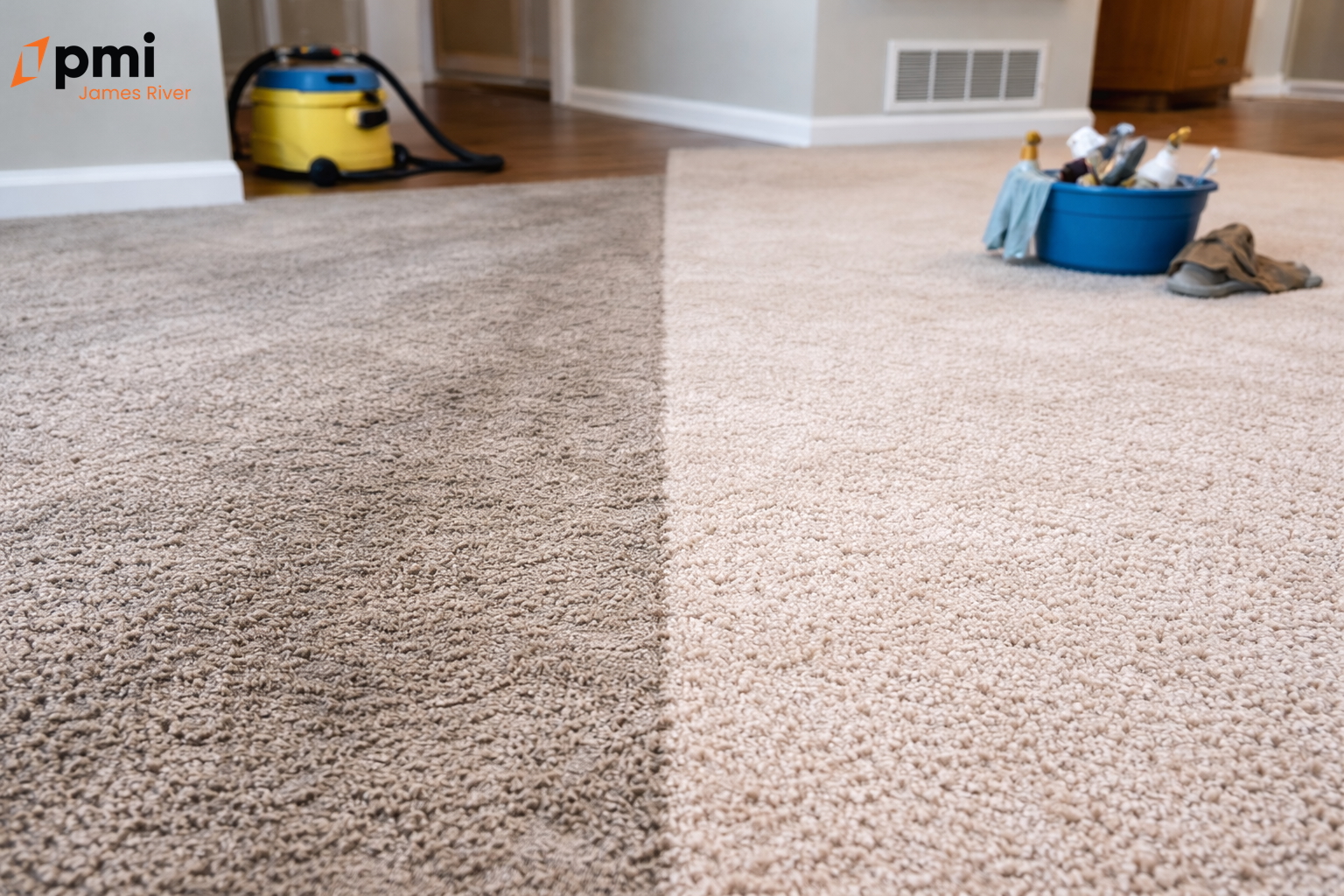
Traffic-lane flattening and gradual fiber loss are time-driven decline. Localized staining that penetrates pad, burns, tears, seam damage, and persistent odor conditions are more likely to be cause-driven loss.
Betterment conflict rises when full replacement is charged for a localized issue without documenting why partial repair was not feasible or why the damage zone could not reasonably be isolated.
Hard-Surface Flooring
Hard-surface claims often turn on moisture and duration. Once responsibility is clear, betterment risk still exists if the chosen replacement spec is an upgrade compared to what existed at move-in.
In Chesterfield County townhomes, appliance-edge failures are common, and matching constraints are common. Matching constraints can justify broader scope, but the constraint needs to be recorded as a fact, not asserted as a preference.
Scenarios With Real Tradeoffs
Common Scenario
A Henrico County home shows widespread carpet traffic wear and minor wall scuffs after a multi-year tenancy. One bedroom has a localized stain that penetrated pad.
A stable outcome treats widespread aging as owner refresh and limits the resident charge to the incremental loss caused by the localized condition. Full replacement can still be the operational choice, but the charge is safer when it reflects remaining value rather than the entire replacement bill.
Messy Scenario
A Hanover County rental has a localized but severe floor issue near a kitchen appliance, and the resident disputes timing and reporting. The owner wants a full-floor replacement charge because matching is difficult.
This dispute becomes easier to manage when the file separates two questions.
Did a cause-driven condition occur, and is it attributable based on dated notice and repair history.
Is full scope required due to feasibility constraints, and can the file prove the constraint without bundling elective improvements.
Edge Cases That Flip The Outcome
- Discontinued Materials. Matching limits can justify broader scope, but the constraint should be documented.
- Pre-Existing Wear. Starting-condition evidence showing heavy wear should change the remaining value assumption.
- Owner Spec Upgrades. Higher-end replacement is an owner decision. Charges are safer when limited to restoration value.
- Room-Wide Work For Local Damage. Some repairs require blending paint or extending to transitions. That expansion reads strongest when it is documented as feasibility rather than framed as preference.
How To Write A Proportional Charge
A proportional charge reads strongest when it is plain English and tied to provable inputs.
Proportional statement structure. The statement identifies the cause-driven condition, proves age and starting condition, explains why the chosen scope was necessary, and limits the charge to the remaining value that was actually lost rather than charging for an upgrade.
That structure is harder to challenge because it is anchored to evidence, not frustration.
FAQ
Does Useful Life Decide Liability
No. Useful life helps estimate proportional value loss after the file supports that the loss is cause-driven and attributable.
Can Full Replacement Ever Be Appropriate
Yes, especially when partial repair is not feasible. The feasibility constraint is what should be documented as a fact.
What Causes The Biggest Betterment Fights
Full replacement charges after long tenancies, invoices that bundle elective improvements, and missing proof of item age and starting condition.
Conclusion
Betterment conflict is not solved by stronger opinions. It is solved by separating restoration from improvement and pricing only what was actually lost. Useful-life references keep assumptions stable, and scope discipline keeps charges aligned to provable damage zones.
Across Richmond City, Henrico County, Hanover County, and Chesterfield County portfolios, proportional pricing reduces repeat disputes because it prevents the same “upgrade bill” pattern from recurring in different forms.
Next Step
Prove The Inputs. When the file can prove age, starting condition, and feasibility constraints, the pricing discussion stays anchored to remaining value instead of reset cost, and that record quality tends to come from consistent capture of inspections, work orders, vendor notes, and closeout photos through proper maintenance documentation workflows.