
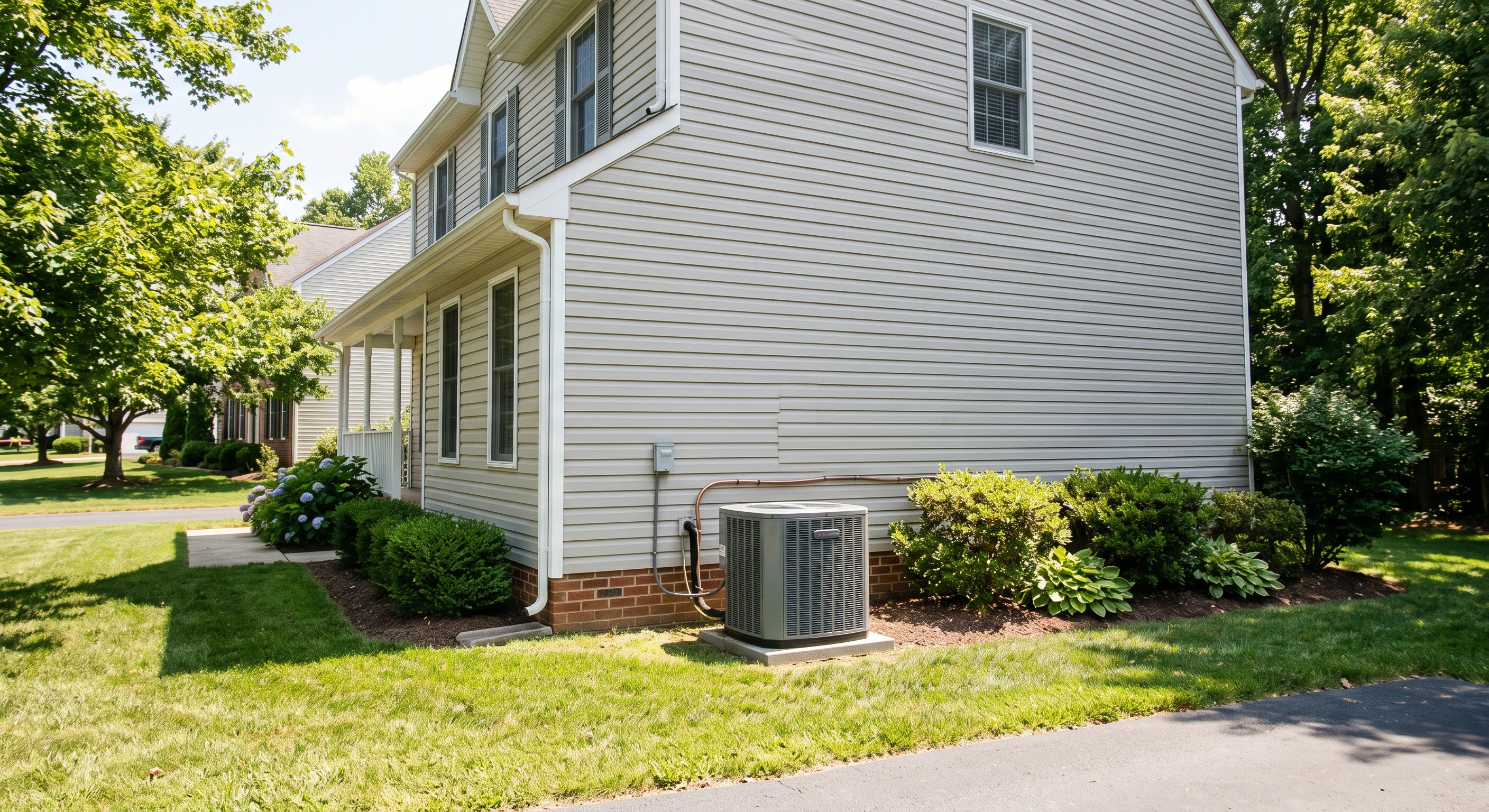
Virginia changed the legal treatment of central air conditioning under the Virginia Residential Landlord and Tenant Act on July 1, 2026. Qualifying landlord-supplied central air conditioning is now included in the statutory definition of an "essential service." The change matters because Virginia already had rules requiring landlords to maintain supplied air-conditioning systems, but essential-service status can bring a qualifying failure within a separate tenant-remedy framework.
For rental owners, the change belongs inside a documented maintenance and repair coordination process and the broader framework for Virginia landlord maintenance duties. This article stays on the narrow 2026 legal change: when central air conditioning falls within the essential-service definition, what that classification changes, and what an owner should document when a qualifying system fails.
Key Takeaways
- Virginia now defines qualifying landlord-supplied central air conditioning as an essential service under the VRLTA.
- The law does not require every Virginia rental to have central air conditioning. The definition applies when the landlord supplies central air and it was operating or represented as operating as of the effective date of the rental agreement.
- Landlords already had a duty to maintain supplied air-conditioning facilities and to provide reasonable air conditioning when it is provided, subject to the statute's stated exceptions.
- Essential-service status does not create an automatic 24-hour repair deadline. Virginia Code § 55.1-1239 requires written notice and a reasonable time to correct a qualifying breach.
- A mechanical breakdown alone does not automatically establish the § 55.1-1239 remedy. That section applies when a landlord willfully or negligently fails to supply an essential service contrary to the rental agreement or the VRLTA.
In This Guide
- What Virginia Changed in 2026
- When Central Air Conditioning Qualifies
- What Essential-Service Status Actually Changes
- What the New Law Does Not Create
- How Owners Should Handle a Central AC Failure
- Where HVAC Maintenance Still Fits
What Virginia Changed in 2026
Among the 2026 Virginia landlord-tenant law changes, House Bill 519, enacted as Chapter 624, amended Virginia Code § 55.1-1200. The current VRLTA definition of "essential service" now includes central air conditioning when it is supplied by the landlord and was operating or represented as operating as of the effective date of the rental agreement.
The Code also defines the "effective date of rental agreement" as the date the landlord and tenant sign the agreement and become obligated to its terms. That makes the lease file and the property's starting condition important. The question is not simply whether the property has cooling equipment today. The statutory definition looks at what central air conditioning the landlord supplied and what was operating or represented as operating when the rental agreement took effect.
Key point: HB 519 did not create a statewide duty to install central air conditioning in every rental. It changed the legal classification of qualifying landlord-supplied central air conditioning by adding it to the VRLTA's essential-service definition.
When Central Air Conditioning Qualifies
The statutory wording matters. For central air conditioning to fall within the new essential-service definition, the text identifies three connected facts:
- The system is central air conditioning.
- It is supplied by the landlord.
- It was operating or represented as operating as of the effective date of the rental agreement.
The amendment expressly names central air conditioning. It does not say that every fan, portable unit, window unit, or other cooling device automatically becomes an essential service. Other equipment may still be governed by the lease or by other maintenance duties, but owners should not expand this particular statutory definition beyond the language Virginia enacted.
This also explains why move-in and leasing records matter. A clear lease, condition documentation, and accurate advertising can establish what the property actually supplied. Owners should avoid informal promises about equipment that are inconsistent with the lease or the property's documented condition.
What Essential-Service Status Actually Changes
The important consequence appears in Virginia Code § 55.1-1239, which addresses wrongful failure to supply an essential service. The section does not say that every outage automatically creates a tenant remedy. It applies when, contrary to the rental agreement or the VRLTA, the landlord willfully or negligently fails to supply an essential service.
If a tenant acts under that section, the statute requires written notice specifying the breach. The landlord must then be allowed a reasonable time to correct it. If the statutory conditions are met and the breach is not corrected within a reasonable time, the tenant may choose between the remedies listed in the section:
- recovering damages based on the reduction in the fair rental value of the dwelling unit; or
- procuring reasonable substitute housing during the period of noncompliance, with rent excused for that period as determined by the court.
Section 55.1-1239 also provides for reasonable attorney fees when a tenant proceeds under the section. It says the tenant may not also proceed under § 55.1-1234 for the same breach. The tenant's rights under § 55.1-1239 do not arise if the condition was caused by the deliberate or negligent act or omission of the tenant, an authorized occupant, or a guest or invitee.
That cause provision is one reason repair responsibility and legal response should not be collapsed into a single question. The property may need service promptly while responsibility for the cost is still being established. The broader distinction between owner duties and resident-caused conditions belongs in the separate guide to landlord and tenant repair responsibility.
What the New Law Does Not Create
The phrase "essential service" can sound like a universal emergency rule. That is not what the statute says.
- No universal requirement to install central AC. The definition applies to qualifying landlord-supplied central air conditioning. It does not require every Virginia rental to be equipped with central air.
- No automatic 24-hour deadline. Section 55.1-1239 uses the standard of a "reasonable time" after written notice. The statute does not set one fixed repair period for every central-AC failure.
- No automatic tenant remedy for every breakdown. The section requires a willful or negligent failure to supply the essential service contrary to the rental agreement or the VRLTA.
- No automatic right to stop paying rent after reporting an AC problem. The substitute-housing remedy and rent consequence arise within the statutory framework and the period of noncompliance is determined by the court.
- No statutory indoor-temperature number in these sections. Sections 55.1-1200 and 55.1-1239 do not establish a single temperature at which every AC complaint becomes a violation.
Owners should therefore separate legal classification from maintenance triage. A qualifying central-AC outage deserves prompt attention because it now sits inside the essential-service framework, but the facts still control how the issue is classified and handled. Risk, active damage, severity, access, and time sensitivity still matter. Owners should not treat every HVAC complaint as identical.
How Owners Should Handle a Central AC Failure
The most useful operational response to HB 519 is a cleaner maintenance file, not a larger list of HVAC tips. When a resident reports a qualifying central-AC problem, the owner or property manager should be able to reconstruct what happened from notice through restoration.
- Capture the report accurately. Record the date and time, the actual symptom, thermostat information when useful, whether the system is running at all, and whether the condition is changing.
- Confirm what the property supplied. The lease and move-in record should establish that central air was part of the rental and what was represented about its condition.
- Move diagnosis forward promptly. A work order should not stall merely because the first report uses vague language such as "AC not working." Clarify the symptom, arrange appropriate service, and document access efforts.
- Keep authorization from becoming the avoidable delay. Once a technician identifies the failure and likely scope, routine authority should be usable within agreed limits and larger decisions should reach the owner quickly.
- Document the timeline. Preserve notice, scheduling attempts, access, vendor findings, approvals, temporary measures if any, completed work, and confirmation that service was restored.
- Separate restoration from cost allocation. If the evidence later shows resident-caused damage or another chargeable condition, address that through the lease and applicable law rather than delaying a needed repair while the billing question is unresolved.
In PMI James River's Richmond-area maintenance work, peak-season scheduling and authorization can matter as much as the mechanical diagnosis. A delayed decision after a technician has identified the problem can mean losing an available service slot. The practical control is to collect a usable diagnosis, maintain reasonable preauthorized limits for routine work, and escalate larger decisions quickly once the failure mechanism is known.
That operating discipline also fits the broader landlord maintenance responsibilities that remain in place regardless of the 2026 amendment.
Where HVAC Maintenance Still Fits
HB 519 did not replace Virginia's existing maintenance duty. Under Virginia Code § 55.1-1220, a landlord must maintain supplied air-conditioning facilities and appliances in good and safe working order. The same section requires reasonable air conditioning if it is provided, subject to the exceptions stated in the statute.
The 2026 amendment adds a second legal layer for qualifying central air conditioning: essential-service status. Owners therefore have two distinct questions when a system fails. First, what maintenance duty applies to the supplied system? Second, do the facts also bring the failure within § 55.1-1239's essential-service remedy framework?
Preventive maintenance remains valuable because avoiding a failure is better than managing one during a hot-weather service backlog. Filter strategy, system inspections, condensate issues, seasonal scheduling, and equipment-performance checks belong in the separate HVAC failure-prevention guide. Keeping that material separate allows this article to stay focused on the legal change.
Frequently Asked Questions
Is Air Conditioning Now Required in Every Virginia Rental?
No. The amended definition covers central air conditioning when it is supplied by the landlord and was operating or represented as operating as of the effective date of the rental agreement. It does not create a general requirement to install central AC in every rental.
Does a Virginia Landlord Have 24 Hours to Fix Central Air Conditioning?
Section 55.1-1239 does not create a universal 24-hour deadline. A tenant proceeding under that section must give written notice specifying the breach and allow the landlord a reasonable time to correct it. What is reasonable depends on the facts.
Does Every Central-AC Breakdown Automatically Violate § 55.1-1239?
No. The section addresses a landlord's willful or negligent failure to supply an essential service contrary to the rental agreement or the VRLTA. A breakdown, the notice received, the response, access, cause, and repair timeline all matter.
Do Portable or Window AC Units Count as Essential Services Under This Amendment?
The amended definition expressly names central air conditioning. It does not expressly add portable units, window units, or fans to the essential-service definition. Other lease terms or maintenance obligations may still apply to equipment the landlord supplies.
What if the Resident Caused the AC Problem?
Section 55.1-1239 says the tenant's rights under that section do not arise if the condition was caused by the deliberate or negligent act or omission of the tenant, an authorized occupant, or a guest or invitee. The owner should rely on documented facts and a qualified diagnosis rather than an assumption about cause.
Bottom Line for Virginia Rental Owners
Virginia's 2026 change is narrow but meaningful. Landlords already had duties concerning supplied air-conditioning systems. HB 519 added qualifying landlord-supplied central air conditioning to the definition of an essential service, which means a wrongful failure to supply it can now implicate the specific notice and remedy framework in § 55.1-1239.
The management response is straightforward: document what the rental supplied, capture notice clearly, move diagnosis and access quickly, keep approval decisions from becoming unnecessary delay, and preserve the full repair timeline. PMI James River's maintenance and repair services are built around that kind of documented coordination for rental owners.
Published: August 27, 2026