
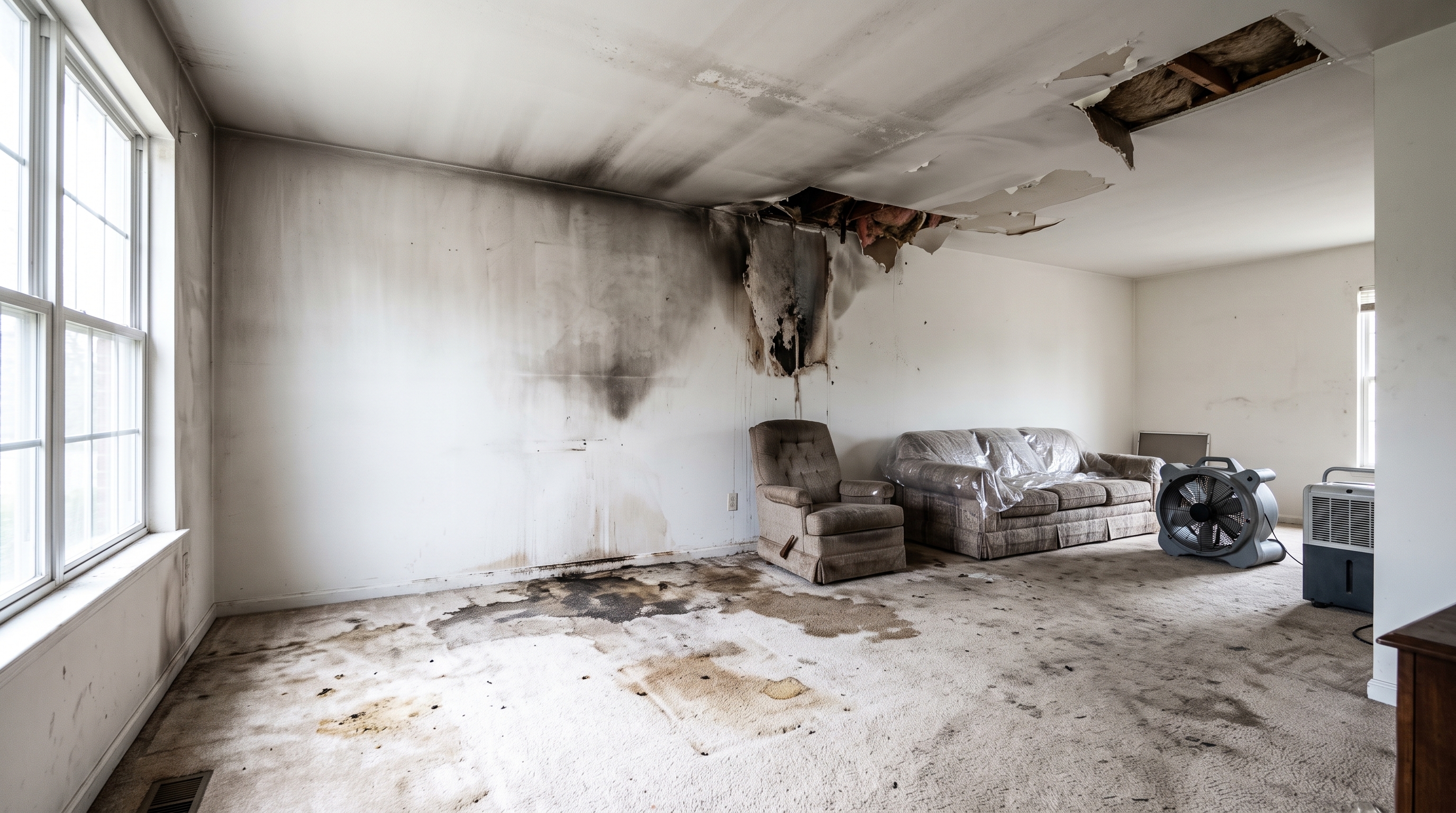
A fire or other casualty can turn an ordinary rental into several urgent problems at once: emergency access, property stabilization, resident displacement, insurance claims, repair decisions, and the question of whether the lease continues. For Virginia rental owners, PMI James River's maintenance and repair coordination provides the operational framework for handling vendors, access, documentation, and owner communication while the legal questions are being sorted out.
Virginia law does not make every fire an automatic lease termination. Virginia landlord-tenant law gives both landlords and tenants specific rights when fire or casualty damage substantially impairs the rental or repairs require the tenant to vacate. Those procedures change on January 1, 2027, including longer notice periods and new steps a landlord may have to complete before terminating the rental agreement.
Key Takeaways
- A fire or casualty does not automatically terminate a Virginia residential lease. The statutory threshold depends on the effect of the damage and the repairs required.
- Through December 31, 2026, the tenant and landlord casualty-termination procedures use 14-day periods. Starting January 1, 2027, those periods become 21 days.
- Beginning January 1, 2027, the ordinary landlord-initiated path adds a required discussion of the damage and reasonable alternatives, plus a check for a substantially similar available unit in the same complex.
- A tenant who receives a landlord termination notice under the 2027 statute may request a reevaluation of the damage and habitability in writing within seven days.
- Temporary relocation, lease termination, rent proration, security deposits, fault, and insurance are separate questions. Owners should document each one rather than treating the casualty as a single all-purpose decision.
In This Guide
- How Virginia's Fire and Casualty Rule Works
- What Changes on January 1, 2027
- Tenant Rights After Fire or Casualty Damage
- Landlord Rights and Duties After Casualty Damage
- Temporary Relocation Is Different From Lease Termination
- Rent, Deposits, and Insurance After a Casualty
- An Owner Response Checklist
- Common Casualty Response Mistakes
How Virginia's Fire and Casualty Rule Works
Virginia Code § 55.1-1240 is the main residential fire and casualty statute. It applies when the dwelling unit or premises is damaged or destroyed by fire or casualty to an extent that the tenant's use and enjoyment is substantially impaired, or when required repairs can only be completed if the tenant vacates.
That threshold is important. A contained kitchen fire may require significant repairs without making the entire home unusable. A larger fire, structural damage, heavy smoke contamination, or extensive water damage from suppression may make continued occupancy impractical or unlawful. The legal decision should follow the actual condition of the property and the repair scope, not simply the fact that a fire occurred.
Casualty response also sits alongside the landlord's general duty under Virginia Code § 55.1-1220 to comply with applicable health and safety codes and keep the premises fit and habitable. PMI James River's habitability and life-safety guide for Virginia rentals addresses that broader repair and risk-classification framework.
Key point: The 2027 change is not just a longer notice period. It changes the landlord's process before a casualty termination notice is sent and gives the tenant a specific reevaluation right after the notice.
What Changes on January 1, 2027
Virginia enacted the new procedure through HB 834, Chapter 1117, with a delayed effective date of January 1, 2027. HB 834 was enacted in 2026, so owners tracking Virginia landlord-tenant law changes enacted in 2026 should treat this as an already-enacted rule with a delayed effective date, not a proposal.
| Issue | Through December 31, 2026 | Starting January 1, 2027 |
|---|---|---|
| Tenant termination after vacating | Written notice within 14 days after vacating. | Written notice within 21 days after vacating. |
| Landlord termination notice | 14 days' notice when the landlord determines the damage requires removal and use of the premises is substantially impaired. | 21 days' notice, with new pre-notice requirements under the ordinary casualty path or a separate path when the landlord determines the damage was caused by the tenant's violation of § 55.1-1227. |
| Discussion of alternatives | No comparable statutory pre-notice meeting requirement appears in the current version. | Before using the ordinary landlord path, the landlord must meet with or make a reasonable effort to meet with the tenant to discuss the damage and reasonable alternatives to termination. |
| Same-complex unit check | No comparable requirement appears in the current version. | The landlord must determine whether a substantially similar unit in the same complex is available within a reasonable time and, if so, offer it under the current rental agreement. |
| Tenant reevaluation request | No special reevaluation procedure appears in the current version. | The tenant may request a reevaluation of the damage and habitability in writing within seven days after receiving the landlord's termination notice. |
For owners of single-family rentals, the same-complex requirement may lead to a straightforward conclusion that no alternative unit exists. The important operational step is to make and document the determination. For an apartment or other multi-unit complex, the analysis can be more consequential because another substantially similar unit may actually be available.
Tenant Rights After Fire or Casualty Damage
The Tenant May Terminate When the Statutory Threshold Is Met
Under the version effective through December 31, 2026, a tenant may terminate by vacating and serving written notice within 14 days after vacating. Starting January 1, 2027, that period becomes 21 days. When the statutory requirements are met, the rental agreement terminates as of the date the tenant vacated.
Continued Lawful Occupancy Can Change the Rent
If continued occupancy is lawful, § 55.1-1240 expressly directs the parties to Virginia Code § 55.1-1411. That cross-referenced rule provides for a reasonable reduction in rent during qualifying destruction until the premises again provide comparable value for the tenant's use. The casualty statute does not give a simple percentage formula, so the actual loss of use matters.
Starting in 2027, the Tenant May Request Reevaluation
Beginning January 1, 2027, a tenant who receives a landlord termination notice under subsection C may make a written request within seven days for the landlord to reevaluate the extent of the damage and the habitability of the dwelling unit. The landlord must involve the tenant in that reevaluation. If the landlord still determines, after meeting with or reasonably trying to meet with the tenant, that use is substantially impaired and the damage requires removal, the original termination date remains in place.
The Tenant's Personal Property Is a Separate Insurance Question
The Virginia State Corporation Commission's renters insurance guide explains that the landlord's insurance protects the landlord's property, not the renter's belongings. Renters policies commonly cover listed perils such as fire and smoke, and loss-of-use coverage may help with additional living expenses after a covered loss makes the home uninhabitable. Actual coverage depends on the resident's policy.
Landlord Rights and Duties After Casualty Damage
Emergency Access Comes First
Fire and casualty response can require immediate entry for inspection, stabilization, insurer documentation, utility shutoff, or emergency work. Virginia Code § 55.1-1229 allows a landlord to enter without the tenant's consent in an emergency. Once the immediate emergency has passed, ordinary access rules apply to nonemergency entry. PMI James River's Virginia rental access and documentation guide covers the broader entry framework.
The Owner Should Separate Cause From Immediate Mitigation
The first repair decision is usually how to stop further loss and make the property safe enough for inspection and restoration planning. Responsibility for the damage can be investigated at the same time, but it should not delay necessary containment.
Starting January 1, 2027, the statute gives a separate landlord termination path when the landlord determines that the fire or casualty damage was caused by the tenant's violation of Virginia Code § 55.1-1227. That section includes duties to use utilities and systems reasonably and not deliberately or negligently damage the premises. A fire associated with a tenant does not automatically prove a statutory violation. Cause should be supported by the facts.
Incident reports, photographs, first-arrival vendor observations, insurer findings, resident communications, and repair records can all help separate the emergency response from the later responsibility decision. PMI James River's guide to landlord versus tenant repair responsibility explains the broader allocation framework.
The 2027 Notice Should Not Be the First Step
Under the ordinary 2027 landlord path, the owner must address the required discussion and same-complex housing check before giving the 21-day termination notice. Sending the notice first and trying to recreate the pre-notice process afterward would put the steps in the wrong order.
Temporary Relocation Is Different From Lease Termination
Not every casualty ends the tenancy. Sometimes the property can be repaired and the resident can return. Virginia has a separate temporary-relocation rule in § 55.1-1229(B) for a qualifying nonemergency property condition that can only be effectively remedied if the tenant temporarily vacates.
Under that rule, the landlord may require the tenant to temporarily relocate for no more than 30 days, generally with at least 30 days' written notice, to a comparable dwelling unit or hotel selected by the landlord and at no expense or cost to the tenant. The parties may agree for the tenant to temporarily vacate in less than 30 days. The statute defines this as a nonemergency property condition, so it should not be confused with the immediate emergency response to an active fire or other urgent casualty.
This distinction matters because the answer to "Does the landlord have to pay for a hotel?" depends on the legal path. Section 55.1-1240 does not create a blanket hotel-payment rule for every fire. But if the tenancy continues and the landlord uses the qualifying temporary-relocation procedure in § 55.1-1229(B), the comparable unit or hotel is provided at no cost to the tenant during that relocation. Renters insurance may separately provide additional living expense coverage for a covered loss.
Rent, Deposits, and Insurance After a Casualty
Rent Is Prorated From the Date of the Casualty When the Lease Terminates
Section 55.1-1240 states that proration for rent in the event of termination or apportionment is made as of the date of the casualty. Owners should preserve the incident date and keep the rent calculation separate from later reconstruction milestones or insurance payments.
A Casualty Does Not Automatically Forfeit the Security Deposit
If the rental agreement terminates under § 55.1-1240, the landlord must return the security deposit in accordance with Virginia Code § 55.1-1226, along with prepaid rent and any accrued interest recoverable by law, unless the landlord reasonably believes the tenant, an authorized occupant, or the tenant's guest or invitee caused the casualty. In that situation, § 55.1-1240 requires a written statement regarding the security and prepaid rent and permits a claim for actual damages under Virginia Code § 55.1-1251.
The ordinary security-deposit accounting requirements still matter. Section 55.1-1226 generally requires an itemized written notice and any amount due to the tenant within 45 days after the tenancy terminates or the tenant vacates, whichever occurs last. PMI James River's security deposit guide for Richmond landlords addresses that process in more detail.
Owner Insurance Should Be Evaluated as a Rental-Property Policy
PMI James River's practical recommendation is to compare the actual protection in the rental-property policy, not the premium alone. Liability coverage, loss-of-rent or rental-income protection, replacement-cost treatment, deductibles, and endorsements can matter after a major casualty. The right time to understand those terms is before a loss forces the owner to rely on them.
The insurance claim and the lease process should still be kept separate. A carrier's coverage decision does not decide whether § 55.1-1240 permits lease termination, and the casualty statute does not determine what a particular policy covers.
An Owner Response Checklist
- Handle life safety and stabilization first. Coordinate emergency services, utility shutoffs, board-up, water extraction, or other immediate mitigation as the facts require.
- Document the initial condition. Preserve photographs, incident information, resident communications, first-arrival vendor findings, and relevant public-authority information.
- Determine whether occupancy can continue. Identify whether use and enjoyment is substantially impaired and whether the required repair scope can be completed while the resident remains.
- Open the owner insurance claim promptly. Follow the carrier's instructions and confirm the relevant rental-property coverages, deductible, and loss-of-rent provisions.
- Separate mitigation from fault allocation. Stop further damage first. Determine responsibility from evidence rather than assumption.
- Choose the correct legal path. Distinguish continued occupancy, temporary relocation, tenant-initiated casualty termination, ordinary landlord casualty termination, and the tenant-violation path.
- Use the correct effective-date rules. Apply the 14-day version through December 31, 2026. Apply the 21-day version and new procedures starting January 1, 2027.
- Calendar every deadline. Under the 2027 version, include the tenant's seven-day reevaluation window after a landlord termination notice.
- Close out rent and deposits separately. Prorate rent as required, complete deposit accounting, and document any actual-damages claim independently.
Common Casualty Response Mistakes
- Treating the fire itself as an automatic lease termination. The statutory threshold depends on impairment and repair needs.
- Using the 2027 procedure before it is effective. The current 14-day version remains controlling through December 31, 2026.
- Focusing only on the change from 14 days to 21 days. The new pre-notice process is a substantive part of the 2027 amendment.
- Sending the 2027 ordinary landlord notice before discussing alternatives and checking for a substantially similar unit in the same complex.
- Ignoring a timely seven-day reevaluation request.
- Confusing temporary relocation with lease termination. They are different statutory paths with different requirements.
- Assuming resident fault from the location or origin of the fire alone. The legal responsibility question should be tied to evidence and the tenant's actual duties.
- Using the security deposit as a substitute for a documented damages claim.
- Assuming the landlord's insurance covers the resident's belongings or all temporary living costs.
Frequently Asked Questions
Does a Fire Automatically End a Virginia Rental Lease?
No. Section 55.1-1240 applies when the casualty substantially impairs the tenant's use and enjoyment or when required repairs can only be completed if the tenant vacates. The party seeking termination must also follow the applicable statutory procedure.
Can a Virginia Landlord Require a Tenant to Move After a Fire?
Yes, in some circumstances, but the correct procedure depends on whether the tenancy is being terminated or the resident is only being temporarily relocated for repairs. Section 55.1-1240 governs qualifying casualty termination. Section 55.1-1229(B) separately addresses certain temporary relocations for nonemergency property conditions.
Does a Virginia Landlord Have to Offer Another Rental After a Fire?
Starting January 1, 2027, before using the ordinary landlord casualty-termination path, the landlord must determine whether a substantially similar dwelling unit within the same complex is available within a reasonable time. If one is available, it must be offered under the terms of the tenant's current rental agreement.
Does a Landlord Have to Pay for a Hotel After a Fire?
Not automatically under the casualty-termination statute. If the tenancy continues and the landlord uses the qualifying temporary-relocation procedure under § 55.1-1229(B), however, the landlord selects and provides a comparable dwelling unit or hotel at no cost to the tenant during that temporary relocation. Insurance may create additional benefits depending on the policy.
What Happens to Rent If Part of the Rental Can Still Be Used?
If continued occupancy is lawful, § 55.1-1240 directs the parties to the rent-reduction rule in § 55.1-1411. The statute calls for a reasonable reduction rather than a fixed percentage, so the actual impairment of the premises matters.
Can a Landlord Keep the Deposit If the Tenant Caused the Fire?
Not automatically. Section 55.1-1240 provides different handling when the landlord reasonably believes the tenant, an authorized occupant, or the tenant's guest or invitee caused the casualty, but it still requires a written statement and ties recovery to actual damages. The security-deposit requirements of § 55.1-1226 also remain relevant.
When Do Virginia's New Fire and Casualty Rules Take Effect?
January 1, 2027. Until then, the current version of § 55.1-1240 remains in effect.
A Documented Process Matters After a Major Loss
Fire and casualty losses create several decisions at once, but they do not have to become one confused decision. Emergency mitigation, repair scope, habitability, access, lease status, rent, deposits, responsibility, and insurance can each be handled in the right sequence and supported by a clear record.
For Richmond Metro rental owners, PMI James River coordinates maintenance response, vendor communication, resident access, documentation, and owner decisions through a structured management process. Owners who want that operational support can review our maintenance and repair management services.
Published: August 27, 2026