
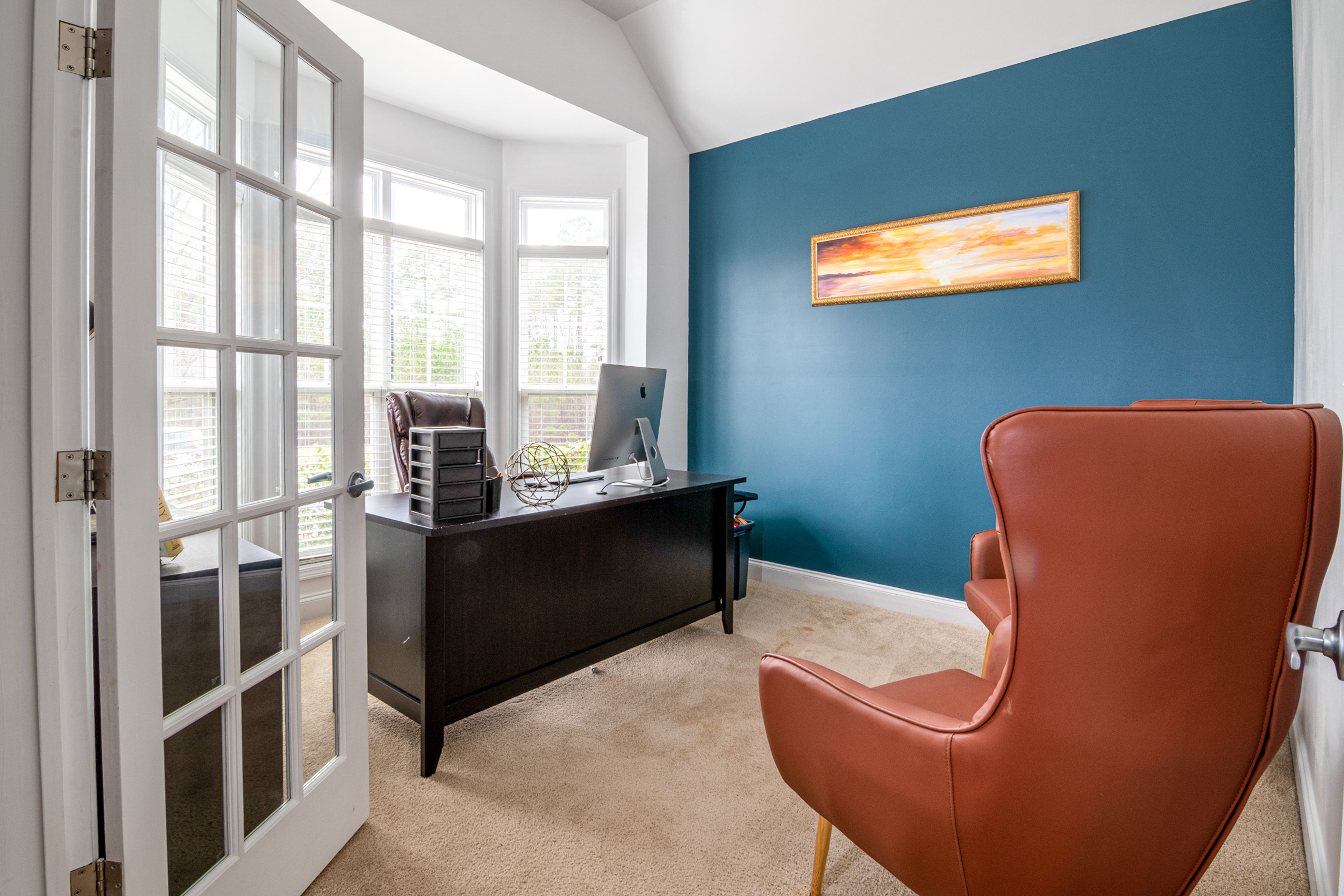
A good home office in a Richmond rental does not need to be built into the property. In most cases, the best setup comes from choosing the right space and using furniture, lighting, storage, and equipment that can move with you.
In the Richmond-area rentals we manage, home-office setups have not become a recurring property issue. An extra bedroom can often work as an office without changing the property at all, and a well-planned corner of a living room or bedroom can work just as well. It is one more way to make your Richmond rental work for the way you actually live.
Start With the Best Space You Already Have
Before buying a desk, decide where you can work comfortably for several hours at a time. A spare bedroom is often the easiest choice because it gives you a door, defined floor space, outlets, and separation from the rest of the home. You can also close the door at the end of the workday.
If you do not have a spare bedroom, look for a part of the home that can hold a desk without blocking a walkway or taking over the room. One side of a larger bedroom, a living-room corner, an underused dining area, or a wide landing can sometimes work.
Test the space during the hours you normally work. Richmond rentals come in a wide range of layouts. A newer apartment may have an obvious desk wall, while an older home may have smaller rooms, deep windows, unusual corners, or outlets that are not exactly where modern office furniture would put them. Pay attention to light, noise, airflow, and where cords would need to run before you commit to the layout.
Get the Desk, Chair, Monitor, and Light Right First
Spend your attention on the things you will use for hours every day before buying organizers or decorative office accessories.
Your desk needs enough surface area for the way you actually work. A laptop may fit comfortably on a compact desk. Two monitors, paperwork, or specialized equipment may justify a larger surface. Leave enough room for your keyboard and mouse rather than squeezing them around everything else.
Your chair matters even more. The OSHA computer workstation guide recommends basic setup goals such as supporting the lower back, keeping feet flat on the floor, leaving room for the keyboard and mouse, and placing the top of the monitor at or just below eye level. If a laptop is your main computer, a separate keyboard or mouse can also give you more freedom to position the screen comfortably.
Then look at the light. A floor lamp or desk lamp can improve a workspace without touching the rental itself. Natural light is useful too, but check the room at different times of day. OSHA's lighting and glare guidance recommends arranging the screen and task lighting so windows and lights do not reflect directly on the display.
Richmond summer adds a practical wrinkle. A bright west-facing window can make a great winter desk location and an uncomfortable July workspace. If the room heats up sharply in the afternoon, our Richmond renter summer survival guide has ideas for shade, fans, timing, and working around the hottest part of the day.
Use Furniture to Create Boundaries
If your office shares space with a bedroom or living room, furniture can give the work area a clear edge without building anything.
- Use a small bookcase or drawer unit for office supplies.
- Keep chargers, notebooks, and headphones together in a basket or rolling cart.
- Use a rug to define the desk area inside a larger room.
- Try a folding screen or open bookcase if you want more visual separation.
- Place the desk so your video-call background is calm without rearranging the entire room.
At the end of the day, close the laptop, put away loose work items, and turn off the task light. That small routine helps a shared room stop feeling like an office after work is done.
The same approach keeps the setup flexible. If you later move from Richmond City to Henrico, Chesterfield, Hanover, or Petersburg, the useful parts of the office can come with you rather than staying attached to the property.
Keep Cords and Daily Wear Under Control
A simple desk can collect a lot of cords once you add monitors, chargers, speakers, a printer, headphones, and a lamp. Reusable cable ties, a cable box, or removable organizers can keep excess cord off the floor without installing permanent cable channels. NIOSH office-environment guidance specifically flags cords across walkways as a physical hazard, so keep power and charging cables out of normal walking paths.
Think about the floor too. A rolling desk chair puts repeated wear in the same spot every day. On a surface that could scratch or wear, a chair mat or low-pile rug is an easy removable layer. Leave enough room behind the chair that you are not bumping the wall whenever you stand up.
Key point: If your office setup can leave with you when you move, it is usually simple. Once the plan involves drilling, wall-mounted shelving, a mounted desk, major anchors, painting, electrical work, or another change to the property, ask first.
Know When an Office Setup Becomes a Rental Modification
A desk, chair, lamp, rug, freestanding shelf, rolling cart, filing cabinet, monitor stand, and folding screen are all portable parts of a workspace. They let you improve the room without making the room itself permanent office space.
If your idea involves attaching something substantial to a wall or changing the property, it becomes a different question. That does not automatically mean the answer is no. It means it is worth checking before you start. Our guide to renter-safe upgrades in Richmond rentals explains what residents can generally do freely, what is worth asking about first, and how we handle larger changes.
Actual electrical changes are not a home-office furniture project. If you think the room needs a new outlet, relocated wiring, or another electrical change, do not improvise it as part of the office setup.
Build an Office You Can Take With You
The best rental home office is useful now and adaptable later. Start with the best space you already have, then spend money on the things that improve the workday and can move with you: a comfortable chair, a desk that fits your work, good lighting, useful storage, and a setup that keeps the room functional after work ends.
For more ideas about making the most of your rental, browse our Richmond renter lifestyle guides. Current PMI James River residents can also find portal access, maintenance information, and other tools on our Resident Resources page.
Published: August 7, 2026
Updated: August 8, 2026