
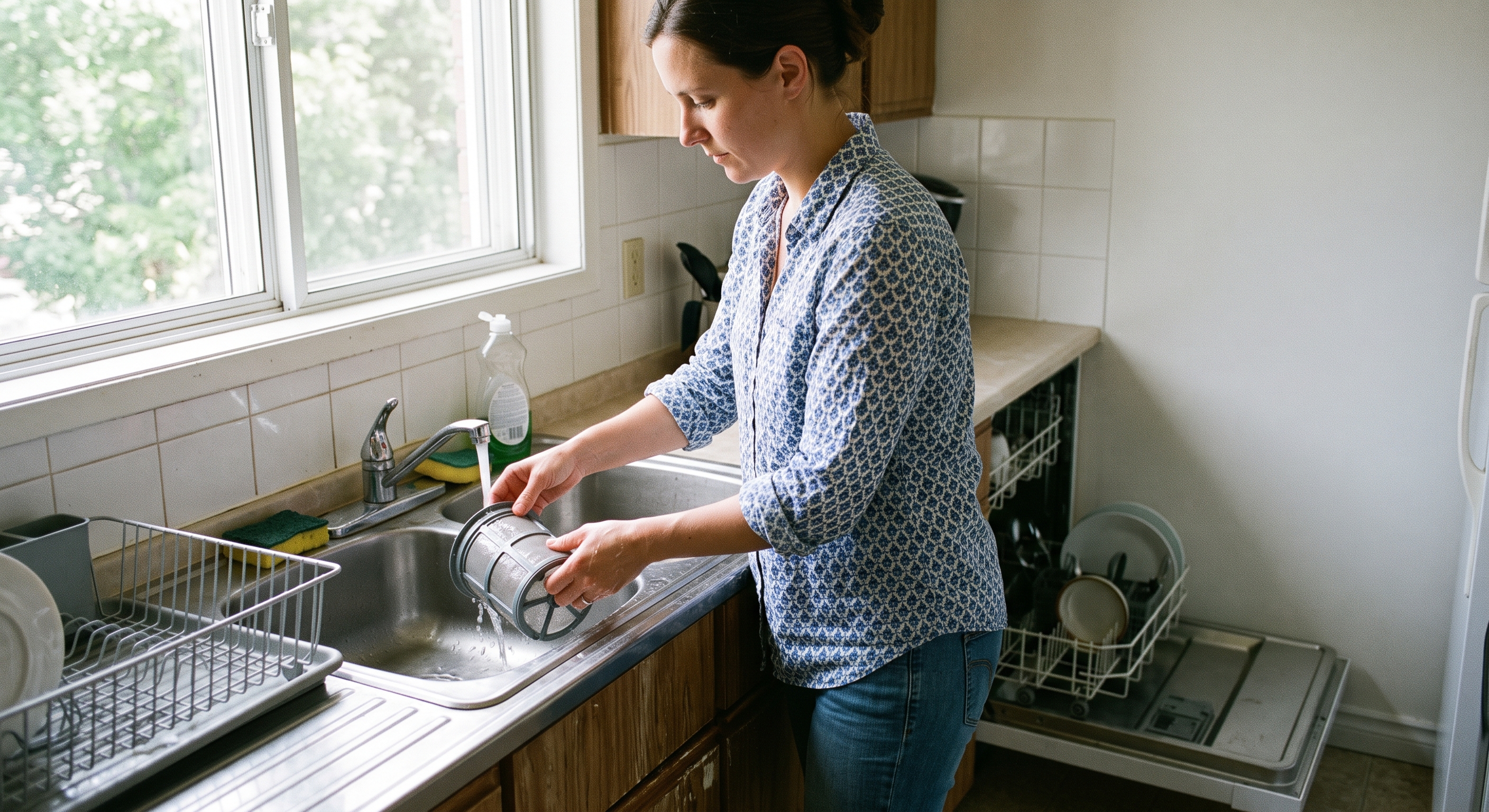
Routine kitchen-appliance care can prevent small usability problems and makes it easier to tell the difference between normal upkeep and an actual appliance failure. The key is to stick to user-serviceable filters, ordinary cleaning, and the instructions for the specific appliance in your Richmond rental.
If an appliance will not start, will not heat or cool, is leaking, will not drain, is sparking, or has another operating fault, use the Rental Troubleshooting library.
Dishwasher Filter Care
Not every dishwasher uses the same filter design. Some have a removable manual-clean filter near the bottom of the tub, while other models use a different filtration system.
If your model has a normal twist-out or lift-out filter, remove only the parts intended for user cleaning. Rinse the filter with warm water and use a soft brush when needed, then reinstall it securely in the position specified by the manufacturer. Do not remove screws, pull the dishwasher out, disconnect hoses, or use chemical drain cleaner inside the dishwasher.
Whirlpool's dishwasher filter guidance shows the general removable-filter process while emphasizing that filter design varies by model.
If the dishwasher still will not drain or clean normally after the appropriate filter care, use our Dishwasher Problems guide.
Refrigerator Water Filters
If your supplied refrigerator has a user-replaceable water filter, identify the refrigerator model and use the filter specified for that appliance. Filter locations, locking mechanisms, flushing instructions, and filter-status resets vary substantially between models.
Do not force a filter that does not seat normally. If water begins leaking after a filter change, stop using the dispenser or ice-maker water function as appropriate and report the issue rather than repeatedly removing and reinstalling parts.
Cooling problems, ice buildup, a freezer that is warming, or a refrigerator that will not maintain temperature are troubleshooting problems rather than filter-care jobs.
Stoves, Ovens & Microwaves
Let cooking surfaces cool before routine cleaning and use products appropriate for the appliance surface. Remove and clean only ordinary user-removable parts intended for routine care, such as certain burner grates or drip pans, and reinstall them normally after they are clean and dry.
Do not disassemble burners, igniters, control panels, electrical connections, gas components, or microwave housings.
If you smell gas, stop appliance troubleshooting and follow the Gas Smell & Suspected Gas Leak guidance. Sparking, burning odor, scorching, or unusual heat also moves the issue out of routine cleaning.
Keep Fats, Oils & Grease Out of the Drain
Kitchen care also includes what does not go down the sink. The City of Richmond recommends keeping fats, oils, and grease out of drains because they can collect inside sewer piping and contribute to blockages.
Let greasy cookware cool, wipe excess grease from pots and pans before washing, use sink strainers for food solids, and dispose of collected household grease with the regular waste as directed by local guidance. See the City of Richmond fats, oils, and grease guidance for more information.
When Routine Care Becomes an Appliance Problem
Routine care ends when the appliance itself stops functioning normally. If cleaning a user-serviceable part does not resolve the issue, or the appliance is leaking, not starting, not draining, not cooling, not heating, sparking, smoking, or making an abnormal noise, use the applicable troubleshooting guide rather than taking the appliance apart.
Return to Systems Care for other routine household care. If a continuing appliance problem needs service, submit a maintenance request through the resident portal.
Published: September 2, 2026