
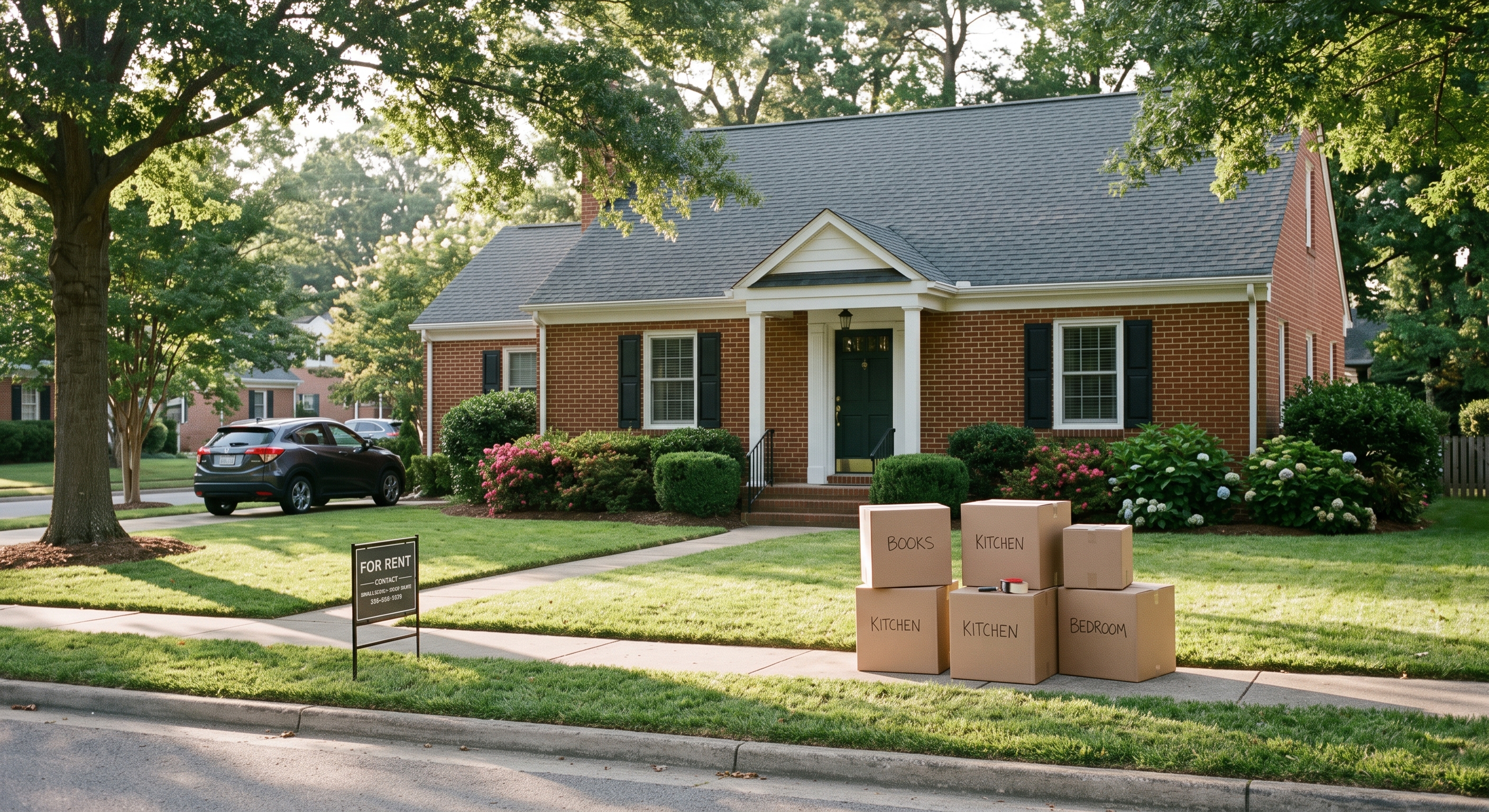
Once an owner has decided to keep a Richmond home as a rental, the period before moving out of Virginia is unusually valuable. Property condition, access, insurance, rental pricing, records, nonresident-owner requirements, and maintenance authority are much easier to organize before the owner is several states away.
PMI James River's Richmond Owner Resources focus on the systems that keep a rental operating after that transition. The broader guide to managing a Richmond rental from out of state explains the long-term operating model; this article focuses on what should be settled before the owner leaves Virginia.
Key Takeaways
- Resolve property condition, rent strategy, access, insurance, records, and local operating responsibility before moving when possible.
- Owners still deciding whether to keep the home should finish the rent-versus-sell analysis before spending money preparing it as a rental.
- Virginia resident-agent and nonresident tax-registration issues should not be discovered after the first lease is already underway.
- Remote ownership works better when repair authority, reserves, keys, vendor information, and communication systems are established in advance.
Make Sure The Property Is Actually Becoming A Rental
This article starts after the strategic decision. If the owner is still choosing between holding the property and selling it, finish that analysis first. PMI James River's guide to whether to rent or sell a Richmond property considers equity, cash flow, vacancy, long-term ownership, and the consequences of selling.
Once the decision is to rent, the home should stop being managed as a former residence and start being prepared as an operating rental asset. That means decisions should be based on the future resident, current rental market, condition of the property, legal requirements, and long-term ownership plan rather than simply preserving the home exactly as the owner used it.
Document The Property Before The Move
Start with a complete condition review while access is easy. Identify repairs, deferred maintenance, safety items, cleaning, paint, flooring issues, appliances, landscaping, keys, remotes, warranties, utility information, and any association documents that will affect rental use.
For a condo, townhouse, or HOA home, confirm rental restrictions before advertising or signing a lease. An owner should not discover after moving that the governing documents impose a lease term, approval process, rental cap, move fee, or other requirement that changes the plan.
The goal is not to renovate everything. A rental should be complete, functional, clean, presentable, and supported by a defensible condition record. The Richmond rent-ready baseline explains how to separate necessary turnover work from optional improvement.
Owners converting a former residence to rental use should also preserve tax records. IRS Publication 527 explains that depreciation basis for property converted from personal to rental use is generally based on the lower of fair market value or adjusted basis at conversion. Keeping acquisition, improvement, and conversion-date records can make later tax reporting much easier.
Set The Rent And Launch Plan Before Distance Adds Friction
A former mortgage payment or desired monthly cash flow does not determine market rent. The property still competes against the homes a prospective resident can choose today.
A Richmond rental analysis should consider current competition, recent leased results, condition, layout, parking, utilities, pet policy, availability, lease timing, and the property's actual submarket. The Richmond rental-pricing guide explains why the useful answer is normally a supportable range rather than one guaranteed number.
Set the launch position and the adjustment rule at the same time. If inquiry, showing, application, or feedback patterns show that the market disagrees with the starting position, the owner and manager should already know how that evidence will be evaluated. That is easier than renegotiating the entire pricing strategy from another state after vacancy begins to accumulate.
Complete The Nonresident-Owner Setup
Moving out of Virginia can change the owner's administrative obligations even though the property itself has not changed.
Qualifying nonresident residential property owners should review Virginia's resident-agent requirement before the next lease is executed. Virginia law requires the applicable agent designation and office address to appear in the lease.
Virginia Tax also has a separate nonresident-owner registration process. Owners receiving Virginia rental income through a broker or property management firm should understand the Virginia Form R-5 process and keep their residency information current when a move changes their status.
These are separate requirements. A resident agent handles a legal-service function. Tax registration addresses Virginia-source income and reporting. Neither substitutes for an actual maintenance, leasing, or property-management system.
Leave Behind A Working Local Operating System
Before the moving truck leaves, the owner should be able to answer several practical questions:
- Who has keys, remotes, access codes, and any necessary association credentials?
- Who receives a maintenance request at 8:00 p.m.?
- Who can enter the property when lawful access is needed?
- What routine repair amount can proceed without another owner approval?
- What funds are available for normal repairs and turnover costs?
- Where are warranties, appliance information, inspection records, leases, invoices, and property history stored?
- Who coordinates vendors, verifies work, and closes the record after a repair?
The owner does not need to make every future decision before moving. The owner does need a system that identifies which decisions can move routinely and which ones come back for approval.
That is what turns a move into a manageable ownership transition instead of a rental property that continues to depend on someone who no longer lives nearby.
Frequently Asked Questions
Should I Hire A Property Manager Before Or After Moving Out Of Virginia?
If professional management will be used, completing the setup before the move is usually easier. The manager can inspect the property, gather records, establish access, identify rent-ready work, discuss rental pricing, and resolve property-specific questions while the owner is still local.
Do I Need To Finish Every Repair Before I Move?
No. The important distinction is whether the property has been evaluated and there is a clear plan. Work needed for safety, legal compliance, marketability, or occupancy should not be deferred simply because the owner is moving, but optional improvements can be prioritized based on the rental strategy.
Can I Keep Managing The Property Myself After Moving?
Yes, if the owner has reliable local access, vendor coverage, maintenance procedures, records, communication systems, and backup when unavailable. Remote self-management becomes fragile when routine work still depends on the owner personally being in Richmond.
Prepare The Rental Before The Owner Becomes Remote
The best time to discover a missing key, uncertain repair history, HOA restriction, insurance question, rent-ready problem, or nonresident-owner requirement is before the owner moves.
A clean transition lets the owner leave Richmond without leaving behind unfinished operating decisions. The property can then function as an investment rather than as a former home that still requires the owner's physical presence.
Published: September 2, 2026