A rental property does not need a perfect forecast of every future repair. It needs enough visibility to keep predictable replacements from arriving as financial emergencies.
For Richmond Metro rental owners, a useful 10-year capital plan starts with the property's actual systems, finishes, condition, repair history, and operating demands. PMI James River's rental maintenance services are built around that property-specific approach, while our rental maintenance operations framework defines how routine repairs, owner approvals, documentation, and repair-versus-replace decisions move once work is needed.
This article addresses a different question: how should an owner look ahead before the work order exists? The goal is not to replace a property evaluation, contractor diagnosis, reserve analysis, or tax advice. It is to build a practical decision calendar so the owner can see which parts of the property deserve monitoring, which may need replacement during the hold period, and which can reasonably stay in repair mode.
Key Takeaways
- A 10-year CapEx plan should be built from the specific property's condition and history, not a generic component-lifespan chart.
- Separate recurring maintenance, repair decisions, and future replacement exposure. They interact, but they are not the same budget problem.
- Use ranges and decision windows rather than pretending a roof, HVAC system, appliance, or finish will fail on a precise date.
- Repeated repairs, declining reliability, resident disruption, parts availability, and installation scope can move an item toward replacement before age alone would.
- Review the plan at least annually and after any major repair, replacement, turnover, or property-condition change.
In This Guide
- What a 10-Year CapEx Plan Is
- Start With the Property, Not a Lifespan Chart
- Build a Simple 10-Year CapEx Register
- When a Quick Fix Still Makes Sense
- When Replacement Deserves Priority
- How Richmond Properties Change the Plan
- Turn the Plan Into a Funding Strategy
- Review the Plan Every Year
What a 10-Year CapEx Plan Is
A 10-year CapEx plan is a forward-looking inventory of the property's larger physical needs. It asks which systems and finishes are likely to require meaningful spending during the owner's expected hold period, what evidence would move each item closer to replacement, and how the owner intends to fund the work.
The planning discipline is common in larger real estate. Fannie Mae's 2026 multifamily guidance requires replacement reserves to account for anticipated capital replacements and major maintenance over a period that can extend up to 12 years, using a property condition assessment and a schedule of expected items. A single-family landlord is not subject to that multifamily underwriting rule, but the underlying discipline is useful: identify likely needs before they become urgent and connect them to a funding plan. Fannie Mae's current replacement-reserve guidance is a useful example of that approach.
The plan should not be confused with a tax schedule. In everyday property-management use, owners often say "CapEx" to mean larger replacement or improvement spending. Federal tax treatment is more technical and depends on the facts of the expenditure. That distinction matters later, but it should not prevent an owner from planning operationally for a roof, HVAC system, water heater, flooring package, appliances, exterior components, or other major work.
Start With the Property, Not a Lifespan Chart
Generic useful-life charts are tempting because they turn uncertainty into neat numbers. They are better used as prompts than predictions.
HUD's current housing guidance takes a more practical approach for major systems: remaining useful life is estimated from age and condition. The systems it identifies include structural components, roofing and weatherproofing, plumbing, electrical, and HVAC. HUD's major-systems framework reinforces the point that age alone is not enough.
For a rental owner, the starting file should answer questions such as:
- What major systems and finishes are present?
- What is known about installation or replacement dates?
- What condition was documented at acquisition, turnover, or the latest property evaluation?
- What repairs have already occurred, and are the same symptoms recurring?
- Are parts, materials, or compatible replacements easy to source?
- Would replacement require secondary work such as electrical, plumbing, trim, flooring, paint, access, or fit corrections?
- Would failure create a major resident, habitability, water-damage, or vacancy problem?
This is also why a reserve shortcut should stay a shortcut. PMI James River's guide to the 1% maintenance rule for Richmond rentals treats it as a starting heuristic, not a substitute for property-specific planning. Two homes with the same value can have very different next-10-year exposure.
Build a Simple 10-Year CapEx Register
The plan does not need specialized software. A spreadsheet or property record can work if it is kept current. The useful part is the information captured for each item.
| Field | What to Record | Why It Matters |
|---|---|---|
| Component | Roof, HVAC, water heater, flooring, appliances, exterior systems, plumbing equipment, well or septic components when applicable | Creates the inventory of larger future needs |
| Known age or date | Installation date, manufacture date, purchase record, permit, invoice, serial number, or best verified estimate | Provides context without treating age as the decision by itself |
| Current condition | Observed wear, corrosion, leaks, noise, performance, damage, prior patching, or other condition notes | Helps estimate whether the item is stable, declining, or already near a decision point |
| Repair history | Invoices, callbacks, repeated symptoms, parts replaced, warranties, and technician findings | Shows whether repair spending is restoring reliability or merely extending a failing cycle |
| Planning window | Monitor, likely 1 to 3 years, likely 4 to 6 years, likely 7 to 10 years, or no current replacement signal | Creates a practical calendar without pretending to know an exact failure date |
| Replacement trigger | Repeat failure, leak, declining performance, parts scarcity, condition threshold, turnover opportunity, or contractor recommendation | Defines what evidence should change the plan |
| Funding target | Current reserve allocation, expected owner contribution, financing plan, or future cash-flow allocation | Connects the physical plan to actual financial readiness |
For appliances, the record should go beyond purchase price. PMI James River compares the total ready-to-use replacement cost, including delivery, installation, haul-away, required connection parts, warranty or return path, and coordination. The same principle applies to other replacements: the relevant number is the completed scope, not the attractive number at the top of a product page.
When a Quick Fix Still Makes Sense
A capital plan should not turn every older component into an automatic replacement project. Good planning protects the owner from premature replacement as well as from deferred replacement.
Repair remains the stronger choice when the failure is specific, the rest of the component is in acceptable condition, the repair is likely to restore dependable service, parts are reasonably available, and the work does not simply postpone another obvious failure.
That decision is especially clear at the appliance level. Our rental appliance repair-or-replace framework looks at diagnosis confidence, condition, repair history, parts timing, resident disruption, and completed replacement cost rather than using age or a single percentage as the answer.
A "quick fix" becomes a problem when it is really a repeat fix. If the same system keeps generating work orders, callbacks, resident access, or secondary work, the owner should stop evaluating each invoice in isolation and look at the accumulated pattern.
When Replacement Deserves Priority
Replacement deserves more serious consideration when several signals begin to line up:
- The same or related failure has already been repaired more than once.
- The component has multiple condition problems, not one isolated defect.
- Parts are difficult to source or repair timing is becoming unpredictable.
- Failure could create meaningful water, safety, resident-service, or property-damage exposure.
- The repair would leave behind another obvious weak point.
- A turnover or planned vacancy creates a cleaner installation window.
- The owner can replace on a normal schedule instead of waiting for peak-demand or emergency conditions.
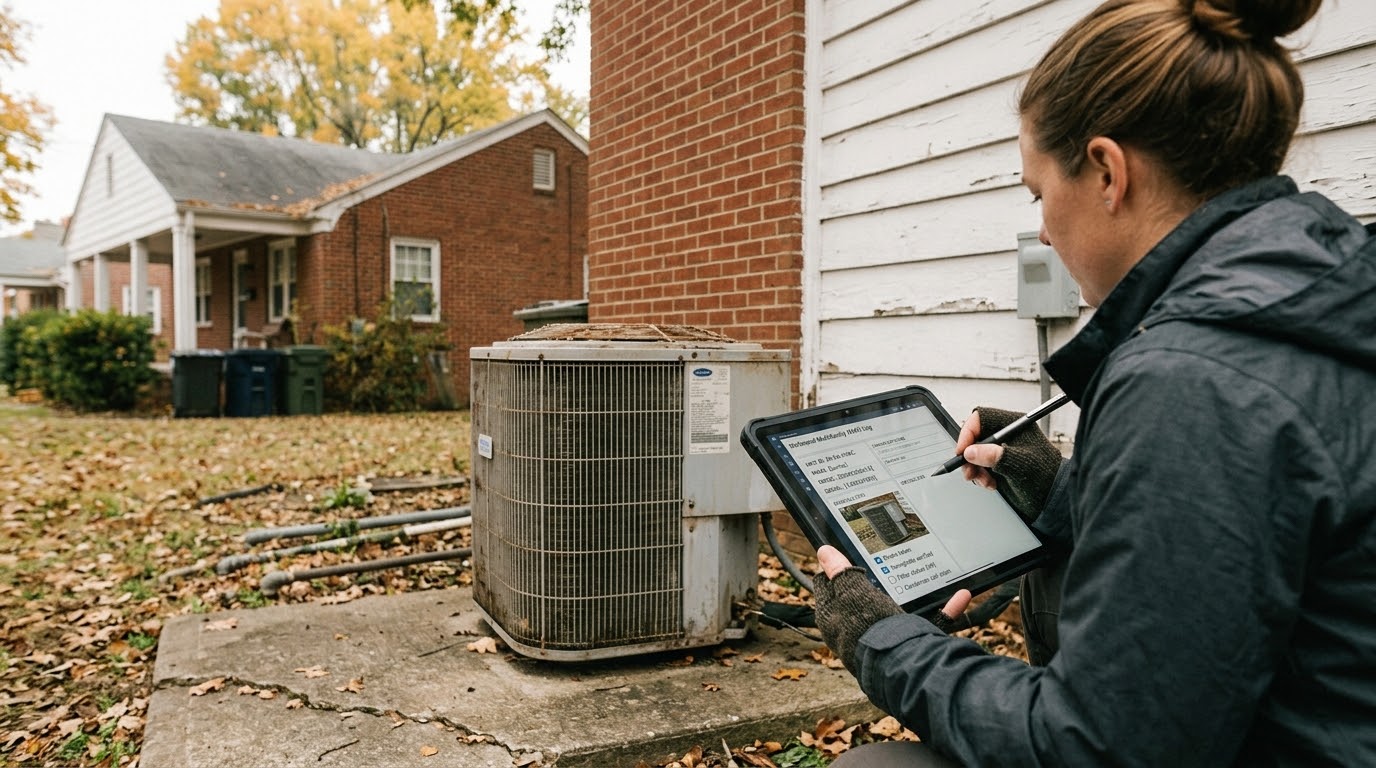
Timing matters in Richmond. HVAC is a good example. In PMI James River's local experience, peak-season contractor schedules can tighten quickly. A system that is still operating but showing repeated performance or repair concerns may deserve an earlier planning conversation because the owner's options can shrink once it fails during the hottest or coldest part of the year.
This is where proactive rental maintenance and capital planning meet. Proactive maintenance tries to preserve the existing asset and catch manageable problems early. Capital planning decides what happens when preservation is no longer the best use of the next dollar.
How Richmond Properties Change the Plan
Richmond Metro does not have one rental-property maintenance profile. A 10-year plan should reflect the actual building and site rather than the ZIP code alone.
An older Richmond City property may have several generations of repairs or replacements behind the visible finishes. That makes documentation especially valuable when installation dates are unknown. A newer rental in Henrico or Chesterfield may have fewer age-related system concerns, but "newer" does not mean every finish has a long service life. PMI James River has seen builder-grade rental finishes, including carpet, wear sooner than owners expected even in relatively new homes.
Hanover can add a different planning fork where a property uses a private well or septic system. Those systems belong in the capital inventory because pumps, treatment equipment, tanks, drainfields, and related site conditions can create future work that a public-water and public-sewer property does not carry.
The practical response is not four different planning systems. Use one framework, then change the asset list and escalation triggers for the property in front of you. The Richmond rental maintenance checklist can help identify the recurring and seasonal items that should feed observations into that longer-term plan.
Turn the Plan Into a Funding Strategy
A CapEx register without a funding plan is only a list of future problems.
The owner does not need to hold the entire 10-year projected cost in cash today. The useful question is whether the reserve and cash-flow strategy are moving in the same direction as the physical needs of the property.
Start by separating three buckets:
- Recurring maintenance. Predictable operating work such as routine service, smaller repairs, landscaping responsibilities, filters, and periodic upkeep.
- Repair reserve. Liquidity for failures that should be repaired rather than replaced.
- Capital replacement exposure. Larger items that are likely to require a meaningful owner decision during the hold period.
Then compare the property record with the financial record. PMI James River's article on recurring rental expenses explains why repeated spending should be read as a pattern rather than a collection of isolated invoices. A system that consumes a growing share of the repair budget may need to move forward in the capital plan.
Funding should also be sequenced. If the roof and HVAC both appear likely to demand attention within the same three-year window, that is more important than a simple annual average. The owner may choose to build reserves faster, preserve more cash after distributions, schedule one replacement at turnover, or adjust the sequence after a contractor evaluation.
Review the Plan Every Year
A 10-year plan is not a document to create once and file away. Its value comes from becoming more accurate as the property produces new information.
Review it at least annually and after events that materially change the property record:
- a major repair or replacement;
- a turnover or make-ready project;
- a property evaluation that identifies new wear or deterioration;
- a recurring maintenance pattern;
- a contractor diagnosis that changes expected remaining service life;
- an insurance, code, utility, or site condition that materially changes the likely scope of future work.
When an item is replaced, do not simply remove it from the list. Record what was installed, when it was installed, the warranty information, model or serial information where useful, the completed cost, and any related work. That becomes the starting point for the next planning cycle.
Quick Answers for Richmond Rental Owners
Does a landlord need a separate bank account for every future capital expense?
No. The planning goal is visibility and financial readiness, not a separate account for every roof, appliance, or HVAC system. The owner should be able to see which larger needs are approaching and whether current reserves and expected cash flow can absorb them.
Should an owner replace a component as soon as it reaches a published life expectancy?
No. Published life expectancies are useful context, not automatic replacement dates. Current condition, repair history, performance, diagnosis, parts availability, failure consequences, and the property's operating timeline should influence the decision.
Is every item in a landlord's CapEx plan a capital improvement for tax purposes?
No. Operational planning language and federal tax classification are not identical. IRS Publication 527 explains that repairs and improvements receive different treatment, and improvements can include betterments, restorations, or adaptations to a new or different use. Owners should keep accurate records and use the actual facts of the expenditure when determining tax treatment. IRS Publication 527 provides the federal framework.
Why use 10 years if the owner may sell earlier?
Because the exercise still reveals concentration risk. An owner considering a shorter hold can see which major systems may affect the property before sale, which replacements may become negotiation issues, and whether several large needs are clustering in the same period. The plan can then be shortened or extended to match the actual investment horizon.
From Surprise Repairs to Planned Ownership
Rental property will always involve repairs. The objective is not to eliminate them or replace everything early. It is to recognize which expenses are routine, which repairs still make economic sense, and which larger components are moving toward a decision that should be funded and scheduled rather than discovered under pressure.
For Richmond Metro owners, a well-maintained 10-year CapEx plan turns the property's maintenance history into a forward-looking operating tool. It gives the owner more time to evaluate scope, compare repair with replacement, coordinate around turnover or seasonality, and make larger spending decisions while options still exist.
PMI James River can help owners connect property evaluations, repair history, vendor findings, replacement decisions, and ongoing maintenance coordination into one documented operating system.
Published: September 8, 2026