
Spring around Richmond can change the feel of a rental quickly. Windows that stayed closed all winter start collecting pollen, rain makes damp spots easier to notice, and the first warm afternoons can expose cooling problems that were invisible a few weeks earlier.
You do not need an owner-style preventive-maintenance checklist. Focus on the simple things you can safely check or clean, the habits that make the home more comfortable, and anything that looks or behaves differently enough to report. For troubleshooting videos, maintenance-request guidance, and emergency information, use the PMI James River Resident Maintenance hub.
Give the Home a Simple Spring Reset
A few small jobs can make the house feel cleaner and help you spot changes before the hotter months arrive.
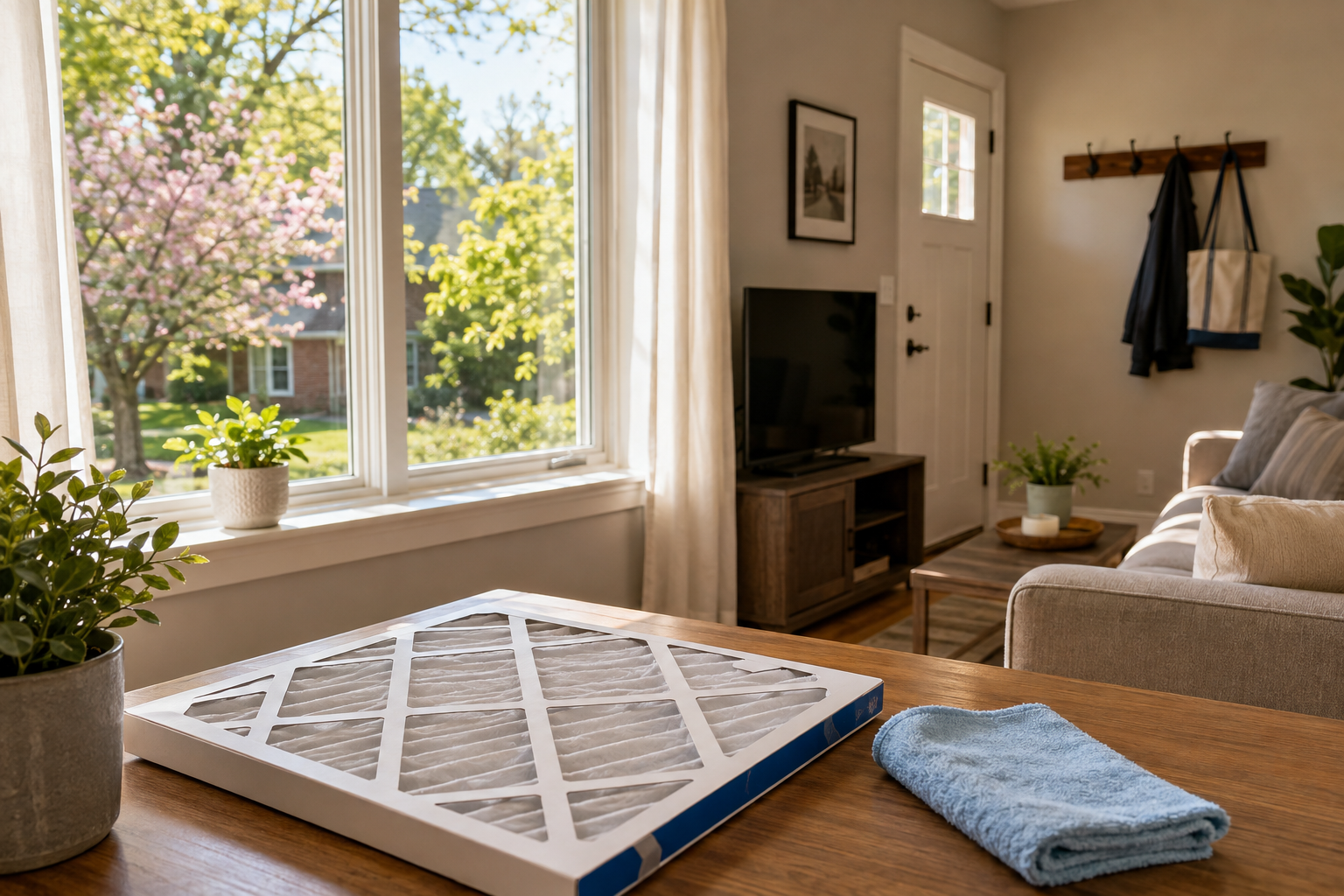
- Change the HVAC filter when the replacement is due. PMI James River residents who receive filters through the Resident Benefits Package get a replacement about every 90 days. Put the new filter in when it arrives, using the size and type provided for the home.
- Clear supply vents and return grilles. Move boxes, furniture, curtains, and other items that are blocking normal airflow. You do not need to remove equipment panels or service the system.
- Wipe window sills, tracks, and nearby hard surfaces. A damp cloth usually picks up settled pollen better than simply stirring it back into the air.
- Check the fans you already use. Bathroom exhaust fans and kitchen ventilation are especially useful as spring becomes warmer and more humid. If a fan has stopped working, sounds different, or no longer seems to move air, that is useful information to report.
Handle Pollen Without Turning It Into an HVAC Project
Pollen is a normal part of spring, but it can work its way indoors through open windows, doors, clothing, and shoes. On high-pollen days, keeping windows closed can reduce what comes inside. The CDC's pollen guidance also recommends changing clothes and showering after outdoor exposure for people affected by pollen.
Inside, keep the response simple: wipe pollen from hard surfaces, clean around entrances, and keep the HVAC filter current. Do not automatically install a denser or higher-efficiency filter just because pollen is heavy. Filter choices need to fit the system. If you are unsure what belongs in your rental, use the filter supplied for the home or ask before changing types.
A yellow film on an open window sill is usually a cleaning issue. A vent that suddenly has weak airflow, a system that is not cooling after basic thermostat and filter checks, or a new mechanical sound is a different matter. Those changes are worth reporting.
Watch What Happens After Rain and During Muggy Weather
Spring moisture deserves attention without treating every fogged mirror or damp day as a maintenance problem. Normal household moisture should clear with reasonable ventilation. Run the bathroom fan during and after showers, use kitchen ventilation when cooking, and let wet towels and clothing dry fully.
The EPA's moisture guidance emphasizes controlling moisture and drying wet materials promptly. In a rental, the practical question is whether water or dampness is new, recurring, or coming from a source you cannot control.
Let us know if you notice an active leak, a ceiling or wall stain that appears or grows after rain, bubbling paint, a repeatedly damp baseboard or floor, a persistent musty odor, or water collecting around HVAC equipment or a utility area. Photos are helpful, especially when the condition changes after rain.
You do not need to climb onto a roof, open a wall, enter a crawlspace, or diagnose the source yourself. When ordinary spring rain turns into severe weather, our storm readiness guide for Richmond renters covers what to do before, during, and after the storm.
Check Cooling Before the First Hot Stretch
A mild spring morning can hide a cooling problem until the first genuinely hot afternoon. Before you need the system heavily, make a few basic checks that do not require tools or equipment access:
- Confirm the thermostat is set to the mode you intend to use.
- Keep the thermostat fan setting on Auto unless your home's instructions say otherwise.
- Make sure the current HVAC filter is installed correctly.
- Keep indoor supply vents and return grilles open and unobstructed.
- Pay attention to new noises, unusual odors, ice, or water where you have not seen it before.
If the cooling system does not start, blows warm air, repeatedly stops, develops ice, or produces water after those basic checks, submit a maintenance request with the details. For a deeper look at airflow, humidity, thermostat habits, and what to check when the house feels too warm, see why a Richmond rental can feel hot in summer.
Make a Maintenance Request Easy to Understand
Spring maintenance requests are most useful when they describe a change, not just a symptom. Tell us what happened, where it is happening, when you first noticed it, and whether it is constant or intermittent. Add a photo or short video when it helps show the problem, and mention any simple check you already tried.
- Instead of: "The window is wet."
- Try: "Water appeared on the bedroom sill after last night's rain. The window was closed. I dried it this morning, and it came back."
- Instead of: "The AC is not right."
- Try: "The thermostat is set to Cool and the fan is on Auto. The filter is current, but the vents are blowing room-temperature air."
That level of detail helps us separate a quick self-check from a condition that needs service without asking you to diagnose the equipment yourself.
Spring is only one part of caring for a rental through Richmond's changing seasons. Use our year-round seasonal maintenance guide for Richmond renters to see what changes as summer, fall, and winter arrive. If something in your home has changed and the basic checks do not resolve it, send the details through the resident maintenance process so we can help.
Published: August 22, 2026