
Richmond summers are humid by design. The James River runs right through the city, the heat settles in by early June, and by July the air feels thick the moment you step outside. The good news is that the inside of your home does not have to feel that way. With a few small habits, your rental can be a real refuge from the heat instead of feeling like more of the same.
Here is how to get your home working for you this summer, and how to tell the difference between a quick fix you can handle yourself and something worth sending our way.
This guide is about the home itself. When the smarter move is to get out of the house for a few hours, our full Richmond summer survival playbook for renters covers cool-off spots, timing your day around the heat, and checking the river before you go.
For the broader year-round view, our Seasonal Maintenance for Richmond Renters guide connects this summer advice with spring, fall, winter, and storm-readiness guidance.
Help Your AC Do Its Job
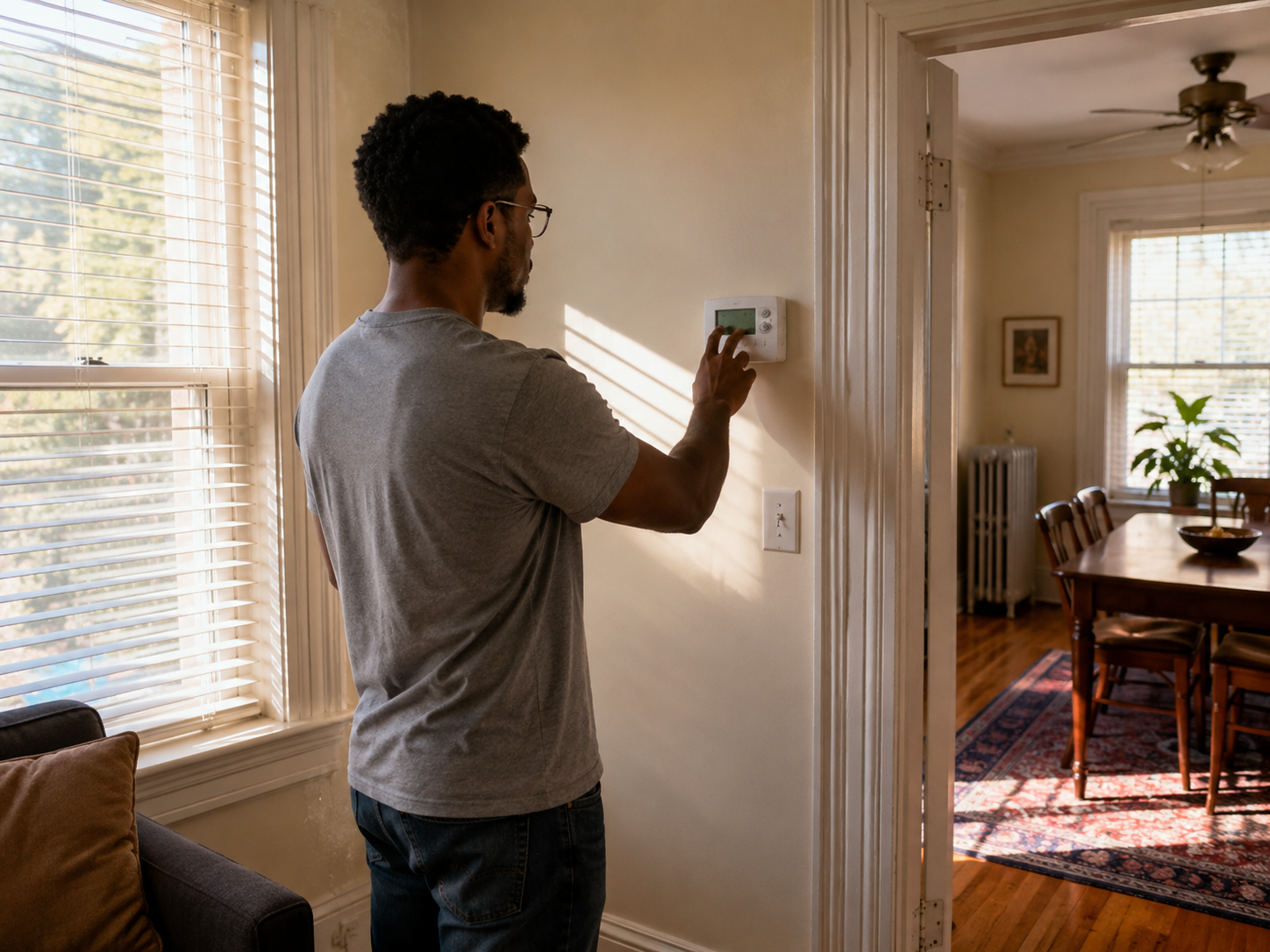
Most of us set the thermostat and forget about it. A couple of easy adjustments make a real difference, especially on the hottest afternoons when even a healthy system is working hard to stay ahead of the outdoor air.
Set the fan to Auto, not On. Check your thermostat for a fan toggle with "Auto" and "On." For most conventional systems, Auto is the better summer default because the blower cycles with the cooling system instead of running nonstop between cooling cycles. If your system has been set up for continuous fan operation for a specific reason, follow the instructions for that equipment.
Try Dry mode on muggy mornings that are not that hot. If your thermostat or cooling system has a Dry or Dehumidify setting, it is designed to reduce indoor humidity with less emphasis on cooling. How that mode behaves varies by equipment, so use it according to the instructions for your system.
Check the HVAC filter during heavy summer use. If filter changes are your responsibility, follow the schedule provided for your home. If PMI James River supplies filters for the property, use the delivered filter rather than guessing at a different size or replacement schedule. A clogged filter can restrict airflow and make cooling less effective.
A quick filter check can save you a service visit for something as simple as restricted airflow from a dirty filter.
Block the Heat Before It Gets In
The more heat that pours in through your windows, the harder your AC has to work and the warmer your home feels. A little blocking goes a long way.
Close the blinds on south and west windows from about noon to 5 p.m. Direct afternoon sun through glass heats a room fast, even with the AC running. Keeping those blinds down during the hottest stretch of the day is one of the easiest ways to stay ahead of it.
Flip your ceiling fans to summer mode. Most ceiling fans have a small switch on the motor housing that reverses the blade direction. In summer you want the blades turning counterclockwise, which pushes air straight down and creates a wind chill effect on your skin. According to the U.S. Department of Energy, running a ceiling fan lets you raise the thermostat about 4 degrees with no loss of comfort, which means less work for your AC.
One thing to remember: fans cool people, not rooms, so turn them off when you leave, since an empty room does not benefit from the breeze.
Control Moisture Where It Starts
Humidity does not only come through the walls. A lot of it is made inside your home, from showers, cooking, and even laundry. The EPA suggests keeping indoor humidity below 60 percent to keep your home comfortable and discourage mold, and small habits can help.
Run the bathroom exhaust fan during your shower and for about 15 minutes after. It is there for exactly this, and in a Richmond summer it earns its keep. If the mirror stays heavily fogged long after you are done, the fan may not be venting well, which is worth a quick note to us.
Use the range hood when you cook. Boiling water and sauteing put a surprising amount of steam into the air, and it settles into walls and cabinets if it has nowhere to go. The hood pulls it out. No hood? Crack a window while you cook.
Dry laundry in the dryer or outside when you can. Air drying a full load indoors releases a lot of moisture into the air. A small load near an open window is fine. A full load hanging in the bedroom is a different story.
When to Reach Out
Most of what summer throws at you is manageable with the habits above. A few things, though, are worth flagging so we can take a look before they grow:
In our Richmond-area HVAC work, we do not treat one indoor temperature as a universal pass-or-fail test. Outdoor conditions, humidity, airflow, equipment design, ductwork, and the home's heat load can all affect performance. What helps us most is knowing what changed from the home's normal behavior.
- Condensation on interior walls or floors, not just a little on the windows, can point to persistent excess moisture or another building or HVAC condition worth checking.
- A musty smell that will not go away often signals moisture or mold at the source. Fans and open windows will not clear it, so it is best for us to track down where it is coming from.
- Standing water near your AC unit or in a utility closet can come from a condensate drainage problem or another HVAC issue, so it is worth reporting.
For basic troubleshooting and maintenance guidance, start with our Resident Maintenance hub.
For any of these, the fastest way to reach us is to submit a maintenance request through your resident portal. Tell us what you noticed, when it started, and what you already tried. The earlier we catch these, the easier they are to fix. You can also find more tips and contacts on our resident resources page.
Frequently Asked Questions
Should my AC fan be set to Auto or On?
Auto is the better summer default for most conventional systems in Richmond. It lets the fan cycle with the cooling system instead of running around the clock between cooling cycles. If your equipment has been set up for continuous fan operation for a specific reason, follow the instructions for that system.
Why does my rental feel humid even when the AC is running?
Richmond air is simply heavy in summer, and everyday activities like showering, cooking, and drying laundry add to it. Running exhaust and range fans, keeping the thermostat fan on Auto, and using a Dry setting if your equipment provides one can all help. If you have done those and the air still feels damp or you notice a musty smell, send us a request so we can check it out.
Which way should my ceiling fan spin in summer?
Counterclockwise, so the blades push air down and create a cooling breeze. There is usually a small direction switch on the motor housing. Because a fan cools you and not the room itself, turn it off when you leave so you are not running it for an empty space.
A comfortable summer at home usually comes down to a handful of small habits, and those habits can make a real difference. If something does not seem right, or you just have a question about your home this summer, reach out to our team anytime. We are glad to help.
Published: May 26, 2026
Updated: August 22, 2026