
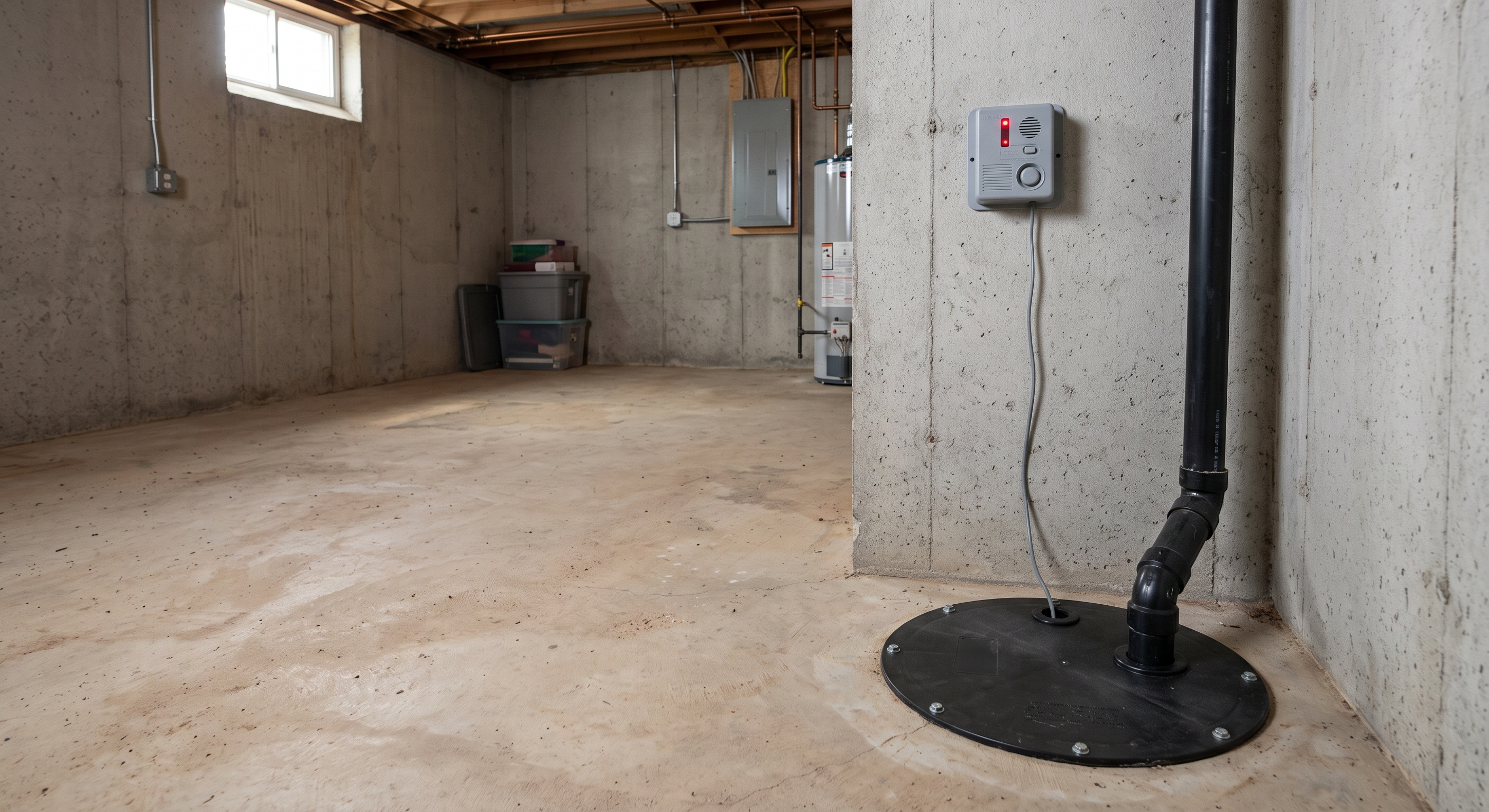
A sump pump or high-water alarm is meant to help control water before it spreads into the home. If an alarm sounds, water is rising in the sump area, or the pump appears not to be keeping up, focus first on what you can safely observe from a dry location.
Do not reach into the sump pit, manipulate the float, remove pump covers, open electrical equipment, or enter standing water around the system.
Key Takeaways
- A high-water alarm means the water level has reached the alarm sensor and deserves attention.
- Stay on dry flooring and observe the equipment without reaching into the pit.
- Check whether the property has otherwise lost power and note whether you can hear the pump operating.
- Water near electrical equipment changes the response immediately. Stay out of the water and report it.
If a High-Water Alarm Is Sounding
From a dry, normally accessible location, note whether you can see water rising, whether an alarm light or display is active, and whether you can hear the sump pump operating.
High-water alarms are designed to warn that liquid in the basin has risen to the alarm level. They do not by themselves tell you why the water level is high.
Take a photo or short video of the visible condition without leaning over or reaching into the pit.
Check General Power Status
If the sump pump appears silent, check whether the rest of the property has power. A broader power outage can also affect an electrically powered sump system.
If the home has lost power, use our No Power or Partial Power guide. Do not open sump electrical controls or repeatedly reset equipment breakers.
If Water Is Spreading
If water is beginning to move into a normally dry basement or finished area, move lightweight belongings away from the water if you can do so safely from dry flooring. Do not enter standing water to retrieve belongings.
If water is near an outlet, electrical panel, extension cord, appliance connection, or other energized equipment, stay away from the area. Use our Electrical Warning Signs guide for the electrical safety path.
Do Not Test the Pump by Reaching Into the Pit
Sump systems use different pumps, floats, alarms, backup arrangements, covers, and electrical configurations. A common online troubleshooting step is to manipulate the float or reach into the basin. That is not a resident troubleshooting step for PMI James River properties.
Leave the pit, float, pump, electrical connection, check valves, and control equipment in place.
When to Submit a Maintenance Request
If an alarm is active, water is rising or spreading, the pump is not controlling the water, or the same issue keeps returning, submit a maintenance request through the resident portal.
Tell us whether an alarm is sounding, whether you can hear the pump, whether water is rising or spreading, whether the home recently lost power, and whether heavy rain preceded the problem. Include photos or short video taken from a safe location.
For other unusual property systems, return to Special Systems in Richmond Rentals.
Published: September 2, 2026