
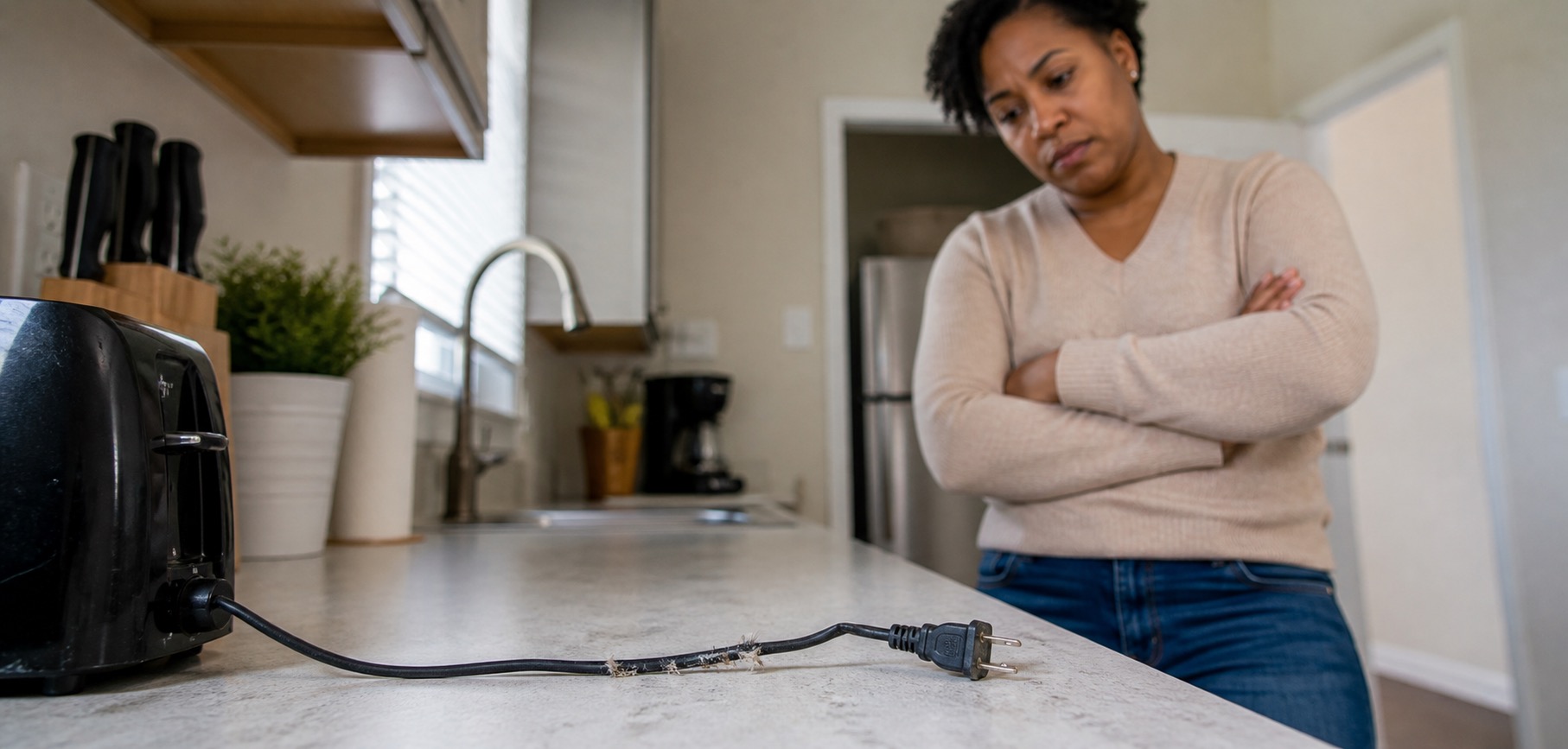
Some electrical problems are appropriate for a basic breaker, fuse, GFCI, bulb, or control check. Other symptoms are warning signs to stop using the affected equipment or area and report what is happening. Once there is a possible electrical hazard, the normal resident-maintenance boundary becomes much narrower.
The Electrical Safety Foundation International identifies recurring breaker trips or blown fuses, flickering or dimming lights, unusual buzzing or sizzling, hot or discolored outlets and switches, burning odors, sparks, and shocks or tingles as warning signs that can indicate an electrical problem. Its electrical warning signs guidance provides a useful overview.
Stop Troubleshooting for Active Electrical Danger
Stop using the affected outlet, switch, fixture, appliance, or area when you notice an active electrical hazard such as:
- Smoke or active burning.
- Sustained, repeated, or substantial sparking or arcing.
- A strong burning electrical odor.
- A hot or scorched outlet, switch, plug, cord, panel, or supplied device.
- An electrical shock or tingling sensation from building wiring or a supplied appliance or device.
- Exposed live electrical parts.
- Water at or around energized electrical equipment.
Do not touch the problem again to see whether it happens twice, and do not take something apart to find the source. If there is active fire or smoke, leave and call 911. Use the PMI James River emergency guide for immediate emergency routing.
If water is between you and an electrical panel or device, do not cross the water to reach a breaker.
Warmth, Discoloration, Buzzing and Burning Odors
An outlet or switch should not be unusually hot, scorched, or making crackling, sizzling, or buzzing noises. A new burning-plastic or hot-insulation odor around electrical equipment also deserves prompt attention.
Stop using the affected item if you can do so safely and report the details. Do not remove the wall plate, tighten electrical terminals, open the fixture, or probe the outlet once a warning sign is present.
Flickering or Dimming Lights
One lamp that flickers can sometimes be a bulb or ordinary fixture-control issue. The pattern becomes more concerning when several lights repeatedly flicker or dim, the problem affects more than one room, or the lights change whenever another appliance starts.
If the problem is isolated to one safely reachable bulb and there are no other warning signs, a correct replacement bulb is a reasonable first check. If the flickering or dimming is recurring, unexplained, or broader than one fixture, report it instead of repeatedly changing bulbs or resetting circuits.
Repeated Breaker Trips or Blown Fuses
A breaker or fuse is a protective device. One normal breaker reset or one correct screw-in plug-fuse replacement may restore a circuit, but a breaker that trips again or a replacement fuse that blows again should not be repeatedly reset or replaced.
Use our circuit breaker and fuse guide for the one-time procedure. If the protection operates again, leave the affected circuit off and submit a request.
Downed Power Lines and Exterior Utility Hazards
If a storm, tree, vehicle impact, or another event brings down a utility line, do not approach it or anything it is touching. Dominion Energy Virginia currently instructs people to stay at least 30 feet away from downed power lines. Use Dominion's downed power line safety guidance, and call 911 first when there is an immediate danger.
What to Report
When the immediate situation is safe enough to report, use the Rentvine resident portal unless the condition requires the emergency process.
Tell us exactly what you saw, heard, smelled, or felt; the room and component involved; whether the problem was one-time or recurring; whether one item or several areas were affected; what was operating at the time if you already know; and any safe photo or video you already captured. Do not recreate a spark, shock, heat condition, odor, or other hazard for documentation.
If the main issue is simply loss of electrical service without a warning sign, use the no power or partial power guide. For dead receptacles, use the outlet and GFCI guide.
Published: September 2, 2026