
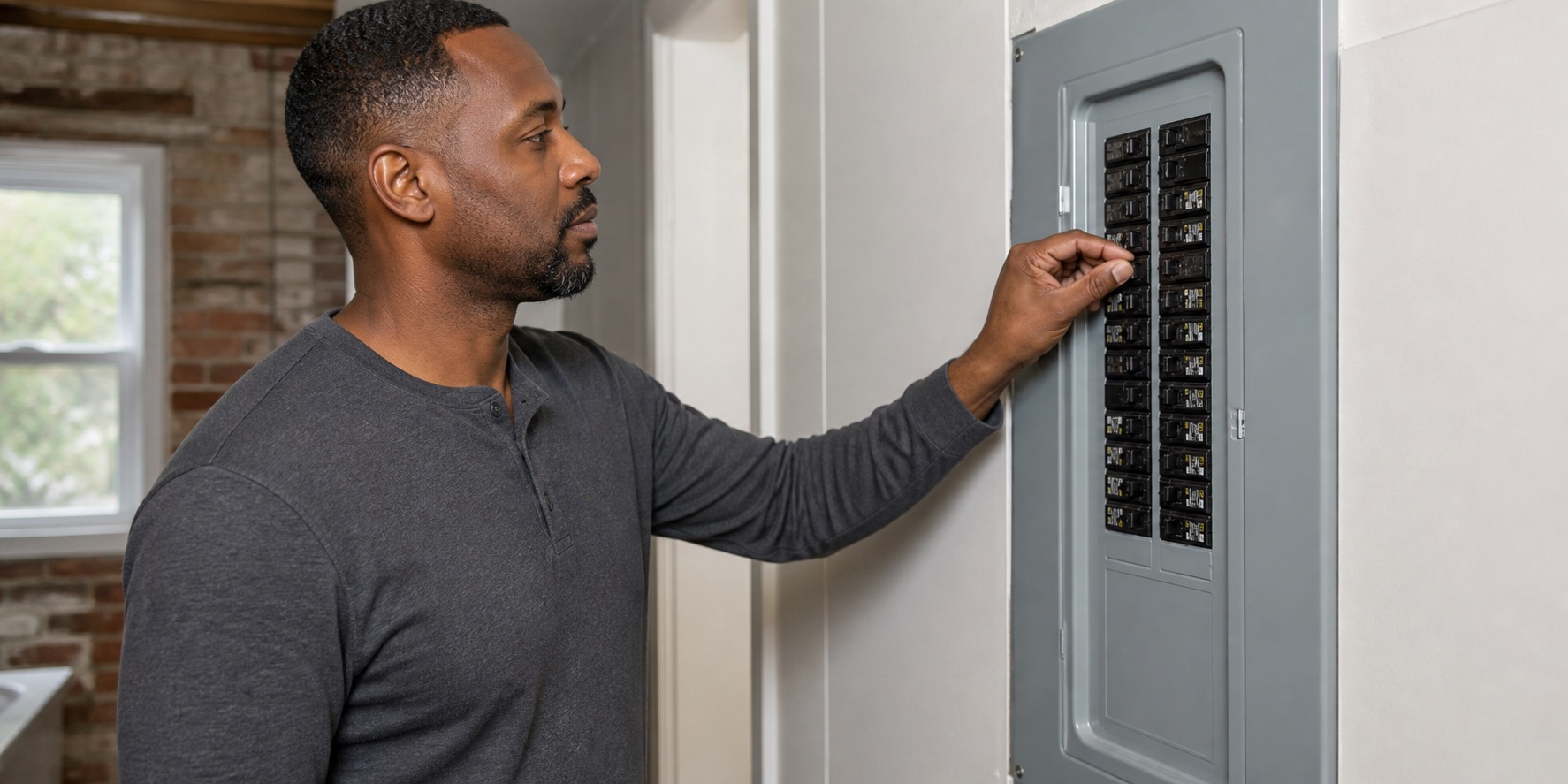
Circuit breakers and fuses protect electrical circuits by interrupting power when a circuit is overloaded or another electrical problem occurs. A resident can usually perform one normal breaker reset or replace one ordinary accessible screw-in plug fuse. If the protection trips or blows again, stop instead of starting a reset-and-retry cycle.
Before touching a breaker or fuse, stop if the panel is wet, hot, scorched, damaged, buzzing or crackling, has exposed parts, smells burned, has produced sustained or repeated sparks, or has given anyone a shock or tingle. Use the electrical warning signs guide instead.
How to Reset a Tripped Circuit Breaker
Use only the normal breaker switches intended for household operation. Do not remove the panel cover or touch anything behind it.
- Turn off or unplug the devices on the circuit that lost power.
- Go to the panel only if the area is dry and the normal breaker switches are safely accessible.
- Look for a breaker that is OFF or sitting between ON and OFF.
- Push that breaker fully to OFF.
- Move it firmly back to ON once.
If the breaker will not stay on or trips again, stop resetting it and submit a maintenance request. The Electrical Safety Foundation International describes the same basic OFF-then-ON breaker reset sequence.
If Your Home Has Screw-In Fuses Instead of Breakers
Some older Richmond-area homes still use fuse panels. An ordinary branch-circuit plug fuse is the small round fuse that screws into the front of the panel. Replacing that type of fuse is a normal household task when the panel is intact, dry, safely accessible, and the replacement rating is clear.
- Turn off or unplug the lights and devices on the affected circuit.
- If the panel has a normal user-operated main or master disconnect, turn it off before changing the fuse.
- Unscrew only the ordinary plug fuse. Avoid touching metal parts.
- Install a replacement with the same fuse type and the same amperage rating.
- Restore the main or master disconnect if you turned it off.
Never install a higher-amperage fuse or use another object to bypass the fuse. ESFI's current home electrical system guidance specifically warns against replacing a fuse with one of a larger amperage rating.
Stop Before Cartridge or Main Fuses
Do not remove or replace cartridge fuses, pull-out fuse blocks, main fuses, service fuses, or any fuse that requires removing a panel cover, reaching around exposed electrical parts, or working beyond the normal user-facing front of the panel. If you are unsure what type of fuse you have, submit a request instead.
If the Breaker Trips or Fuse Blows Again
One reset or one same-rated plug-fuse replacement is troubleshooting. Repeated operation means the circuit needs attention.
If the breaker trips again or the replacement fuse blows again, leave the affected circuit off and submit a maintenance request through the Rentvine resident portal. If one specific supplied appliance causes the problem each time it runs, include that detail.
What to Include in the Request
Tell us which room or circuit lost power, whether the home has breakers or screw-in fuses, what was operating when power stopped, what the breaker or fuse did, whether the reset or replacement held, and whether there was any heat, odor, unusual noise, discoloration, sparking, shock, or water nearby. Add a clear photo of the normal front of the panel if it can be taken safely.
For dead outlets and GFCIs, use the outlet and GFCI guide. If a larger portion of the home is out, use the no power or partial power guide. For other household issues, use the resident troubleshooting library.
Published: September 2, 2026