
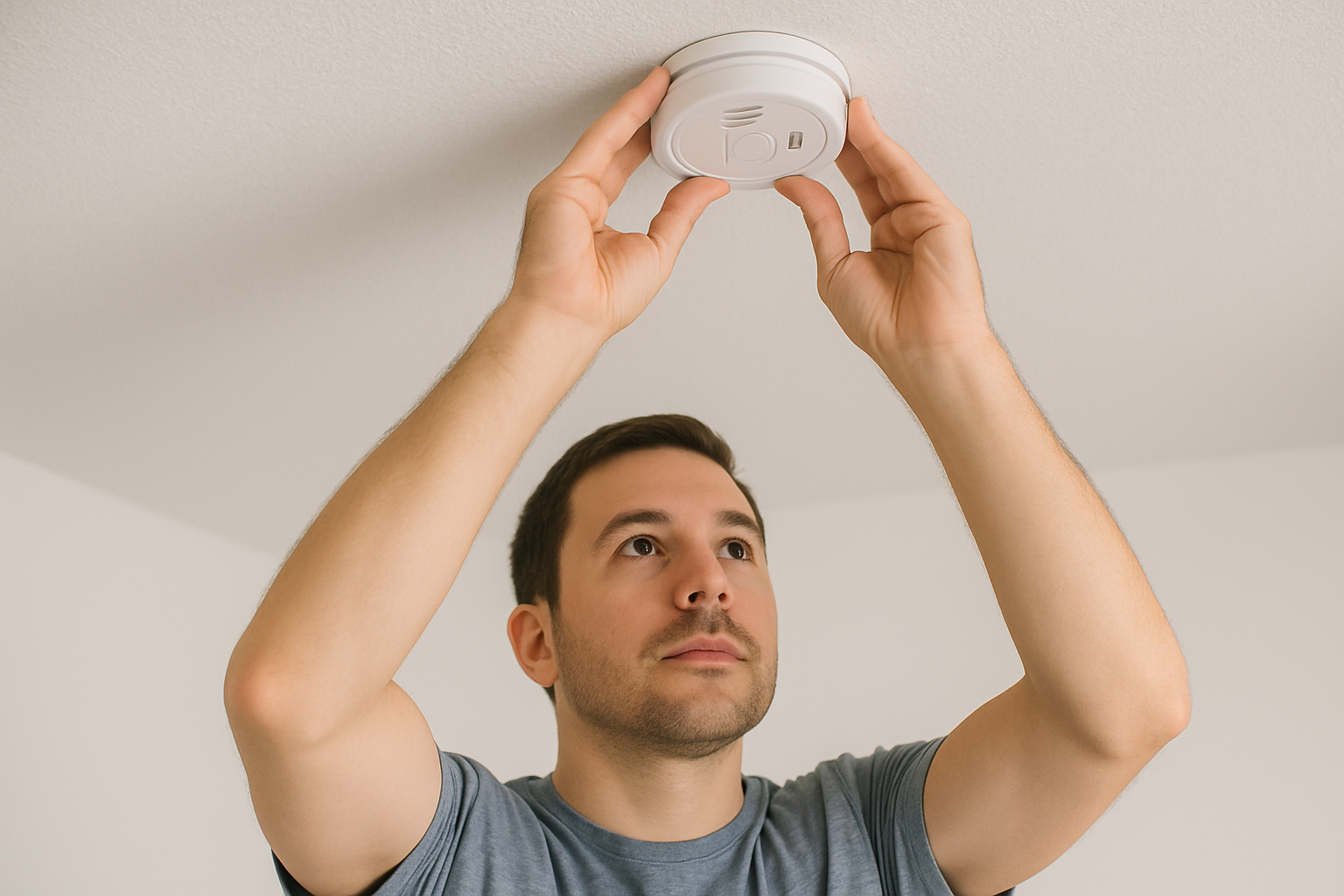
When a tenant is injured in a residential fire, insurance adjusters do not start by asking whether a property technically complied with the minimum code requirements in effect decades ago.
They ask three different questions:
Did the property meet current industry standards?
What would a reasonable professional property manager have installed?
Were reasonable precautions taken to protect occupants from foreseeable harm?
The answers to these questions can mean the difference between a routine insurance claim and a six-figure personal liability disaster.
This article explains why the gap between “legally required” and “industry standard” matters far more than most Virginia property owners realize — and why professional property management operates under a different set of expectations than DIY landlording.
Table of Contents
How This Article Fits Within the Maintenance Framework
The Insurance Industry Reality
Legal Minimums vs Professional Standards
How Insurance Carriers Actually Evaluate Fire Losses
Why Third-Party Inspection Standards Matter
Why Hallway Alarms Alone Fail in Real Fires
What Fire Safety Research Actually Shows
How Modern Alarm Technology Changed the Risk Equation
A Short Primer on Alarm Types and Why It Matters
The Real Cost-Benefit Analysis
Common Owner Misconceptions That Create Risk
A Real-World Fire Scenario: How Liability Is Determined
The Professional Property Management Standard
How Carbon Monoxide Alarms Fit Into the Risk Picture
Bottom Line: Legal Minimums vs Modern Liability
How This Article Fits Within the Maintenance Framework
This is Part 1 of a focused series on smoke alarm risk in Virginia rentals:
Part 1: Why Every Bedroom Needs a Smoke Alarm (insurance + liability risk)
Part 2: The Virginia Smoke Alarm Gray Area: Why § 55.1-1220 Creates Legal Confusion
This article focuses on risk and professional judgment. Legal nuance is addressed separately in Part 2. For a neutral, step-by-step reference on placement, replacement intervals, and annual certification, see the Smoke & CO Alarm Placement Checklist for Virginia Rentals.
The Insurance Industry Reality
Most property owners misunderstand how insurers evaluate fire losses.
Insurance carriers do not benchmark risk against historical building codes. They evaluate losses against current building standards and fire-safety knowledge.
After a fire, claims adjusters examine:
Alarm placement and functionality
Whether the property reflected modern fire-safety knowledge
What similarly situated professionally managed properties install
Whether low-cost risk-reduction measures were ignored
This is why insurers, underwriters, and inspection vendors increasingly assume bedroom smoke alarms as a baseline safety measure, regardless of a property’s age.
Legal compliance may satisfy a local inspector.
It does not define liability exposure.
Legal Minimums vs Professional Standards
Many Virginia rental homes were built before modern smoke-alarm placement standards existed. Owners often assume that alarms installed to the standards of the time remain sufficient indefinitely.
That assumption ignores a distinction that drives outcomes:
- Legal minimums define compliance.
- Professional standards define liability exposure.
Building standards evolve because evidence proves older assumptions wrong. In the case of smoke alarms, decades of fire-safety research have shown that hallway-only alarms can fail to wake sleeping occupants behind closed bedroom doors.
Industry standards have changed accordingly, regardless of whether older buildings may be legally “grandfathered” for certain code purposes.
The uncomfortable truth is that legal compliance can coexist with avoidable exposure.
How Insurance Carriers Actually Evaluate Fire Losses
After a fire, carriers and defense counsel do not limit their analysis to whether the home once passed a local inspection.
Claims investigations focus on:
Whether precautions reflected current safety knowledge
Whether low-cost protective measures were ignored
What professional managers install as standard practice
Whether the loss was foreseeable and preventable
Properties that meet only outdated minimums often trigger deeper scrutiny, particularly when injuries occur.
This scrutiny is not theoretical. It directly affects:
Coverage determinations
Defense under reservation of rights
Settlement posture
Premium increases and non-renewal decisions
Why Third-Party Inspection Standards Matter
Smoke alarm inspection services do not install equipment arbitrarily. They follow standards that are defensible after a loss.
Bedroom alarms are commonly installed because:
Carrier expectations
Inspection programs exist to reduce insurer exposure, not to preserve grandfathered layouts.
Portfolio consistency
Managing thousands of properties requires a single defensible standard.
Liability protection
No vendor wants to defend certifying a property that omitted modern life-safety measures.
Claims defensibility
“Installed to current standards” is easier to defend than “installed to 1985 standards.”
These practices quietly shape what insurers consider reasonable long before a claim occurs. Owners do not see it day to day. They feel it when something goes wrong.
Why Hallway Alarms Alone Fail in Real Fires
Older assumptions were simple: put an alarm in the hallway and it will wake everyone.
Modern reality is not simple.
Several changes in how homes are built and used have altered the risk profile:
Tighter construction reduces sound transmission
Energy-efficient construction, insulation, and modern materials can reduce how well sound carries from a hallway to a closed bedroom.
Closed bedroom doors block audibility
Closed doors can dramatically reduce the volume that reaches a sleeping person. That is not a rare edge case. Many people sleep with doors closed for temperature control, privacy, noise control, or habit.
White noise masks alarm signals
Fans, HVAC, air purifiers, and white-noise machines are common and can blunt the signal that a hallway alarm is supposed to deliver to a sleeper.
Bigger floor plans increase distance
Many layouts place bedrooms farther from common areas. Some designs create “sound dead zones” where a hallway device is not reliably effective.
The key operational takeaway is this: bedroom alarms provide earlier warning to the person most at risk of not waking up in time.
This is why bedroom alarms are not “overkill.” They address a documented failure mode.
What Fire Safety Research Actually Shows
Fire-safety research consistently shows that bedroom alarms provide critical additional warning time, often before smoke inhalation becomes incapacitating.
NFPA findings demonstrate:
A closed bedroom door can reduce alarm audibility from ~75 dB to ~50 dB
Most adults require 60+ dB to wake from deep sleep
Children, elderly occupants, and hearing-impaired residents are at higher risk
Smoke inhalation often incapacitates occupants before hallway alarms are perceived
Bedroom alarms frequently provide 30–60 seconds of additional warning. In fire scenarios, that window is often the difference between escape and injury.
This is not bureaucratic overreach. It is safety standards catching up to how people actually live, sleep, and build homes.
How Modern Alarm Technology Changed the Risk Equation
Why Smoke Alarm Prices Have Increased — and Why That’s Good News
Modern smoke alarms cost more than the $8 units common in the 1990s. That increase reflects meaningful safety and operational improvements.
What modern 10-year sealed alarms provide:
Sealed lithium batteries lasting the full device lifespan
No 3 a.m. chirping calls
Tamper resistance (batteries cannot be removed)
Fewer nuisance alarms with photoelectric sensors
Improved discrimination between cooking smoke and real fires
Wireless interconnection without running new wiring
The Real Operational Savings
For property owners and managers, modern alarms reduce:
Emergency maintenance calls
Disabled devices
Annual battery replacement labor
False alarm complaints
Post-incident documentation gaps
They also strengthen legal defense by demonstrating proactive, evidence-based decision-making.
A Short Primer on Alarm Types and Why It Matters
Clarity here helps property owners avoid expensive misunderstandings, sloppy installations, and compliance gaps that only become visible after a fire, inspection failure, or insurance review.
Professional risk management starts with understanding what is actually being installed.
Alarms vs. Detectors: Not the Same Thing
Virginia law, insurance policies, and inspection protocols distinguish between alarms and detectors, and confusing the two creates real problems.
Smoke alarms
These are the familiar standalone, self-contained devices mounted in bedrooms, hallways, and on each level of a home. They sense smoke and emit an audible warning locally.
This is what most single-family rentals use, and what annual certification under the VRLTA addresses.
Smoke detectors
These are typically system components connected to a central fire alarm panel, more common in multifamily, mixed-use, or commercial buildings. They may not emit sound locally and instead trigger a panel response.
Carbon monoxide (CO) alarms
Standalone devices that sense carbon monoxide and emit a local audible alert. These may be separate units or combined with smoke alarms.
CO detectors
Panel-connected system components, uncommon in single-family rentals.
Practical takeaway:
Most single-family rentals are dealing with alarms, not panel-based detectors. Installing the wrong device type, or assuming system behavior that does not exist, creates documentation and liability gaps.
Sensor Types: Practical Implications Owners Miss
Owners do not need to become engineers, but sensor choice affects reliability, nuisance alarms, and real-world performance.
Ionization alarms
Tend to respond faster to fast-flaming fires
More prone to nuisance alarms near kitchens
Historically common, but increasingly problematic in residential settings
Photoelectric alarms
Respond well to smoldering fires (a common residential fire profile)
Generally less prone to nuisance alarms
Often better suited to modern homes and rental environments
Dual-sensor alarms
Combine both technologies
Broader detection profile
Higher upfront cost, but often fewer operational headaches
The operational goal is not technical perfection.
The goal is reliable warning, fewer nuisance events, and a system that tenants do not disable.
An alarm that constantly false-alarms is an alarm that eventually gets ignored, removed, or tampered with — creating silent liability.
Lifespan and Replacement Reality
Alarm lifespan is not theoretical. An expired device is a silent liability, even if it looks fine on the wall.
Smoke alarms
Commonly follow a 10-year replacement cycle
Most modern sealed units are designed to last the full device life without battery changes
Expiration dates are stamped on the device
Carbon monoxide alarms
Typically have a shorter sensor life, often 5–7 years
CO sensors degrade faster due to the detection chemistry
An expired CO alarm may still appear functional but fail to detect dangerous levels
Why this matters operationally
Expired alarms undermine insurance defensibility
Annual testing does not reset expiration
Replacement schedules must be tracked, not guessed
Documentation matters more than good intentions
Professional management treats alarm replacement as a scheduled compliance task, not a reactive maintenance issue.
Why This Section Exists at All
This primer exists because many liability failures do not come from missing alarms, but from:
The wrong device type
Poor placement choices
Nuisance-prone installs that tenants disable
Expired units that were never tracked
These are not exotic failures. They are routine, preventable mistakes that show up in insurance files and courtrooms.
Professional property management avoids them by design.
The Real Cost-Benefit Analysis
When the math is laid out, it is difficult to justify skipping bedroom alarms.
Installing bedroom smoke alarms (typical):
Cost: about $35 per alarm
Example total (3–4 bedrooms): about $105–$140
Lifespan (common modern sealed units): about 10 years
Monthly cost per bedroom: roughly pennies
Not installing bedroom smoke alarms:
Upfront savings: $105–$140
Potential outcomes if there is a serious fire with injuries:
litigation exposure that rapidly moves into six figures
defense costs that dwarf the upgrade cost
claim friction and coverage disputes
premium increases or non-renewal risk
A small cost sits on one side of the scale. Catastrophic downside sits on the other.
That is the basic reason professional managers treat bedroom alarms as a standard.
Common Owner Misconceptions That Create Risk
These are patterns seen repeatedly.
“The personal residence does not have bedroom alarms, so the rental does not need them.”
A personal residence and a rental property operate under different risk expectations. A rental introduces third-party risk, a duty of habitability expectations, and a different liability posture. A configuration that an owner accepts for personal risk tolerance is not automatically defensible for occupants who did not choose it.
“The inspector never mentioned it.”
Local inspections tend to check minimum compliance and functionality, not “best-defensible-after-injury” standards. Claims and lawsuits do not care what was not mentioned during an inspection.
“They can be added later if required.”
Liability is judged after the loss, not at the moment enforcement occurs. Waiting is functionally choosing to carry the risk.
“This is just unnecessary regulation.”
Much of the bedroom alarm push is driven by injury outcomes, not bureaucracy. The actual pattern is: evidence changes, standards change, and professional norms move first.
“The house is old, so bedrooms do not need alarms.”
Older housing stock is not a safety exemption in the real world. Even when “grandfathering” exists in some contexts, the injury case still asks what was reasonable to do given modern knowledge.
A Real-World Fire Scenario
A common version of the scenario looks like this.
Setup
A well-maintained 1985 rental passes inspection. Hallway alarms only.
Event
A nighttime fire starts. A hallway alarm activates. One occupant wakes and escapes. Another occupant behind a closed door sleeping next to a gray noise machine does not wake quickly and suffers smoke inhalation.
What happens next
The investigation and litigation do not revolve around “did the property pass a minimum inspection last year.”
They revolve around:
What current standards would have provided
Whether the missing bedroom device was a low-cost, high-impact precaution
Whether a reasonable professional would have installed it
Whether the injuries were foreseeable and preventable
Afterward, everyone agrees on one fact: A $35 bedroom alarm would likely have changed the outcome.
That is the moment liability is decided.
The Professional Property Management Standard
Professional managers do not manage to the bare minimum required to pass inspection. They manage to standards that can be defended after something goes wrong.
In practice, that means:
Installing alarms where they provide the earliest warning, not merely where once required
Aligning decisions with modern fire-safety knowledge
Treating low-cost safety upgrades as risk controls, not optional extras
Documenting installation and inspections consistently
This is the difference between reactive compliance and professional risk management.
It is also why annual inspection discipline matters. Virginia’s landlord duties include providing a certificate to the resident stating that smoke alarms are present, inspected, and in good working order no more than once every 12 months.
That certificate is not just paperwork. It is part of the defensibility story.
How CO Fits Into the Risk Picture
Carbon monoxide is different from smoke. It is also different from an owner’s instinct, which is often to treat CO alarms as “optional until requested.”
Virginia law includes a tenant-request framework for CO alarms in many contexts. In general terms, the landlord must install a carbon monoxide alarm within 90 days after written request, and the landlord may charge a reasonable fee to recover equipment and labor.
That is the legal baseline.
The professional management reality is often stricter in practice, much closer aligned to modern building code, because CO risk is predictable:
CO risk commonly exists when there are:
gas furnaces, water heaters, or appliances
fireplaces (gas or wood-burning)
attached garages
any fuel-burning equipment
Professional practice often treats CO alarms as a risk-based install decision rather than a paperwork workflow triggered by a written request.
The reason is not complicated: if a predictable CO risk exists, a preventable CO incident is difficult to defend.
Bottom Line: Legal Minimums vs Modern Liability
Bedroom smoke alarms are not about exceeding the law for its own sake.
They address a documented failure mode in residential fires, align with modern safety knowledge, and reflect the standard that insurers and professional managers increasingly expect.
Legal compliance may avoid citations. It does not necessarily avoid liability.
For the procedural reference, see our Smoke & CO Alarm Placement Checklist for Virginia Rentals.
For the legal nuance, see Part 2: The Virginia Smoke Alarm Gray Area.
Life-safety decisions are judged with hindsight. Managing to professional standards reduces the risk of being judged harshly.
FAQ: Smoke and CO Alarms in Virginia Rentals
Are landlords required to provide a smoke alarm inspection certificate in Virginia?
Virginia law requires the landlord to provide a certificate stating that all smoke alarms are present, inspected, and in good working order no more than once every 12 months.
What are residents required to do regarding smoke alarms?
Virginia law places duties on residents that include keeping the dwelling unit reasonably safe and complying with obligations that materially affect health and safety, and it also prohibits deliberate or negligent destruction or removal of devices and fixtures supplied by the landlord.
Does “grandfathering” eliminate smoke alarm risk?
Even when older layouts may be treated differently under certain code frameworks, liability analysis after an injury centers on reasonableness, industry practice, and foreseeability. “Grandfathered” is rarely a satisfying answer in a serious injury case.
Are CO alarms required everywhere?
Virginia includes a written-request framework in many situations, requiring installation within 90 days after written request and allowing recovery of reasonable equipment and labor costs.
Risk-based installation is still often the prudent approach when fuel-burning equipment or attached garages are present.
Continue Reading
Continue to Part 2: The Virginia Smoke Alarm Gray Area: Why § 55.1-1220 Creates Legal Confusion
Use the Smoke & CO Alarm Placement Checklist for Virginia Rentals as the practical reference document
PMI James River’s standard is simple: install smoke alarms in every bedroom, outside sleeping areas, and on every level, then document and certify consistently.
If PMI James River is evaluating a Virginia rental for onboarding, the smoke and CO alarm configuration is treated like any other major risk control: it is audited, corrected, photographed, and tracked on a replacement schedule.
For owners who want an objective review of a property’s current alarm setup against professional risk expectations, PMI James River can complete a compliance walk-through and provide a clear upgrade plan that can be executed during turnover or as a stand-alone safety project.
Disclaimer
This article is provided for educational and informational purposes only and does not constitute legal advice. Virginia landlord-tenant law, building codes, and local regulations are complex and subject to change. Property owners should consult a Virginia-licensed attorney and appropriate building officials for guidance specific to a particular property, and seek independent insurance advice regarding coverage and underwriting requirements.