
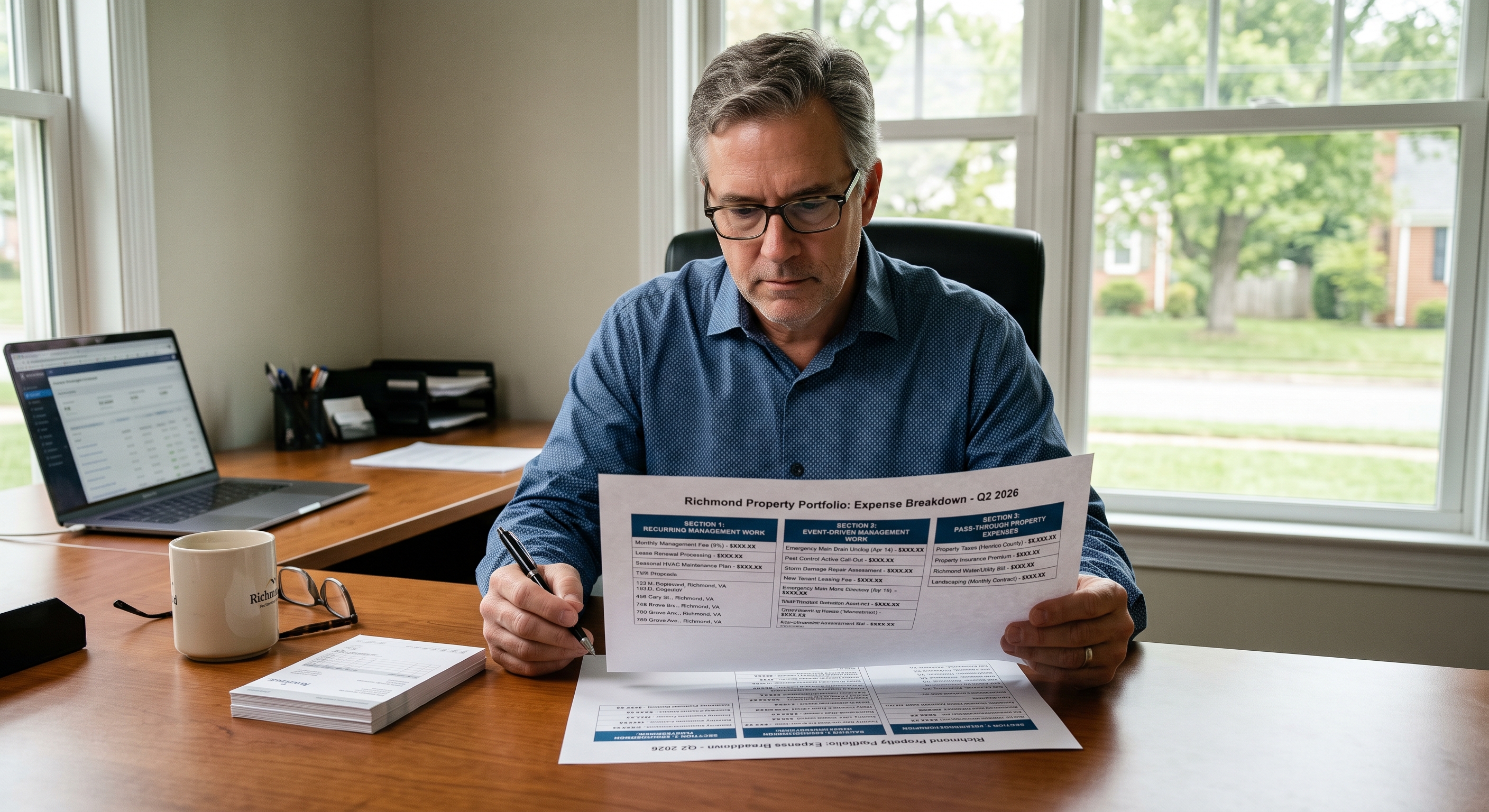
Property management costs are easier to understand when an owner separates them into three buckets: recurring management work, event-driven management work, and property expenses. The first two compensate the management company for work it performs. The third pays for the rental property itself.
PMI James River's owner resources show the different functions involved in operating a managed rental, while the guide to why Richmond owners hire a property manager explains why those functions create more value when they operate as one connected system.
This article answers a narrower question: when an owner pays for professional management, what is the management company actually being paid to do, and which costs belong to the property rather than the manager?
Key Takeaways
- Recurring management work supports the ongoing operation of the tenancy month after month.
- Event-driven management work is triggered by something specific, such as leasing, renewal, turnover, onboarding, or a repair.
- Property expenses are the underlying costs of owning and maintaining the rental.
- A repair can create both a property expense and an event-driven management fee.
- Companies bundle these costs differently, so owners should compare the whole pricing structure rather than one percentage.
The Three Cost Buckets Owners Should Separate
| Cost bucket | What it pays for | Examples |
|---|---|---|
| Recurring management work | The ongoing people, systems, records, and execution required to operate the tenancy. | Resident communication, rent administration, routine lease work, records, reporting, routine coordination, and ordinary decisions within delegated authority. |
| Event-driven management work | Additional management work created by a particular event. | Leasing, renewal, onboarding, turnover coordination, maintenance coordination, special evaluations, and unusually involved projects when separately priced. |
| Property expenses | The actual cost of owning, maintaining, and operating the physical property. | Contractor invoices, materials, utilities, HOA charges, insurance, make-ready work, appliances, repairs, and capital improvements. |
The parent guide to how much property management costs in Richmond looks at the annual numbers. This distinction explains what those numbers represent.
1. Recurring Management Work Keeps the Rental Operating
The recurring management fee primarily pays for the ongoing management relationship. It supports the systems, communication, records, and routine execution that remain in place throughout the tenancy.
That can include:
- receiving and recording rent;
- routine resident communication;
- lease administration and deadline tracking;
- maintenance-request intake and routing;
- owner accounting and monthly reporting;
- maintaining property and tenancy records;
- routine notices and follow-up;
- monitoring lease expiration and recurring deadlines; and
- making ordinary decisions within the authority established with the owner.
That does not mean the same amount of activity occurs every month. A quiet month may produce few resident questions and no repair activity. Another may require repeated communication, payment follow-up, documentation, or coordination.
The recurring fee supports the operating capability that remains available through both.
This is why property management is more useful when it functions as a system rather than as disconnected tasks. A company should be able to preserve context from one event to the next instead of making the owner reconstruct the history every time something happens.
2. Event-Driven Management Work Happens Because Something Specific Occurs
Other management work exists only because a specific event creates it.
A new resident has to be placed. A lease reaches renewal. An existing rental enters management. A resident moves out. A repair generates troubleshooting, scheduling, access coordination, owner approvals, vendor communication, invoices, and follow-up.
Those are still property-management functions. The pricing question is whether the company includes them in the recurring fee or charges for them when the event occurs.
Common examples include:
- Leasing: marketing, inquiries, showings, screening administration, lease preparation, and move-in coordination.
- Renewal: rent review, owner decisions, resident communication, documentation, and execution of the next lease term.
- Onboarding: bringing a property, existing lease, funds, keys, records, instructions, and property information into the management system.
- Turnover coordination: managing the operational transition between residents.
- Maintenance coordination: triage, troubleshooting, vendor selection, access, approvals, communication, documentation, and closeout generated by a repair event.
PMI James River currently separates maintenance coordination from the recurring management fee. The detailed explanation of our maintenance coordination fee explains why the management work around the repair is priced separately from the contractor's work.
Other companies may bundle more event-driven work into the monthly percentage. That can also be a legitimate pricing model. Owners should compare the complete structure rather than assume that a separate fee is inherently bad or that an included service is somehow free. The compensation can simply be packaged differently.
3. Property Expenses Pay for the Property, Not the Manager
Property expenses are different from management compensation. They are costs the rental itself creates or requires.
Examples include:
- a plumber's invoice;
- HVAC labor and replacement parts;
- a new appliance;
- paint, flooring, or make-ready work;
- utilities paid by the owner;
- HOA or condominium charges;
- landlord insurance;
- landscaping or exterior services;
- preventive maintenance performed by a contractor; and
- larger repairs or capital improvements.
The management company may receive the bill, review it, obtain approval, pay it from available property funds, record it, and coordinate the underlying work. None of that converts the contractor's invoice into a management fee.
A Single Repair Can Create Two Different Costs
| Repair-related cost | Bucket | Why |
|---|---|---|
| Plumber's labor, materials, and service-call invoice | Property expense | The money pays for physical work performed on the rental. |
| Management company's maintenance coordination fee | Event-driven management work | The money compensates the manager for moving the repair from report through completion. |
This separation is particularly useful when reviewing financial performance. A rental with an expensive HVAC replacement had a large property expense. That is different from saying the management company suddenly became expensive.
Richmond Metro properties can also create very different underlying expenses. An older Richmond City home may have a different repair profile from a newer Chesterfield rental. An HOA-governed Henrico property may create association expenses or procedures that another home does not have. Those differences affect the cost of operating the asset, but they do not change the distinction between management compensation and property expenses.
The guide to rental property financial management explains how fees, repairs, reserves, bills, and owner distributions fit into the larger property record.
What Are Property Management Fees Really Buying?
Once the three buckets are separated, the management company's value becomes easier to evaluate.
The recurring fee buys the ongoing operating capability. Event-driven fees compensate for additional management work when specific events occur. Property expenses pay for the underlying asset.
The management company's value is in how effectively the first two categories help operate and protect the third.
A repair is not valuable merely because somebody forwarded a resident's message to a plumber. Useful management work includes understanding what is being reported, preserving the property history, selecting the appropriate response, arranging access, working within owner authority, documenting what happened, recording the expense, communicating material information, and closing the loop.
The same principle applies to leasing and renewals. The individual tasks matter, but the owner is ultimately paying for a system in which one activity feeds the next instead of becoming a new project that the owner must coordinate personally.
What Should an Owner Ask Before Comparing Fees?
- What ongoing work does the recurring management fee cover?
- Which events can create a separate management fee?
- Which costs are simply expenses of owning the property?
- When an event creates both a property expense and a management charge, will those amounts be shown separately?
- What routine decisions can the manager make without another approval?
- What decisions come back to the owner?
- What work, if any, is the owner still expected to coordinate personally?
- How will management fees, contractor invoices, reserve activity, and owner distributions appear in the financial records?
PMI James River's current pricing page shows how our recurring and event-driven management charges are presently structured.
The bottom line: recurring management work pays for the ongoing operating relationship. Event-driven management work pays for additional work created by specific events. Property expenses pay for the rental itself. Separating those three categories makes it much easier to understand what a management company is charging and what the property simply costs to own.
Published: August 29, 2026