
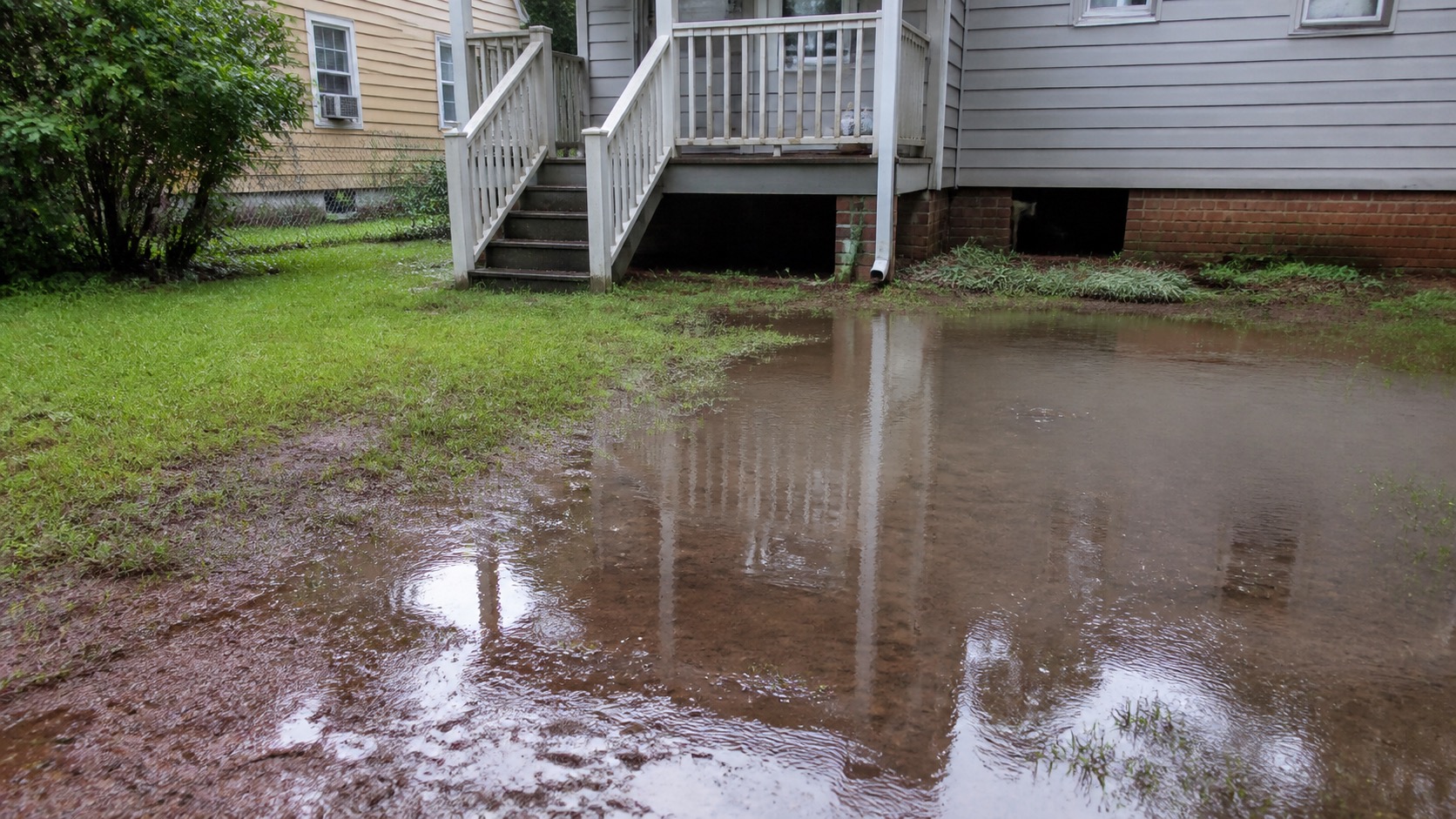
Standing water, erosion, or runoff moving toward a rental home is often easiest to understand while the water is actually present. Start by watching the path it takes, then address only simple surface-level obstructions that are safe to reach.
Clear Simple Surface Obstructions
From dry, stable ground, reasonable first steps may include:
- clearing loose leaves, sticks, mulch, or other lightweight debris from an exposed surface drain, swale, drainage channel, or downspout outlet;
- moving a lightweight portable object that is visibly blocking normal surface flow;
- repositioning an existing splash block or simple surface downspout extension if its intended direction is obvious; and
- moving outdoor belongings out of the path of runoff when safe.
If water is seeping under an exterior door, towels or another absorbent barrier placed inside may help contain minor water entry while the problem is being addressed, provided the material does not block a required exit.
Watch Where the Water Starts and Goes
Useful observations include whether the water:
- collects in one low spot;
- flows toward the house;
- comes directly from a downspout;
- appears only when the irrigation system runs;
- is washing away soil or mulch;
- crosses a walkway or driveway; or
- enters beneath a door or through another exterior opening.
If the problem appears to begin with a gutter or downspout, use the Gutters, Downspouts & Exterior Water Entry guide.
If the water appears when the sprinkler system operates, see Irrigation Problems.
If erosion or settlement has damaged a driveway, walkway, patio, or another hard surface, use the Driveway, Walkway & Exterior Trip Hazard Problems guide.
Know Where to Stop
Do not enter standing or moving floodwater to inspect a drain. Do not remove drain covers, dig trenches, excavate around buried drainage, install permanent piping, or change the property's grading.
Never drive or walk into floodwater simply to inspect the property. The National Weather Service advises people to avoid flooded roads and areas because water depth, road condition, and current can be difficult to judge. Review the National Weather Service flood-safety guidance.
Report Drainage or Erosion That Continues
If reasonable surface-level troubleshooting does not restore normal drainage, water continues moving toward the home, erosion is developing, or you cannot proceed safely, submit a maintenance request through the Rentvine resident portal.
Include where the water starts, where it travels, whether it happens during rain or irrigation, what you safely cleared or repositioned, and photos or video that show the water path when practical.
For routine seasonal yard-care information, see Seasonal Maintenance for Richmond Renters.
For other household problems, use the Resident Troubleshooting Library.
Published: September 2, 2026