
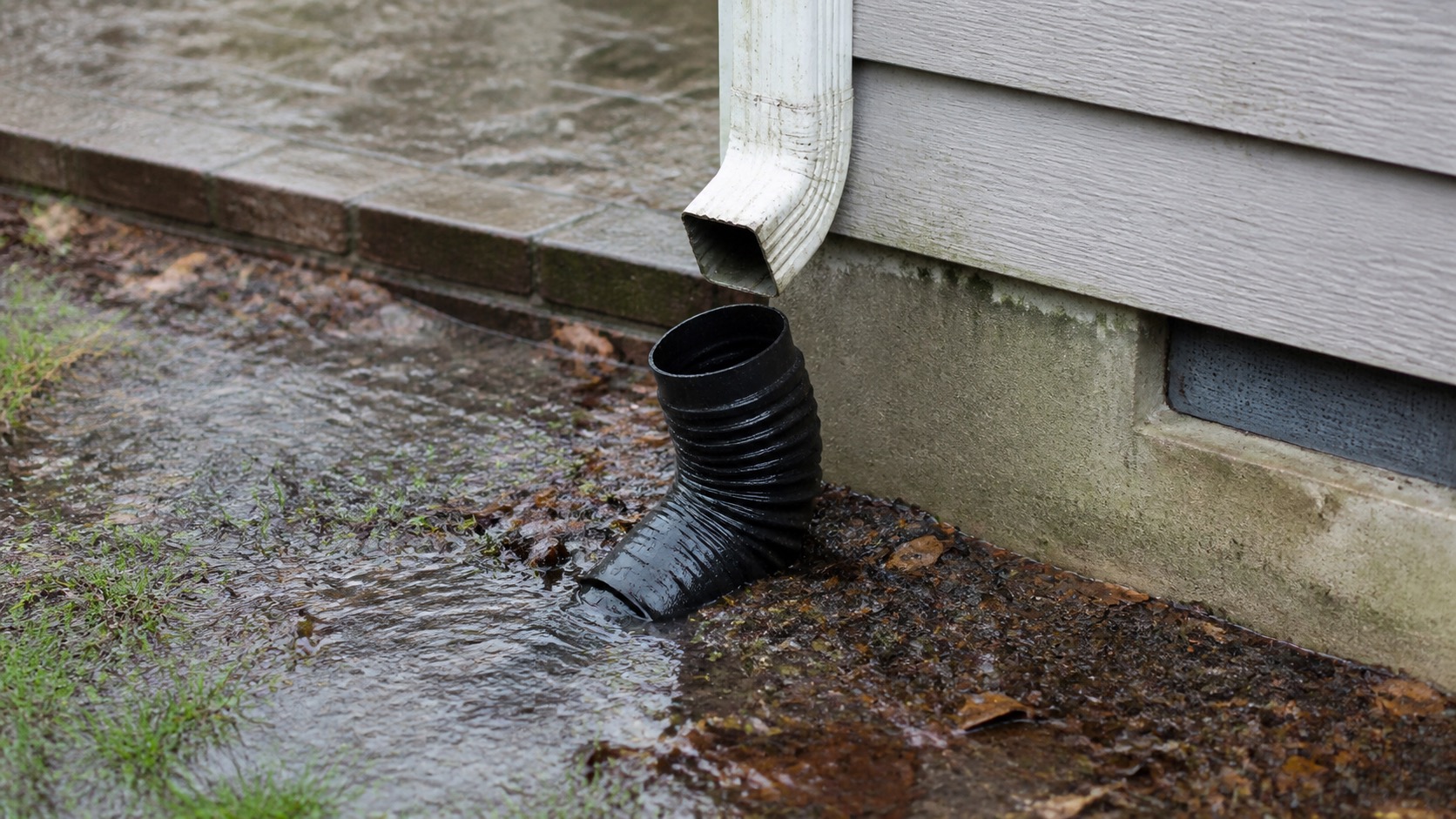
When rainwater is overflowing a gutter, spilling beside the foundation, or running toward the home, start by watching where the water is actually going. A ground-level problem may have a simple fix, but do not climb, cut, drill, or take apart fixed exterior components.
Check the Downspout From Ground Level
If you can safely reach the bottom of the downspout while standing on dry, stable ground, look for an obvious surface-level problem:
- Clear loose leaves or other lightweight debris from an exposed downspout outlet.
- Reposition an existing splash block if it has shifted out of place.
- Turn an existing surface extension so it directs water away from the home.
- If a simple flexible or slip-fit downspout extension has merely slipped off, slide it back into its obvious connection if it fits easily without force.
- Move a lightweight portable object that is blocking the water's normal path.
Stop if the downspout or extension is cracked, will not stay connected, requires screws or cutting, or appears loose higher on the building. Do not force parts together.
Watch Where the Water Goes
During rain, observe whether the water:
- overflows the gutter;
- comes out of the downspout but pools beside the home;
- runs back toward the foundation or an exterior door;
- spills from a separated downspout connection; or
- appears to be entering through an exterior wall or opening.
The EPA recommends directing roof drainage away from the building and addressing moisture promptly. You can review the EPA's moisture and drainage guidance.
Know Where to Stop
Do not climb a ladder or onto the roof to inspect or clean gutters. Do not remove fixed downspout sections, cut or drill exterior components, open siding or trim, or alter permanent drainage piping.
If water is entering through the ceiling, use the Roof & Ceiling Leak Problems guide.
If the water is pooling in the yard, washing out soil, or following a surface drainage path rather than coming directly from the roof system, see Yard Drainage, Erosion & Standing Water.
Report a Problem That Continues
If reasonable ground-level troubleshooting does not resolve the problem, the water continues moving toward or into the home, or you cannot proceed safely, submit a maintenance request through the Rentvine resident portal.
Include where the water is coming from, where it is going, whether the problem occurs only during rain, what you safely tried, and photos or video when useful.
For other household problems, use the Resident Troubleshooting Library.
Published: September 2, 2026