
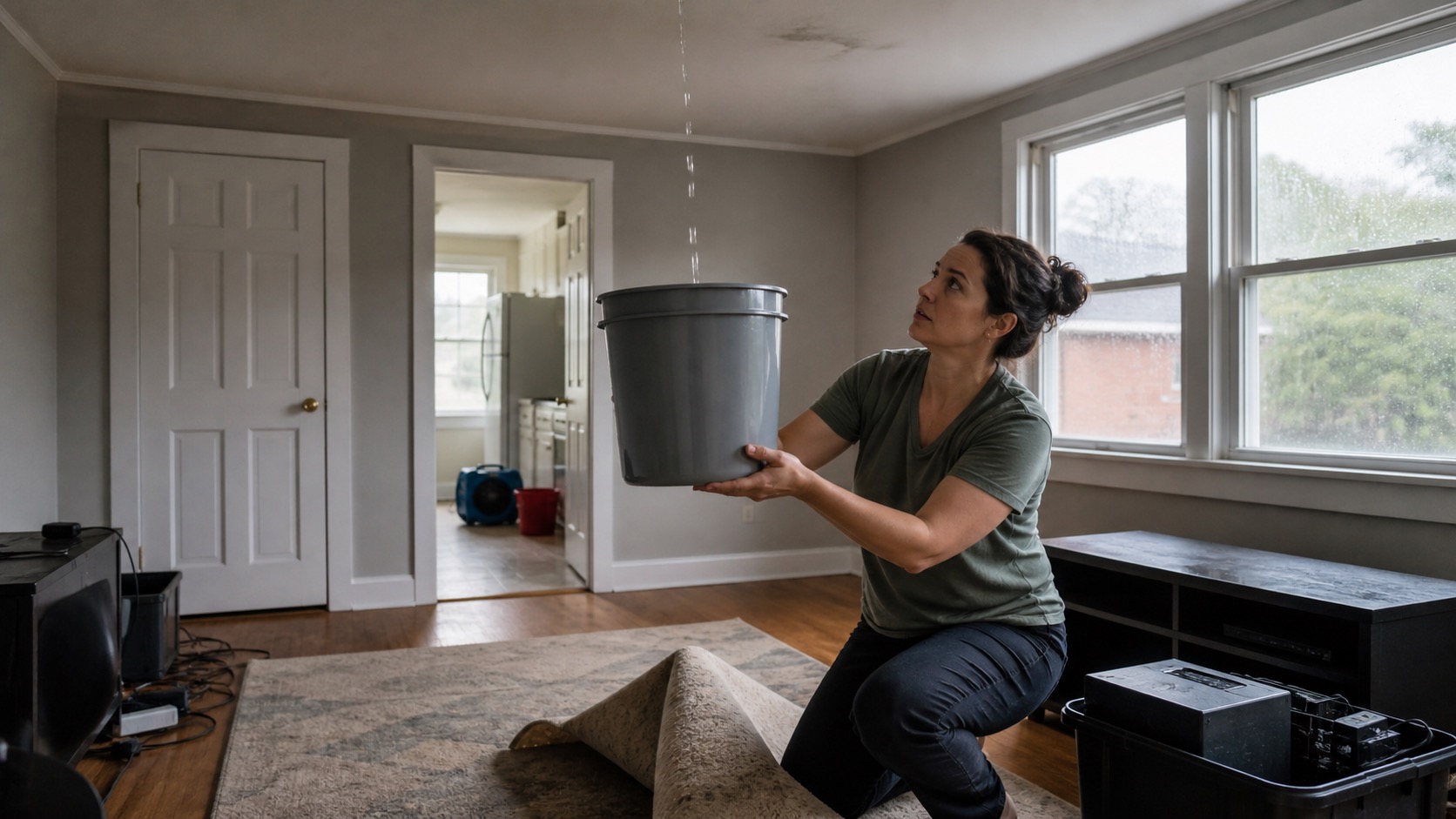
Water coming through a ceiling calls for two things at once: protect the area from additional damage and stay clear of anything that could be unsafe. If the leak is small and the area is safe to approach, you do not need to watch the water spread while waiting for service.
Richmond thunderstorms and prolonged rain can expose roof and exterior leaks that are not noticeable during dry weather. Start with the conditions you can safely control indoors.
Contain the Water and Protect the Room
If the ceiling is not bulging or visibly unstable and there is no electrical hazard, take reasonable steps to limit the damage:
- Place a bucket, bowl, or other stable container under the drip.
- Put towels around the container if water is splashing or spreading across the floor.
- Move electronics, furniture, rugs, boxes, and other belongings out of the wet area.
- Wipe up water on hard flooring so it does not continue spreading.
- Move removable wet rugs, cushions, or other damp personal items somewhere they can dry.
- Take photos or a short video once the immediate water is contained.
The EPA recommends acting quickly when indoor materials become wet because prompt drying helps reduce moisture problems. If the active leak has stopped, the room's electrical outlets and equipment are dry and safe, and there is no other hazard, normal ventilation, a household fan, or a dehumidifier can help dry room air and removable items. Do not place electrical equipment in or beside the wet area. You can review the EPA's moisture guidance.
Know When Not to Approach the Ceiling
Stay out from under a ceiling that is bulging, sagging, dropping material, or becoming noticeably soft. Do not puncture it to release water.
If water is reaching a light fixture, ceiling fan, outlet, electrical device, or exposed wiring, do not touch the wet fixture, switch, or surrounding area. Keep people and pets clear and use the Resident Maintenance hub for the appropriate emergency or urgent routing.
Do not enter an attic, climb onto the roof, use a ladder to inspect the roofline, pull down wet drywall, or remove building materials to look for the source.
Does the Leak Happen With Rain?
If the water appears during rain or shortly afterward, tell us that. Also note whether it gets heavier as the rain gets heavier or stops after the weather passes.
If the water appears around a window, exterior door, gutter, downspout, or exterior wall rather than through the ceiling, use the Gutters, Downspouts & Exterior Water Entry guide.
If the main visible problem is loose or missing siding, soffit, fascia, or other exterior wall material, see Siding & Exterior Wall Problems.
Report the Leak After Taking Reasonable First Steps
Water intrusion should be reported promptly even if you have successfully caught the drip. Submit a maintenance request through the Rentvine resident portal and include:
- the room and exact location;
- when you first noticed the water;
- whether it was raining or had recently rained;
- whether the leak is active, slowing, or stopped;
- whether the ceiling is flat, stained, sagging, or bulging;
- whether water is near an electrical fixture; and
- photos or video after the area is safely contained.
For other household problems, use the Resident Troubleshooting Library.
Published: September 2, 2026