
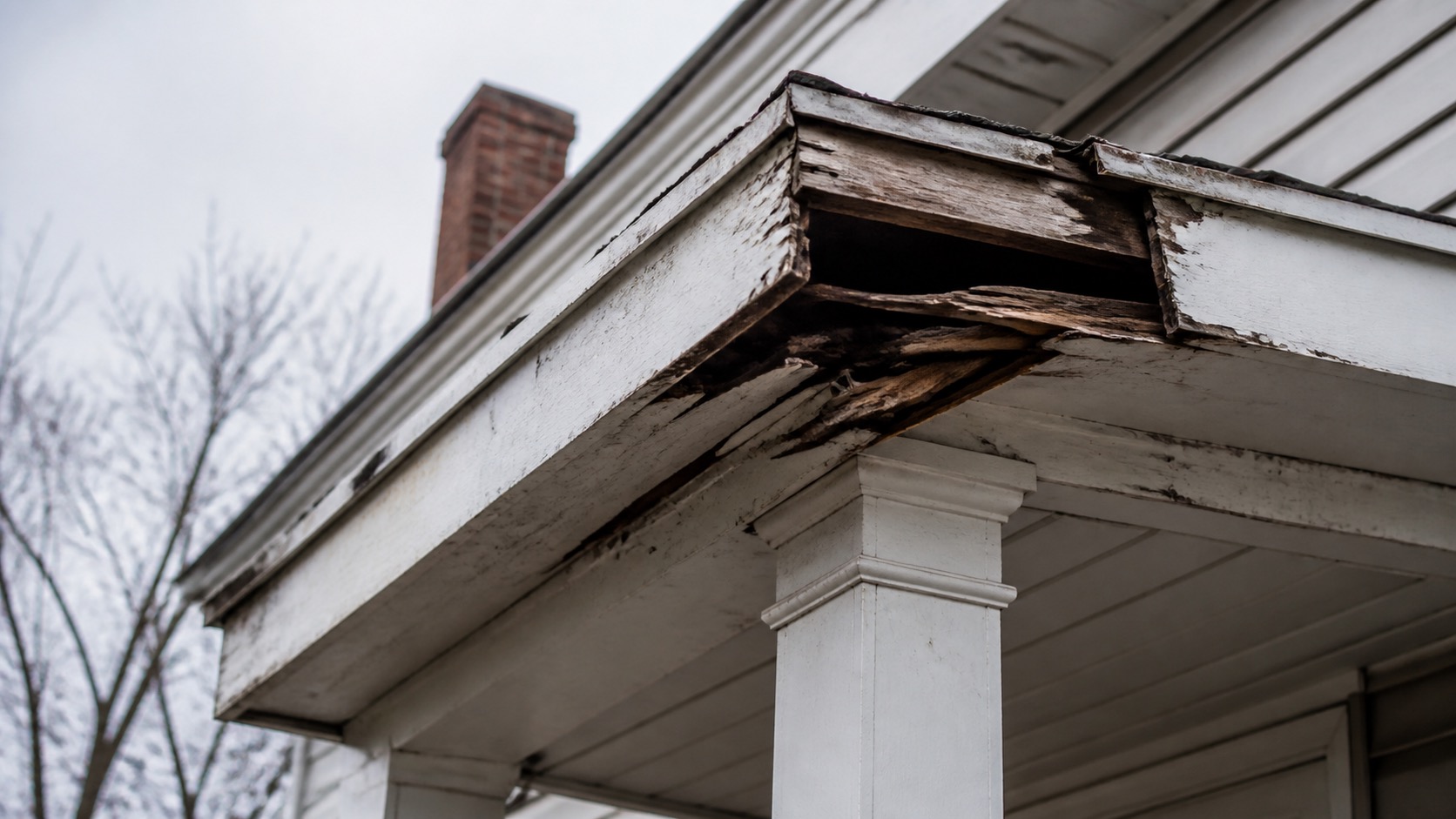
Loose siding, damaged soffit or fascia, missing trim, or another opening in an exterior wall can allow wind or water into a rental home. Start with the conditions you can safely manage without climbing or taking the exterior apart.
Protect the Inside First
If water is entering the home and the area is safe to approach:
- Move furniture, electronics, rugs, boxes, and other belongings away from the wet area.
- Use towels or a stable container to catch or contain minor water entry.
- Wipe up water on hard flooring so it does not continue spreading.
- Close nearby windows or exterior doors if they are functioning normally and can be closed safely.
If a small, lightweight piece of siding or trim is already completely detached and lying on safe, open ground, you may pick it up and set it aside so it does not become windblown debris. Do not pull on material that is still attached to the building.
Look From a Safe Location
From the ground or another normally accessible area, note whether you can see:
- loose, cracked, bowed, missing, or detached siding;
- damaged soffit, fascia, stucco, or exterior trim;
- a visible hole or opening in the exterior wall;
- storm or fallen-limb damage;
- water entering around the affected area; or
- an obvious opening where pests may be entering.
You do not need to climb, pull on the material, scrape or probe the wall, remove additional pieces, or try to screw exterior components back into place.
Use the Guide That Matches the Main Problem
If overflowing gutters or a failed downspout appear to be sending water toward the wall, see Gutters, Downspouts & Exterior Water Entry.
If water is coming through the ceiling or appears to involve the roof, use the Roof & Ceiling Leak Problems guide.
If a tree or limb struck the building, see Tree & Fallen Limb Problems.
Report Exterior Wall Damage
If the material remains loose or damaged, an opening remains exposed, water continues entering, or you cannot proceed safely, submit a maintenance request through the Rentvine resident portal.
Include the location, what material appears affected, when you first noticed it, whether weather or a storm was involved, whether water is entering, and clear ground-level photos when safe.
For other household problems, use the Resident Troubleshooting Library.
Published: September 2, 2026