
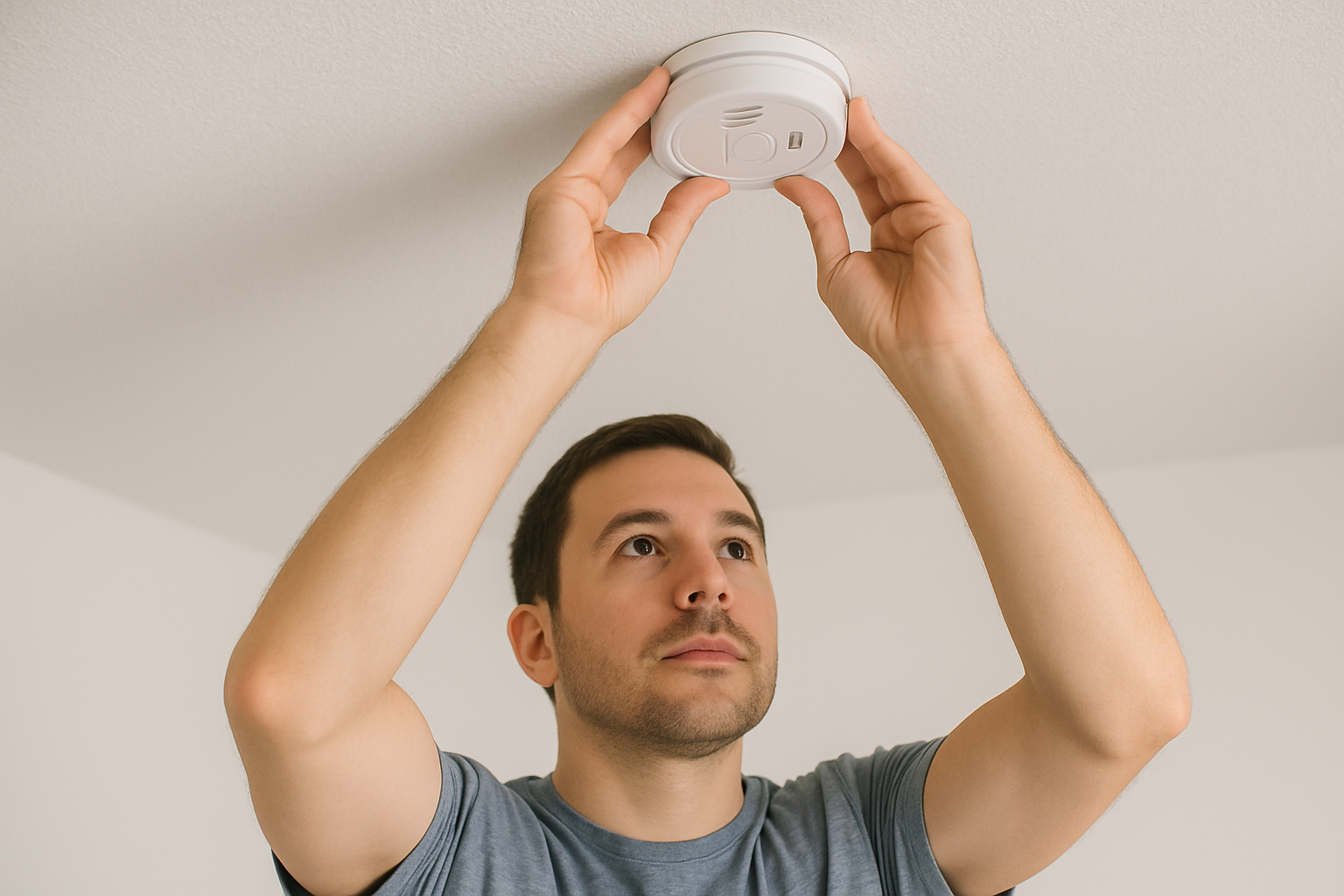
Bedroom smoke alarms are a small property decision with a large safety consequence. For a Virginia rental owner, the useful question is not simply whether an older home can pass a minimum inspection. The owner needs an alarm layout that provides reliable warning where residents sleep and a record showing what was installed, tested, and maintained.
PMI James River handles life-safety corrections through its rental maintenance process and treats smoke alarms as part of the broader habitability and life-safety framework for Virginia rentals. Our operating standard is a smoke alarm in every bedroom, outside each separate sleeping area, and on every level, with the devices tested, photographed, dated, and tracked.
That operating choice is separate from the legal question of which retrofit rules apply to a particular older property and from the technical details of alarm placement. Keeping those questions separate makes the owner decision clearer.
Key Takeaways
- Working smoke alarms materially reduce fire-death risk, and federal fire-safety guidance recommends alarms both inside and outside sleeping areas.
- Insurance sources treat functioning alarms as a meaningful risk-control measure, but alarm installation never guarantees coverage for a particular loss.
- Virginia law requires recurring smoke-alarm certification and ties landlord liability under the maintenance statute to ordinary care, actual damages, and proximate cause.
- PMI James River uses one documented alarm standard across older and newer rentals because a consistent system is easier to inspect, maintain, and verify.
In This Guide
- Why bedroom alarms matter when people are asleep
- What insurance guidance actually supports
- What Virginia liability law means for the owner
- Why one standard works better across a mixed-age portfolio
- Documentation turns an alarm layout into a system
Why Bedroom Alarms Matter When People Are Asleep
The broader case for working smoke alarms is strong. NFPA research covering reported home fires from 2018 to 2022 found that the death rate per 1,000 home structure fires was about 60% lower in homes with working smoke alarms than in homes with no alarms or none that operated.
Placement is the next part of the safety decision. The U.S. Fire Administration smoke-alarm guidance recommends alarms inside and outside each bedroom and sleeping area, on every level, and interconnected so that one alarm sounding causes the others to sound. It also notes that a closed door can slow the spread of smoke, heat, and fire.
A hallway alarm still matters. An in-bedroom alarm adds a warning source in the room where someone may be asleep. That is why PMI James River does not treat a hallway-only layout as the preferred operating standard simply because it may be common in an older house.
This comes up often in Richmond-area rentals because the housing stock spans many construction periods. A Richmond City house built decades ago, a Henrico home from a later development cycle, and newer properties in Chesterfield or Hanover may have very different wiring and alarm layouts. A consistent present-day standard keeps that history from becoming the default maintenance plan.
What Insurance Guidance Actually Supports
Insurance claims should not be predicted from a general blog rule. Policies differ, endorsements differ, and the facts of a loss matter.
What the available carrier guidance does support is the risk-control value of working alarms. Travelers landlord guidance calls functioning smoke detectors important in rental properties, specifically mentioning bedrooms, hallways, and every level. State Farm rental-property insurance information says qualifying fire and smoke alarms may support a home-alert discount.
Neither source turns alarm placement into a coverage guarantee. State Farm expressly notes that coverage depends on the policy's terms, provisions, exclusions, conditions, and endorsements. Rental owners should confirm any property-specific alarm requirements, discounts, or underwriting expectations with their own insurance agent or carrier.
What Virginia Liability Law Means for the Owner
Virginia Code § 55.1-1220 requires a landlord to comply with applicable building and housing codes materially affecting health and safety and to keep the premises fit and habitable. It also requires a certificate, no more than once every 12 months, stating that all smoke alarms are present, inspected, and in good working order.
The same section states that a landlord is liable under those duties only for actual damages proximately caused by a failure to exercise ordinary care. That makes causation and the facts of the particular loss important. A prior inspection does not make every later question disappear, and a missing alarm does not by itself answer every liability question.
The separate issue is whether a particular older rental must be retrofitted to every current bedroom-alarm location. That analysis belongs in The Virginia Smoke Alarm Gray Area, which compares the VRLTA duty with Virginia's separate limit on certain local smoke-alarm upgrade mandates. This article does not need to resolve that legal question to reach a practical operating decision.
Why One Standard Works Better Across a Mixed-Age Portfolio
Older rental homes can create a recurring management problem: every property has a different construction history, but staff and vendors still need a clear rule for what to check.
PMI James River uses the current placement pattern as the operating baseline: a smoke alarm in every bedroom, outside each separate sleeping area, and on every level. That gives onboarding, turnover, annual reviews, and maintenance visits the same target instead of requiring a new debate whenever an older alarm layout is encountered.
The benefits are practical:
- staff and vendors know what to verify at each property;
- missing devices are easier to identify from room-by-room photographs;
- device age and replacement timing can be tracked consistently;
- owners receive a clear recommendation instead of an open-ended minimum-code debate; and
- the annual smoke-alarm certification is supported by a repeatable inspection record.
This is a management standard, not a claim that every Virginia rental has identical code history. The distinction matters because it lets an owner choose a stronger operating practice without overstating the law.
Documentation Turns an Alarm Layout Into a System
Installing an alarm is only part of the job. A useful property record should show what was present, whether it worked, and what needs to happen next.
During onboarding or an alarm review, PMI James River:
- maps smoke and carbon monoxide alarms by room and level;
- tests the devices and photographs them in place;
- records manufacture, replacement, or end-of-life information when visible;
- notes power source and interconnection where applicable;
- corrects missing, expired, damaged, or nonresponsive devices; and
- keeps the record for certification and future replacement tracking.
The detailed placement, testing, replacement, carbon monoxide, and certification steps belong in the Smoke & CO Alarm Placement Checklist for Virginia Rentals. The important point here is that a documented standard is easier to maintain than a collection of one-off decisions.
Frequently Asked Questions
Does Virginia Clearly Require a Bedroom Smoke Alarm in Every Older Rental?
Not from § 55.1-1220 alone. The statute requires compliance with applicable health-and-safety codes and recurring smoke-alarm certification, but identifying which placement rules apply to a particular older property can require a separate code-history analysis. That is the issue addressed in the legal-gray-area article.
Does a Hallway Alarm Make a Bedroom Alarm Unnecessary?
No. The U.S. Fire Administration recommends alarms both inside and outside sleeping areas. PMI James River therefore uses both locations as part of its operating standard.
Will Bedroom Smoke Alarms Guarantee Insurance Coverage?
No. Working alarms are a risk-control measure. Coverage and claim handling depend on the actual insurance policy and the facts of the loss.
Why Use the Same Standard in Older and Newer Rentals?
Consistency makes the system easier to inspect, document, maintain, and replace over time. It also prevents an older layout from remaining in place simply because no one has revisited it.
Bottom Line
Bedroom smoke alarms are a straightforward safety and management decision. Fire-safety research supports the importance of working alarms, federal guidance recommends alarms inside sleeping rooms as well as outside sleeping areas, and Virginia law makes smoke-alarm inspection and certification an ongoing landlord responsibility.
For PMI James River, that is enough to use one documented placement standard across the portfolio while keeping the separate retrofit-law question in its proper lane. Owners who want the current setup reviewed can ask PMI James River to evaluate the alarm system during onboarding, turnover, or a stand-alone maintenance review.
Published: November 29, 2025
Updated: August 5, 2026