

Blog Post Screening International Applicants For Richmond Rentals: Verification That Works Without US Credit

Screening International Applicants For Richmond Rentals: Verification That Works Without US Credit

An international applicant can be fully qualified even when a standard U.S. credit file does not exist. The screening problem is not where the applicant came from. It is whether the same rental criteria can be verified with reliable evidence when familiar U.S. documents are missi...
Read More
Blog Post Habitability And Life Safety Basics For Virginia Rentals

Habitability And Life Safety Basics For Virginia Rentals

Virginia rental habitability starts with a legal floor, but the owner still has to make a practical decision when a maintenance report arrives: Is this a routine defect, an essential-service problem, a health or safety issue, or a condition that is actively getting worse?That dis...
Read More
Blog Post Is Hoarding a Disability Under Fair Housing Law in Virginia?

Is Hoarding a Disability Under Fair Housing Law in Virginia?

Yes. Hoarding disorder can qualify as a disability under federal and Virginia Fair Housing law, but not every clutter problem or instance of hoarding behavior is automatically a protected disability. The legal question is whether the resident meets the disability definition and w...
Read More
Blog Post Non-Standard Screening In Virginia Rentals: Verification That Stays Fair And Defensible

Non-Standard Screening In Virginia Rentals: Verification That Stays Fair And Defensible

Non-standard rental applications are not rare in Virginia. A file may involve a new job, seasonal earnings, self-employment, a landlord who will not verify history, or a credit file that contains less information than expected. None of those facts automatically tells an owner whe...
Read More
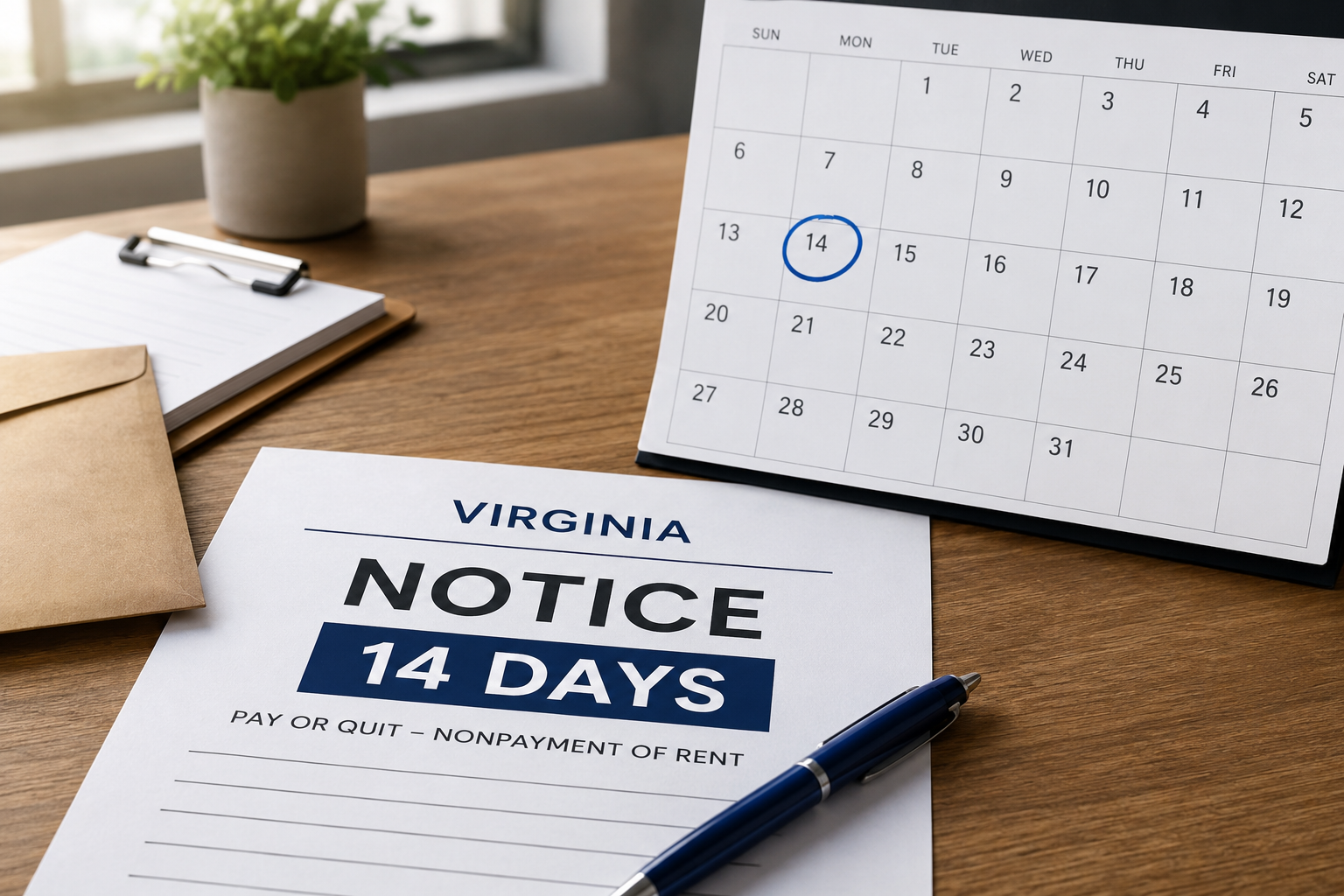
Blog Post Virginia's 14-Day Pay or Quit Notice: What Rental Owners Need to Know

Virginia's 14-Day Pay or Quit Notice: What Rental Owners Need to Know

Virginia's 14-day nonpayment notice rule is now in effect. Since July 1, 2026, a landlord handling an ordinary residential tenancy covered by the Virginia Residential Landlord and Tenant Act must give the tenant 14 days after written notice is served to pay unpaid rent before...
Read More
Blog Post Before You Repair a Pre-1978 Rental: The Lead Paint Rule Richmond Landlords Miss

Before You Repair a Pre-1978 Rental: The Lead Paint Rule Richmond Landlords Miss

For a Richmond rental owner, a pre-1978 house can turn an ordinary maintenance call into a federal lead-compliance question. The repair may have nothing to do with "lead work." A painter sands a wall, an electrician cuts an access hole, a plumber opens a painted chase, ...
Read More
Blog Post What to Do When a Tenant Violates the Lease in Richmond, VA

What to Do When a Tenant Violates the Lease in Richmond, VA

A lease violation is not solved by sending an angry email or jumping straight to eviction. Richmond-area landlords need a repeatable process: identify the obligation, confirm what happened, document the facts, choose the correct notice, track whether the problem is cured, and esc...
Read More
Blog Post What Is a Holdover Tenant in Virginia, and What Can a Landlord Do?

What Is a Holdover Tenant in Virginia, and What Can a Landlord Do?

A holdover tenant in Virginia is a tenant who remains in possession after a rental agreement has expired or terminated. That does not automatically mean the tenant is wrongfully occupying the property. Virginia law treats a tenant who stays with the landlord's agreement diffe...
Read More
Blog Post Why Every Bedroom Needs a Smoke Alarm: The Insurance and Liability Reality

Why Every Bedroom Needs a Smoke Alarm: The Insurance and Liability Reality

Bedroom smoke alarms are a small property decision with a large safety consequence. For a Virginia rental owner, the useful question is not simply whether an older home can pass a minimum inspection. The owner needs an alarm layout that provides reliable warning where residents s...
Read More
Blog Post Move-In and Move-Out Guide for Landlords: Protect Your Property

Move-In and Move-Out Guide for Landlords: Protect Your Property

Most rental owners do not lose money at move-out because a resident was dishonest.They lose money because they do not have the documentation to prove what changed during the lease. We see this constantly. An owner calls us after a resident vacates, frustrated that they cannot cha...
Read More
Showing 31- 40 of 43