
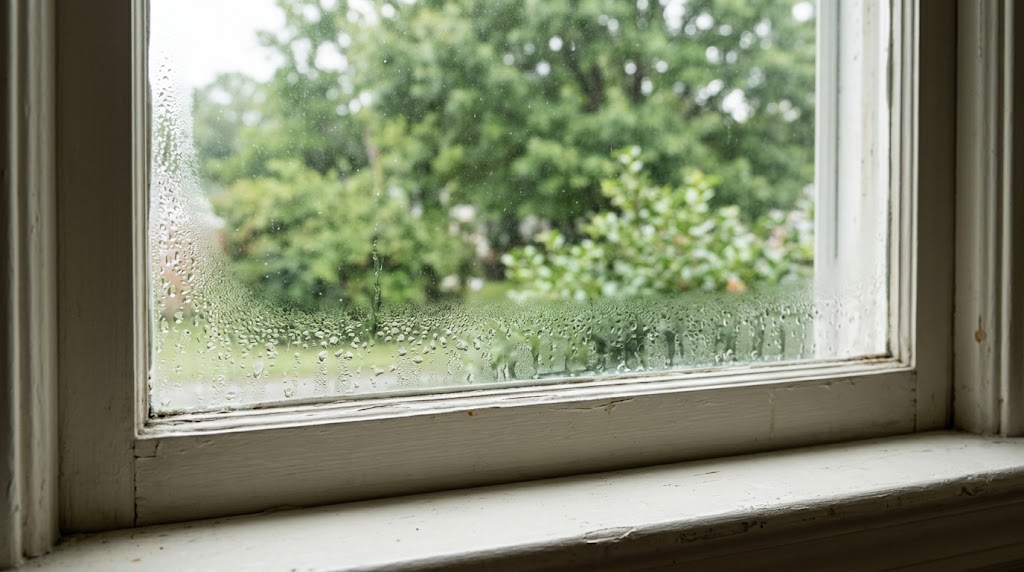
If your Richmond rental feels unusually damp or condensation keeps coming back, start with normal ventilation and the location of the moisture. A fogged mirror after a shower is different from water that keeps appearing on a wall, floor or ceiling.
This guide covers the safe checks you can make for indoor humidity, condensation and bathroom ventilation. If active water is entering the home or building materials are wet, skip the humidity troubleshooting and use the current maintenance routing for a water problem.
Use the Ventilation Already in the Home
Start with ordinary moisture-producing activities. Run the bathroom exhaust fan during and after a shower if the fan operates normally. Use installed kitchen ventilation while cooking. Dry accessible condensation from windows and other hard surfaces rather than letting water sit.
If the bathroom does not have an exhaust fan, use the normal ventilation provided for that room when conditions are suitable, such as an operable window when the outdoor air is drier. During Richmond's muggy weather, opening a window may bring additional moisture inside instead.
If a portable dehumidifier is already provided in the home or you use your own, operate it according to the manufacturer's directions.
Check the Bathroom Exhaust Fan Safely
First, turn the fan on normally. Listen for its usual operating sound and notice whether it appears to be drawing air.
If visible dust or debris is covering the outside of the grille and your vacuum brush attachment can reach it safely while you remain on the floor, turn the fan off and vacuum the exterior face of the grille. Do not push the vacuum attachment through the grille openings.
If the grille is readily reachable while you are standing on the floor, you can also make one simple airflow check:
- Turn the exhaust fan on.
- Hold one sheet of tissue or toilet paper lightly against the grille.
- See whether the fan pulls the tissue against the grille and holds it there.
- Remove the tissue when you are finished.
If the tissue holds, the fan is pulling air at the grille. Treat that as a basic airflow clue, not a measurement of the fan's full ventilation capacity. If the tissue falls, stop there and report the result rather than taking the fan apart.
For these checks, do not climb or use a stool. Do not remove the grille or open the housing, touch wiring or investigate the duct.
If the fan simply does not run, include that in your maintenance request. If it has a burning smell, smoke, sparking, unusual heat or water at the fixture, stop using it and use the Resident Maintenance page for the current safety and reporting path.
Use Humidity Readings as a Practical Guide
If you already have a household humidity meter, it can help show whether damp conditions are lingering. The EPA recommends keeping indoor relative humidity below 60 percent when possible, ideally between 30 and 50 percent.
One reading is not a pass-or-fail test for the home. Humidity can rise temporarily with showering, cooking and weather changes. The more useful pattern is whether the air stays unusually damp or condensation repeatedly returns after normal ventilation and drying.
Know When It Is More Than Ordinary Condensation
Condensation usually appears on a cool surface when the surrounding air is humid. If you instead have active dripping, wet or soft building material, water associated with rain, or water collecting around HVAC or electrical equipment, stop the routine humidity checks and use the Resident Maintenance page for the appropriate water or safety path.
If the moisture is accompanied by mold, recurring mildew or a musty smell, use our mold, mildew and musty odor guide.
If your rental has a supplied whole-house humidifier or dehumidifier and the equipment itself is leaking, showing an alarm or service message, not responding to its normal controls, or has stopped operating, use our Whole-House Humidifier & Dehumidifier Problems guide. If the equipment appears to be operating normally and the main symptom is condensation or high indoor humidity, continue with the guidance on this page.
If the Humidity or Condensation Continues
If these safe steps do not resolve the problem, the moisture keeps returning, or you cannot proceed safely, submit a request through the PMI James River resident portal.
Include the room and exact location, when the problem occurs, whether the surface dries completely between occurrences, whether the exhaust fan operates and holds a tissue if you safely performed that check, any humidity readings you already have, and clear photos of recurring condensation or dampness.
If heat and cooling performance are also part of the problem, our guide to a Richmond rental that feels too hot in summer covers the comfort and HVAC side of the issue.
For the broader moisture decision path, see Moisture, Mold & Indoor Air Problems for Richmond Renters. For other household problems, start with the Richmond rental troubleshooting library.
Published: September 2, 2026