
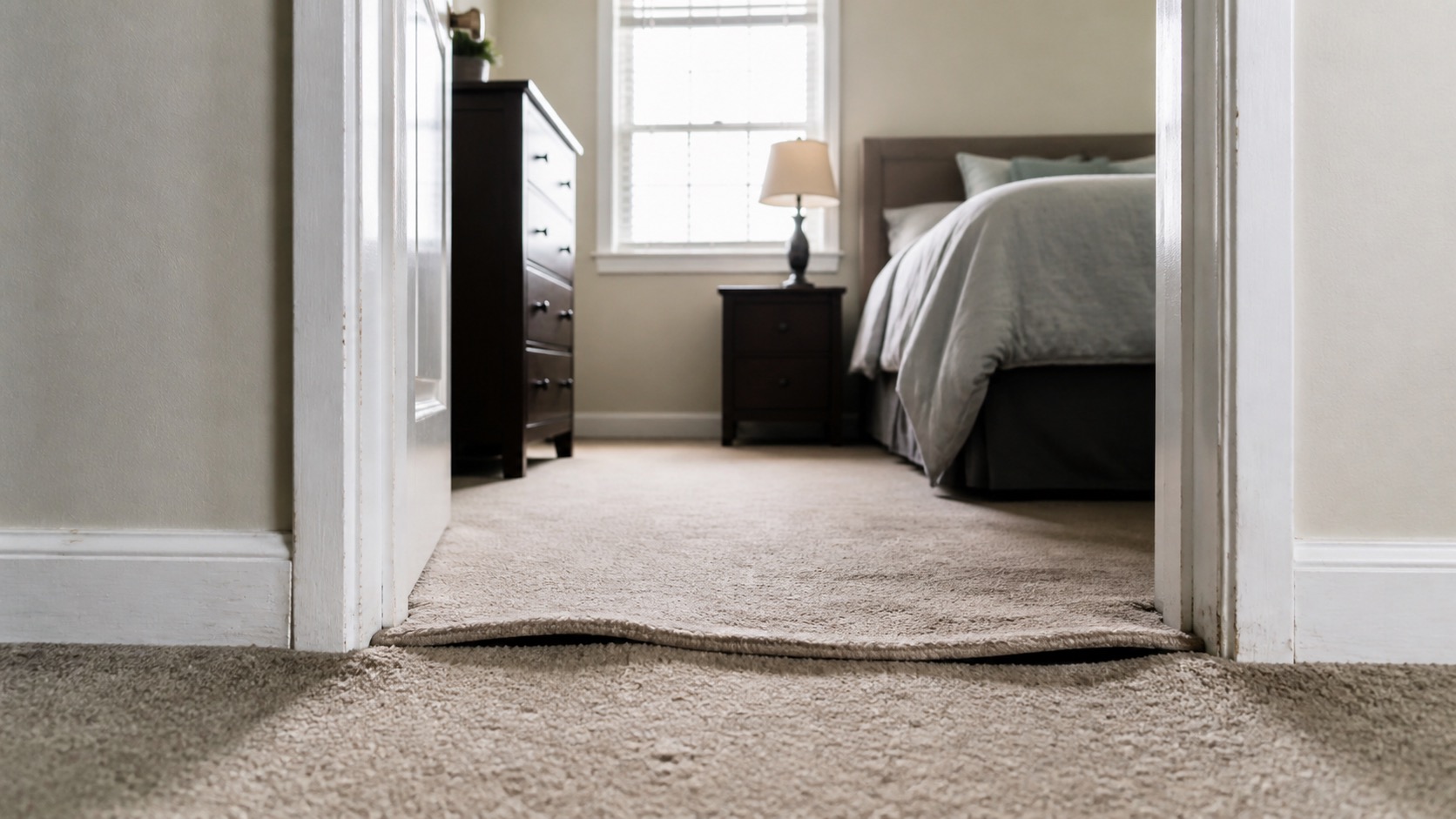
Loose plank edges, torn carpet, raised transitions, cracked tile, buckling, soft spots, and floor movement can all feel like the same problem underfoot. The useful first distinction is whether the issue is limited to the floor covering or whether the floor itself feels soft, sagging, unusually flexible, or newly sloped.
For PMI James River residents in the Richmond Metro, start with what you can safely see and feel during ordinary use. If a walking surface feels unsafe, has a sharp edge, is wet and soft, or seems unstable, avoid that spot when possible rather than testing it further.
Identify the Visible Flooring Problem
Common floor-covering problems include:
- carpet that is torn, rippled, loose at an edge, or separating at a seam;
- plank or sheet flooring that is lifting, curling, buckling, or separating;
- a transition strip that is loose or raised;
- tile that is cracked, loose, or has a sharp exposed edge; and
- a localized area that feels different under normal foot traffic.
Take a photo showing both the affected spot and the surrounding walking area. Do not pull up flooring, cut carpet, remove a transition, or pry up tile to see what is underneath.
If Water Is Affecting the Floor
If flooring is wet, swelling, cupping, buckling, or becoming soft after a leak, deal with the active water first. Move lightweight belongings away from the wet area when safe, catch or wipe up accessible water, and follow the leak and shutoff guidance on our Resident Maintenance page.
Do not pull back carpet or lift flooring to inspect underneath it. Once the water is contained, photograph the visible flooring condition so the resulting damage can be reviewed.
If the Floor Feels Soft, Bouncy, Sagging, or Newly Sloped
A broader change in the way a floor feels can require a different evaluation from a damaged surface material. Do not jump, bounce, stomp, or add weight to see whether the floor moves more.
If the concern is a new sag, broad slope, unusual bounce, or soft area that seems to involve more than the floor covering, use Structural & Foundation Warning Signs.
Trip Hazards and Sharp Edges
A raised transition, curled flooring edge, torn carpet, or broken tile can make an ordinary walking route difficult to use. Use another safe route when one is available and keep children and pets away from a sharp or unstable area.
Do not create a permanent repair with nails, screws, glue, cutting, or replacement flooring as a troubleshooting step. If the issue is on a stair tread, handrail, railing, or landing rather than the general floor surface, use Stairs, Handrails & Railings Problems.
If the Problem Continues
If reasonable resident troubleshooting does not resolve the issue, the condition returns or continues, or you cannot use the area safely, submit a maintenance request through the Rentvine resident portal.
Include the exact room and location, clear photos or a short video, whether the area is wet, soft, raised, sharp, sagging, or sloped, and when you first noticed the change.
For other household problems, use the PMI James River resident troubleshooting library.
Published: September 2, 2026