
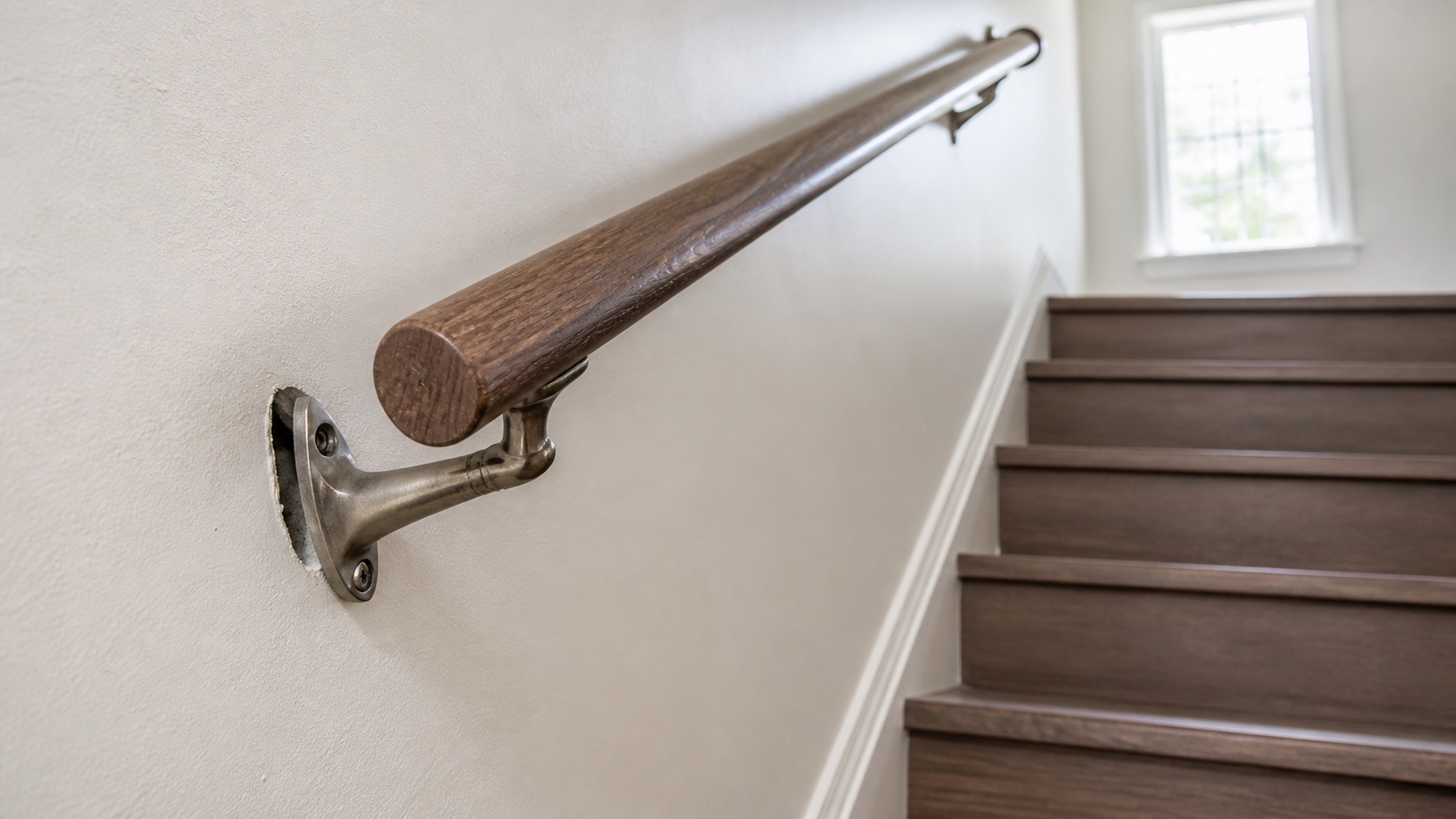
A loose stair tread, a handrail that moves, a damaged railing, and a loose bathroom grab bar all have one important thing in common: someone may rely on them for support. That makes the safe troubleshooting boundary different from tightening a loose cabinet knob or another low-consequence household item.
For PMI James River residents in the Richmond Metro, inspect these components visually and note what happens during ordinary use, but do not add force to test them. Richmond's current property-maintenance guidance specifically identifies stairways, handrails, and guard rails as components that should be properly anchored and safely support normal loads.
Loose or Damaged Stair Treads and Steps
From a stable position, look for a tread or step that is visibly loose, cracked, shifted, broken, or pulling away. If you discover movement during normal use, avoid that step when a safe alternative is available.
Do not stomp, bounce, pry, screw down, or add weight to the step to see how much it moves. If the problem is only torn carpet or loose floor covering on an otherwise stable stair, see Flooring & Carpet Problems.
Loose or Damaged Handrails
If a handrail moves during normal use, is pulling away from the wall, has a visibly loose bracket, or has a broken section, stop relying on it when you can safely do so.
Do not tighten or remount the rail as a resident troubleshooting step. A support can appear firm after a screw is tightened even when the mounting behind it is not secure. Photograph the rail and the area where it attaches instead.
Railings, Guards, and Balusters
Do not lean against a railing or guard that appears loose, damaged, incomplete, or unstable. Keep children and pets away from an unsafe elevated edge while the condition is being addressed.
If the entire stair, landing, wall, or floor appears to be shifting or sagging rather than just one railing component, use Structural & Foundation Warning Signs.
Loose Bathroom Grab Bars
A supplied bathroom grab bar is also a support component. If it moves, pulls away from the wall, has loose mounting hardware, or no longer feels secure during ordinary use, stop relying on it if that can be done safely.
Do not tighten, remount, hang from, pull on, or load-test the grab bar. Send photos showing both the bar and the mounting area.
If the Problem Affects a Required Route
Tell us when damaged stairs or an unstable rail affect the normal route into, out of, or through the home. If there is severe structural damage, an apparent collapse risk, or another condition where serious harm is actively at stake and the problem cannot safely wait, follow our rental emergency guidance.
If the Problem Continues
If the stair, handrail, railing, guard, baluster, or supplied grab bar remains loose or damaged, or you cannot proceed safely, submit a maintenance request through the Rentvine resident portal.
Include the exact location, clear photos or a short video taken without testing the component, what part is loose or damaged, and whether the condition affects the normal walking route.
For other household problems, use the PMI James River resident troubleshooting library.
Published: September 2, 2026