
```html id="9v3rgy"
Not every crack, squeak, or uneven finish is a structural problem. The warning signs in this guide involve something that appears to be newly moving, changing, sagging, separating, bowing, or affecting more than a surface finish.
For PMI James River residents in the Richmond Metro, focus on what you can observe safely during normal use. Richmond's current property-maintenance guidance treats structural soundness as a distinct building-condition issue, which is why broader movement and unstable supports follow a different troubleshooting path from ordinary cosmetic damage.
New or Changing Cracks and Separation
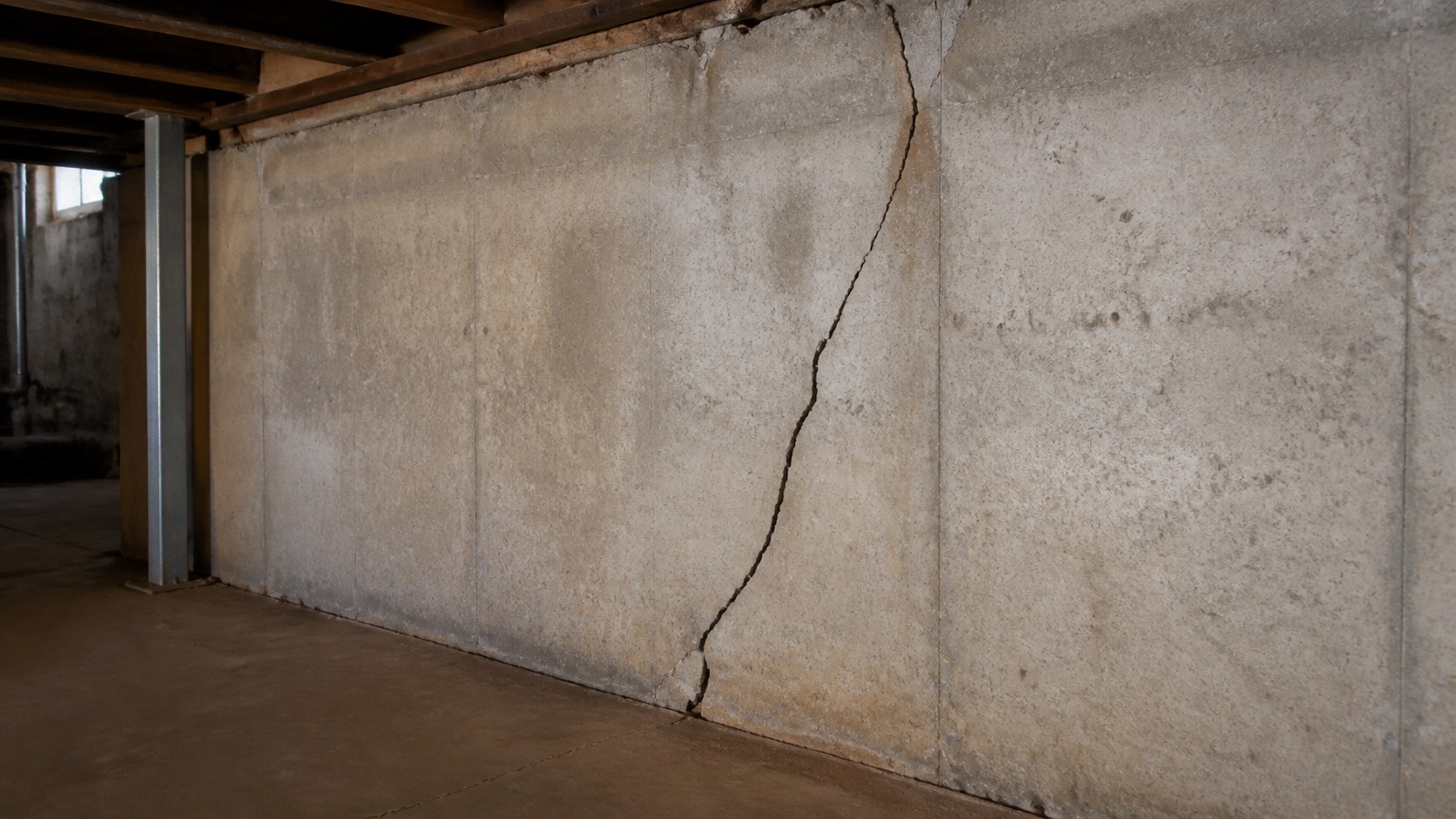
Take one close photo and one wider photo showing where the crack or separation is located. Note when you first noticed it and whether you have already seen it change.
If it is a small, dry, stable finish crack with no other movement, start with Walls, Ceilings & Interior Finish Problems.
If a wall is visibly bowing, leaning, separating from another surface, or changing along with other parts of the home, stay clear if the area appears unstable and report the broader condition.
Do not probe, widen, fill, drill, scrape, or open the surface to investigate the crack.
Soft, Sagging, Bouncy, or Newly Sloped Floors
Do not jump, bounce, stomp, or put extra weight on an area to test whether it moves. Photograph or record what you can observe from a stable position.
A loose plank, torn carpet, broken tile, or raised transition without broader floor movement belongs in Flooring & Carpet Problems. A new sag, broad slope, unusual bounce, or soft area that appears to involve the floor structure belongs here.
Visible Beam, Post, Pier, or Support Concerns
If a support concern is already visible from an ordinarily accessible area, photograph what can be seen safely. Do not enter a crawlspace, climb into a concealed area, move building materials, jack or brace the structure, or touch a support to test it.
If an inspector or vendor has already supplied photos or a report, include that existing information with the maintenance request rather than trying to recreate the inspection yourself.
If Stairs or Railings Are Involved
If the condition is limited to a loose tread, handrail, railing, guard, baluster, or supplied grab bar, use Stairs, Handrails & Railings Problems.
If the whole stair, landing, wall, or surrounding structure appears to be moving, sagging, or separating, stay away from the affected area when possible and report the broader condition.
After a Tree Impact, Vehicle Impact, Storm, or Major Water Event
Stay out of an area with falling material, a structural opening, visible movement, severe sagging, or another condition that appears unsafe. Take photos only from a safe location.
Do not move structural debris, attempt temporary structural bracing, or enter a damaged part of the building to investigate.
If there is severe structural damage, active collapse, an area that appears likely to fail, or another condition where serious harm is actively at stake and the problem cannot safely wait, follow our rental emergency guidance.
If the Problem Continues
If the condition continues or changes, or you cannot safely use the affected area, submit a maintenance request through the Rentvine resident portal.
Include the exact location, clear photos from safe positions, when you first noticed the condition, whether it appears to be changing, and any recent storm, impact, leak, or other event you already know about.
For other household problems, use the PMI James River resident troubleshooting library.
Published: September 2, 2026