
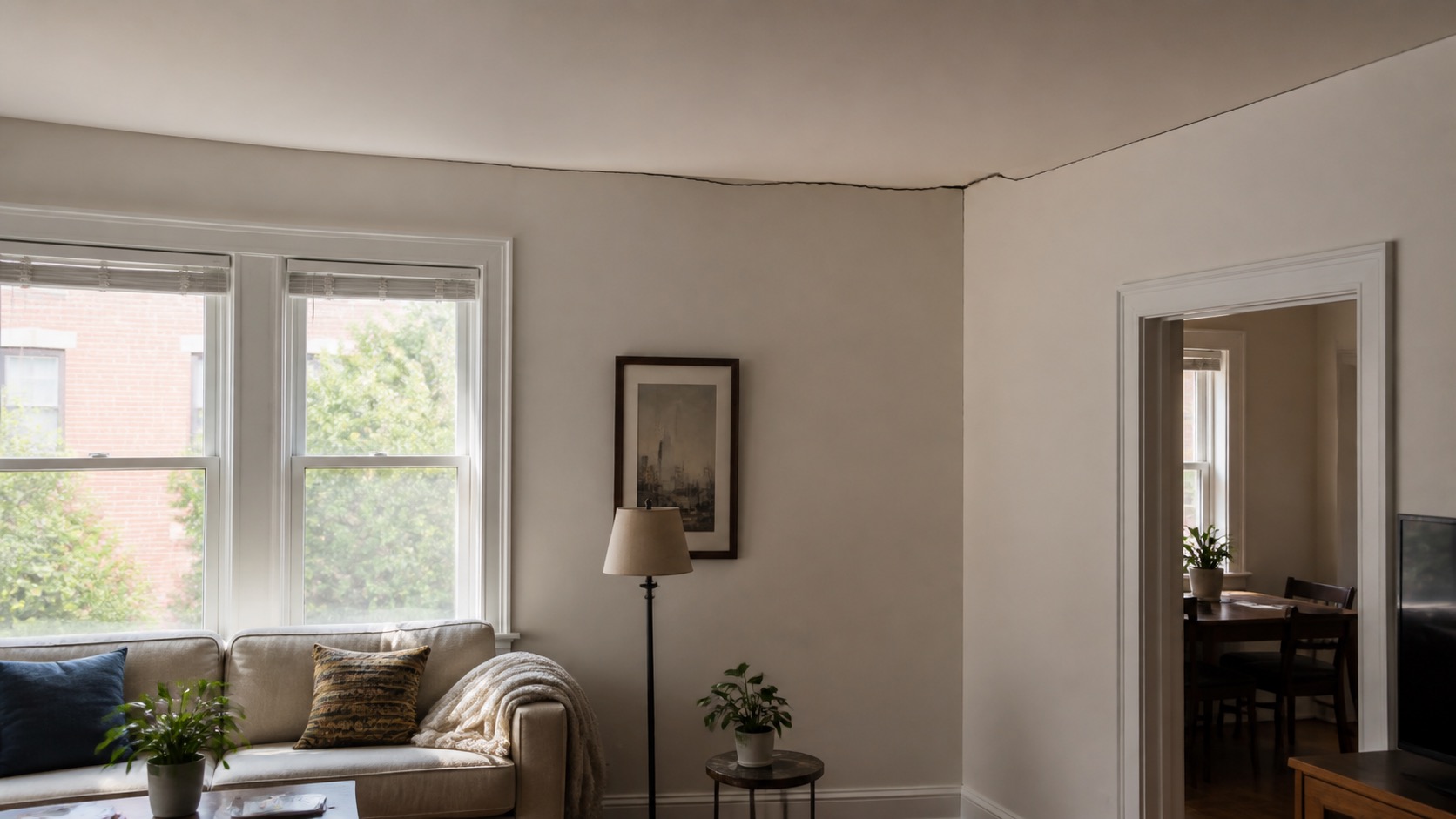
A mark on a wall, a drywall crack, peeling paint, a ceiling stain, and loose plaster do not all call for the same first step. For PMI James River residents in the Richmond Metro, start by deciding whether you are looking at an ordinary surface mark or whether the wall, ceiling, or finish itself is damaged, wet, loose, or changing.
If the area is wet, soft, bulging, loose, falling, or visibly changing, skip routine cleaning and use the problem sections below. If it is simply a dry mark on intact paint, start with the routine wall-care guidance in our Resident Maintenance library.
If It Is Just a Minor Mark on the Wall
For an ordinary scuff or surface mark on intact, dry paint, start with the DIY Video Library on our Resident Maintenance page. It includes our selected video for removing minor marks from walls.
Use a light touch and stop if the paint begins to soften, transfer, chip, or peel. At that point, the issue is no longer ordinary surface cleaning.
Do not sand, scrape, drill, cut, or remove painted material as a troubleshooting step. EPA lead-safe guidance explains that scraping, drilling, cutting, opening walls, and removing trim can create dust that may contain lead in homes with lead-based paint.
Cracks, Holes, Nail Pops, Peeling Finish, and Loose Trim
If the surface itself is damaged, look at the area from a normal, readily accessible position. Take one close photo and one wider photo showing where the problem is in the room.
Note whether the condition appears dry and stable or whether you have already seen it change. Do not widen a crack, pull loose material away, cut drywall, or open the wall to investigate behind it.
If a crack or separation is new or changing and appears along with broader movement, such as a newly sloping floor, bowing wall, or several related changes, use our Structural & Foundation Warning Signs guide instead.
Stains, Wet Drywall, Bubbling Paint, or Soft Material
Moisture changes the troubleshooting path. If the wall or ceiling is wet, soft, newly stained, bubbling, or spreading, move belongings away from the affected area when you can do so safely.
If water is actively dripping and a container or towels can catch it from a safe position, use them to limit additional water damage. If the source is a readily accessible plumbing fixture and you can safely shut it off, follow the water-containment guidance on our Resident Maintenance page.
Stay clear of water near electrical equipment, and do not cut into the wall or ceiling to look for the source.
Loose, Bulging, or Falling Ceiling Material
Stay out from underneath loose, sagging, bulging, or falling ceiling material. Do not press on the ceiling, pull material down, or stand beneath it to get a closer photograph.
If there is severe structural damage, active collapse, or another condition where serious harm is actively at stake and the problem cannot safely wait, follow our rental emergency guidance.
If the Problem Continues
If reasonable resident troubleshooting does not resolve the issue, the condition returns or continues, or you cannot proceed safely, submit a maintenance request through the Rentvine resident portal.
Include the room and exact location, one close photo and one wider photo, whether the area is wet or dry, whether anything is loose or falling, when you first noticed it, and any change you have already observed.
For other household problems, use the PMI James River resident troubleshooting library.
Published: September 2, 2026