
Washer and dryer care should stay simple: use the supplied machines as intended, keep user-serviceable areas clean, and pay attention when normal operation changes. You should not need to move a machine, alter a gas or electrical connection, or dismantle laundry equipment to perform routine care.
If the washer will not start, fill, drain, or spin, or the dryer will not start, heat, or dry normally, move to the appropriate guide in our Rental Troubleshooting library.
Start With the Equipment as Installed
Before using a supplied washer or dryer for the first time, identify the normal controls and visually confirm that the existing cords, hoses, drain connection, and dryer exhaust connection appear to be in their normal installed positions.
That is a visual check, not an installation job. Do not pull out a gas dryer, alter a gas connection, modify an electrical receptacle or cord, disconnect plumbing, or take apart the dryer exhaust system.
Major laundry appliances should use their intended permanent electrical connection rather than an extension cord.
Routine Washer Care
Use the detergent type and amount appropriate for the machine, including high-efficiency detergent when the washer is marked for it. Avoid routinely overloading the drum, and follow the model instructions for cleaning accessible dispensers, door seals, tubs, or self-clean cycles.
Wipe away ordinary spills and detergent residue before they build up. If a hose, valve, drain connection, or the washer itself starts leaking, stop treating it as a cleaning issue and move to maintenance troubleshooting.
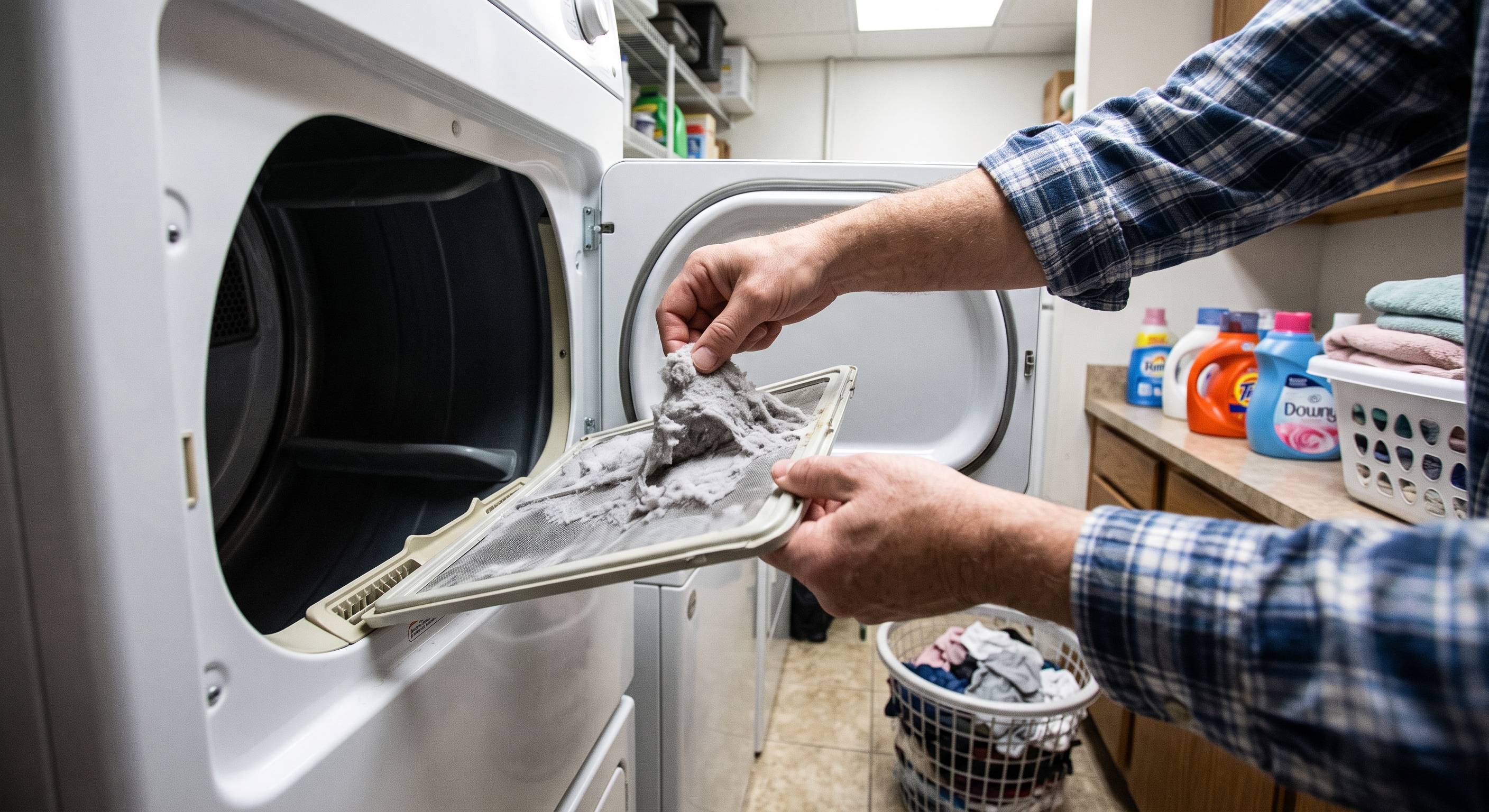
Clean the Dryer Lint Screen Before Use
The U.S. Fire Administration recommends cleaning the dryer lint filter before using the dryer. Remove the accessible lint screen, clear accumulated lint, and reinstall the screen normally before running the appliance.
See the U.S. Fire Administration appliance and electrical fire-safety guidance.
If the lint screen has residue that does not come off with ordinary lint removal, follow the dryer manufacturer's cleaning instructions for that screen. Reinstall it fully dry and do not operate the dryer without the lint screen in its normal position.
Know the Boundary With Dryer Vent Problems
A clean lint screen does not rule out a dryer or exhaust problem. Clothes taking much longer than normal to dry, repeated overheating, poor airflow, or a plainly visible crushed or disconnected transition duct should be reported rather than addressed by repeatedly cleaning the lint screen.
Do not move a gas dryer, disconnect venting, enter an attic or crawlspace, or attempt to clean concealed ductwork as routine resident care.
Use our Dryer Problems guide when drying performance has changed.
When Laundry Care Becomes Troubleshooting
If the washer begins leaking, shaking severely, stopping mid-cycle, failing to drain or spin, or showing another operating problem, use our Washer Problems guide.
If either machine sparks, smokes, smells like burning, develops unusual heat at the cord or outlet, or a gas dryer is associated with a gas odor, stop using it and follow the appropriate safety guidance.
Return to Systems Care for other routine household care. If a continuing laundry problem needs service, submit a maintenance request through the resident portal.
Published: September 2, 2026