
A Richmond heating bill can jump for more than one reason. You may have used more energy, the energy itself may have cost more, the billing period may be different, or several of those things may have happened at once.
Start with the bill before blaming the thermostat or assuming the heating system is failing. Once you know what actually changed, the three household levers that matter most are your thermostat habits, how you handle drafts and window coverings, and whether the heating system has clear airflow.
Key Takeaways
- Separate higher energy use from higher energy prices before deciding what caused the bill increase.
- Long cold stretches can make a normally operating heating system run much longer.
- Home size, insulation, window condition, equipment efficiency, weather, and utility prices are not fully under a renter's control.
- Your three practical levers are thermostat use, renter-safe draft and window habits, and HVAC airflow.
- If the home's heating performance has clearly changed, treat that as a maintenance question rather than simply an expensive-bill question.
First, Separate Usage From Price
If your home uses electric heat, start with the same basic information you would use for any Dominion Energy Virginia bill. The utility's Understand My Bill guide shows where to find the service-period dates, number of billing days, billable usage, and usage history.
That helps answer the first question: did you actually use substantially more electricity, or did the total cost change more than the usage did?
Dominion's Virginia rate explanation notes that electric heating tends to produce higher bills during peak winter months and that the underlying cost of electric service can change even when household usage stays the same.
For Richmond Gas Works customers, usage and price also need to be separated. The City of Richmond Department of Public Utilities explains that its Purchased Gas Cost is adjusted monthly to reflect actual market conditions and fuel costs. A winter bill can therefore rise because the furnace used more gas during cold weather, because the gas cost changed, or because both happened together.
Why a Cold Stretch Can Make Such a Difference
Heating demand changes quickly when outdoor temperatures stay low for several days and nights. Richmond DPU has specifically noted that prolonged cold can cause furnaces to run much longer, increasing monthly natural-gas usage.
The home itself changes the outcome too. Richmond Metro includes older houses, townhomes, newer suburban rentals, and homes with very different window, insulation, and HVAC characteristics. Two households using the same thermostat setting can therefore have very different winter energy use.
If you are heading into the first cold stretch of the season rather than reacting to a bill that has already arrived, our Fall Maintenance guide for Richmond renters covers testing the heat before the first genuinely cold night and checking the basic airflow items while the weather is still forgiving.
The 3 Things Actually Under Your Control
1. How You Use the Thermostat
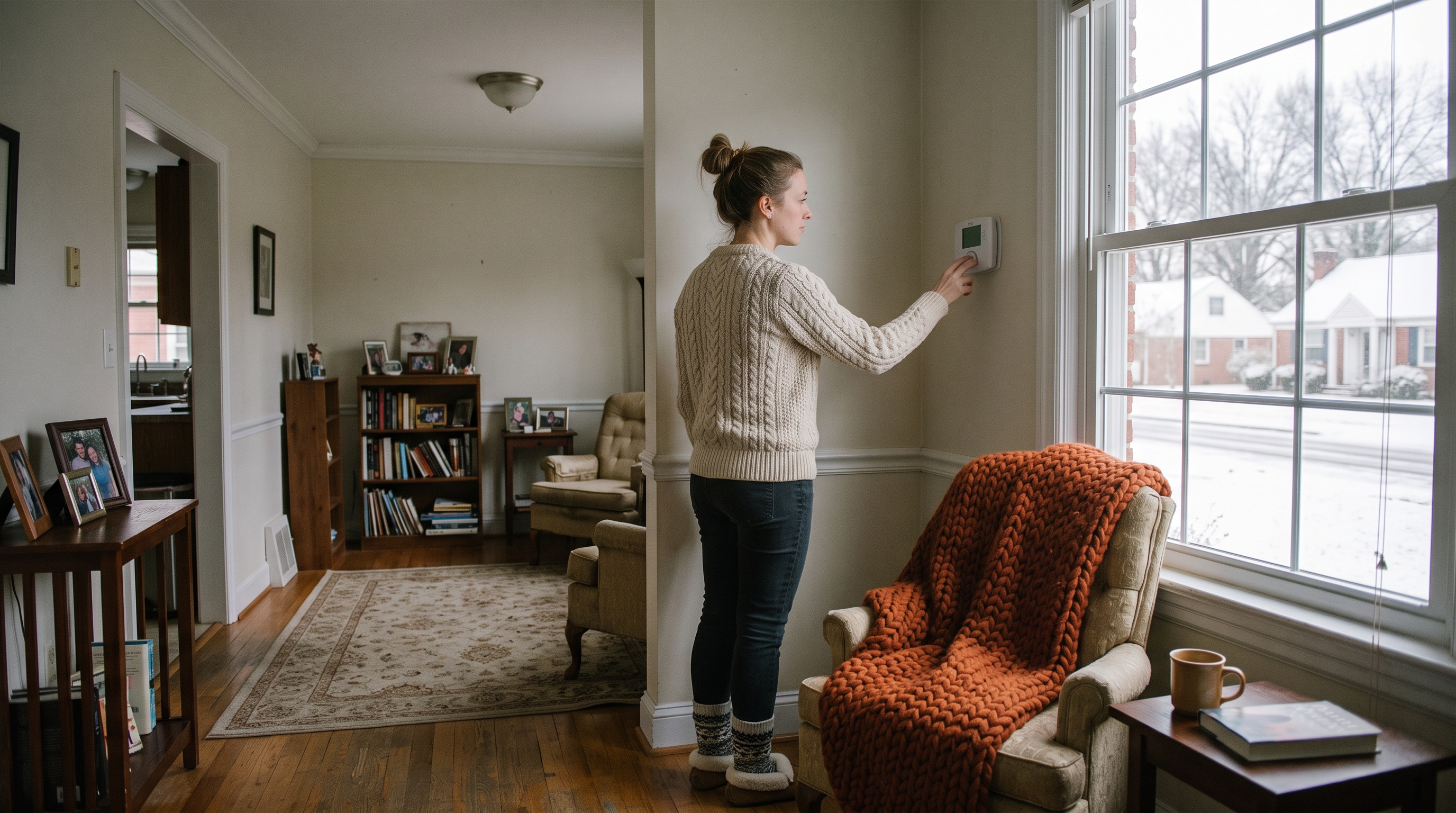
Your thermostat directly affects how much heating the home is asking for. You do not need to make the house uncomfortable, but a schedule that reflects when you are home, asleep, or away can reduce unnecessary heating.
The U.S. Department of Energy's energy-saving guidance for renters recommends programmable thermostat scheduling when available, along with reasonable heating and cooling settings.
The useful goal is consistency. Pick a comfortable setting that works for your household and system, then use modest scheduled changes rather than constantly chasing the thermostat.
2. How You Handle Windows and Drafts
You cannot change the insulation inside the walls or replace the home's windows, but you can reduce some unnecessary heat loss without permanently altering the property.
- Close blinds, curtains, or shades after dark to help retain warmth.
- Open window coverings when useful daytime sunlight can warm the room naturally.
- Use a removable draft stopper at a noticeably drafty exterior door when appropriate.
- Make sure windows and exterior doors are fully closed while the heat is running.
DOE specifically recommends window coverings and draft-control measures for renters. Permanent caulking, weatherstripping, window film, or other modifications should not be installed when they would alter the property without approval.
If a door or window suddenly develops a major gap, will not close correctly, or has another condition that appears to need repair, report the condition rather than improvising a permanent fix.
3. Whether the Heating System Can Move Air Properly
A heating system cannot distribute heat effectively if supply vents, return grilles, or the filter are restricting airflow.
Keep furniture, rugs, boxes, and heavy curtains away from vents and returns. If filter replacement is assigned to you, follow the schedule provided for your home or resident program. ENERGY STAR explains that a dirty filter slows airflow and makes HVAC equipment work harder.
If you are not sure what safe basic check applies to your heating system, use the PMI James River Resident Maintenance guidance rather than attempting to diagnose or alter the equipment yourself.
What Is Not Really Under Your Control
You do not control the outdoor temperature. You do not set utility fuel costs or electric rates. You generally cannot change the home's insulation, window construction, duct layout, heating-system type, or equipment efficiency.
Those factors can materially affect the bill, which is why an expensive month does not automatically mean you did something wrong. It also does not automatically mean the heating equipment is defective.
The bill tells you what the household paid. The way the heating system is behaving tells you whether there may be a maintenance issue.
When a High Heating Bill Becomes a Maintenance Question
A high bill by itself is not proof that the heating system needs repair. A noticeable change in system performance is much more useful.
It is worth reporting when something that previously worked normally has changed, such as:
- the thermostat no longer appears to control the system correctly;
- the system is running but there is little or no airflow from the vents;
- the home suddenly cannot maintain its normal indoor temperature;
- some rooms develop a major new heating difference;
- the system starts making an unusual noise or producing an unusual odor; or
- the heat stops working altogether.
Before submitting a non-emergency request, complete the safe basic checks that apply to your home. Then include details such as the thermostat setting, what the system is doing, which rooms are affected, whether airflow is present, and whether the filter is current when filter replacement is your responsibility.
Heating Bills Are Only One Part of Richmond Winter
Utility costs are only one part of cold-weather living. Frozen pipes, outdoor spigots, ice, outages, and other winter preparation belong in our winterizing guide for Richmond rental residents.
For the broader rhythm of what to notice as Richmond moves from summer through storms, fall, and winter, keep our year-round Seasonal Maintenance guide handy.
For portal access, maintenance requests, payments, and other resident tools, use the PMI James River Resident Resources page.
The useful sequence is straightforward: understand what changed on the bill, work the three household levers you actually control, and report a separate maintenance issue when the heating system itself starts behaving differently.
Published: November 1, 2026