
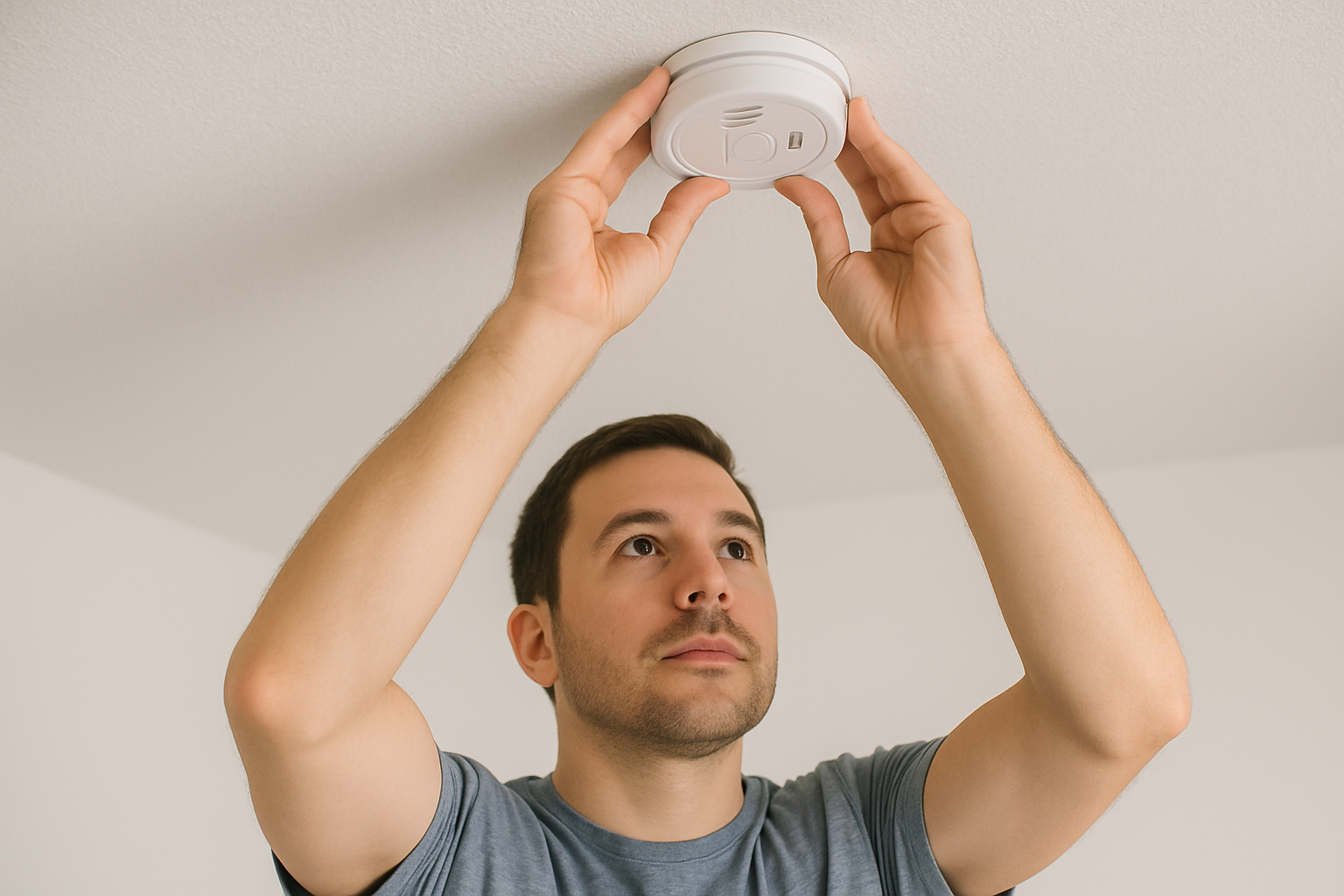
When a tenant is injured in a fire, insurance adjusters ask three critical questions:
- Did the property meet industry standards?
- What would a reasonable property manager have installed?
- Were all reasonable precautions taken?
The answers to these questions can mean the difference between a covered claim and a $350,000 personal liability disaster.
Let me show you why the gap between "legally required" and "industry standard" matters more than most property owners realize—and why professional property management in Virginia operates under a completely different set of expectations than DIY landlording.
This is Part 1 of a 2-part series:
- Part 1: Why Every Bedroom Needs a Smoke Alarm (you are here)
- Part 2: The Legal Gray Area Around § 55.1-1220 - Why professional managers install them anyway
Important Notice: This content is for educational purposes only and does not constitute legal advice. Consult a Virginia-licensed attorney and local building officials for guidance specific to your property.
The Insurance Industry Reality: Why Carriers Expect Bedroom Alarms
Here's what most property owners don't realize: Insurance carriers use current building code standards as their benchmark, regardless of what's legally required for existing buildings.
How Third-Party Inspection Services Actually Work
Many landlord insurance policies require or recommend third-party alarm inspections. Virginia Landlord-Tenant Law also mandates annual smoke alarm certification. So when smoke alarm inspectors visit your property, they install to current IRC R314.3 standards (bedroom alarms included) because:
1. Insurance carriers specify it in their contracts
The third party's job is to minimize the carrier's risk exposure. Current IRC standards require bedroom alarms, so that's what they install.
2. Consistency across thousands of properties
Inspection services manage portfolios of 10,000+ properties. One standard is easier to train, verify, and defend than property-by-property exceptions.
3. Liability protection for the inspection service
If a fire occurs and someone gets hurt, the third party service doesn't want to explain why they certified a property that didn't meet current fire safety standards.
4. Claims defense requires documented compliance
Insurance carriers need to defend claims. "We installed to current IRC standards" is easy to defend. "We installed to 1985 standards because that's when it was built" is much harder.
What This Means for Your Coverage and Claims
Most insurance policies won't explicitly deny coverage for lack of bedroom alarms. That's not how it works.
Instead, claims adjusters scrutinize:
- Whether the property met "industry standards" at time of loss
- What a "reasonable" property manager would have installed
- Whether the landlord took "reasonable precautions"
A fire claim where bedroom alarms were missing creates:
- Increased scrutiny during claims investigation
- Potential coverage disputes around "reasonable precautions"
- Litigation vulnerability if tenants were injured
- Premium increases or non-renewal after claim resolution
The Real Cost-Benefit Analysis
Let's do the math that insurance actuaries have already done:
Installing bedroom alarms:
- Cost: $35 per alarm x 3-4 bedrooms = $105-140
- Lifespan: 10 years
- Annual cost: $10.50-14.00 per year
- Monthly cost per bedroom: $0.29
Not installing bedroom alarms:
- Upfront savings: $105-140
- Fire claim with injuries: $100,000-$1,000,000+
- Insurance coverage disputes: $25,000-100,000 in legal fees
- Premium increases: 20-50% for years
- Potential policy non-renewal: Forced into high-risk market
What insurance carriers know:
- Early detection = less fire damage = smaller claims
- Documented safety measures = faster claim approvals
- Properties exceeding minimums = lower risk profiles
- Bedroom alarms = dramatically reduced injury severity
A $35 smoke alarm can prevent a $350,000 loss. That's not an expense — it's the cheapest insurance you'll ever buy.
What Fire Safety Research Actually Shows
Old building codes assumed a hallway alarm could wake everyone. Decades of fire safety research has proven that assumption dangerously wrong.
How Modern Homes Are Different
Better insulation and soundproofing:
- Today's energy-efficient construction blocks sound more effectively than 1980s homes
- Closed bedroom doors can reduce alarm audibility by 20+ decibels
- Modern HVAC systems create white noise that masks alarm sounds
- Sound doesn't travel through modern walls like it did through old plaster
Larger floor plans:
- Bedrooms are farther from common areas than in older, smaller homes
- Multiple sleeping areas on the same floor
- Split-level and open-concept designs create sound dead zones
- Master suites isolated from main living areas
Changed sleeping patterns:
- People sleep with doors closed more often (for privacy, noise control, temperature)
- White noise machines and earplugs are now common
- Multiple generations sleeping in different parts of the house
- Deeper sleep cycles due to modern sleep aids
What the NFPA Data Reveals
The National Fire Protection Association has studied residential fire deaths for decades. Here's what they've found:
Closed bedroom doors matter:
- A closed door can reduce alarm audibility from 75 decibels to 50 decibels
- Most people need 60+ decibels to wake from deep sleep
- Hallway alarms frequently don't reach sleeping occupants behind closed doors
Sleeping occupants don't wake:
- Adults in deep sleep frequently don't respond to hallway alarms
- Children sleep even more deeply and are harder to wake
- Elderly and hearing-impaired occupants at highest risk
- Smoke inhalation occurs before hallway alarms penetrate consciousness
Bedroom alarms provide critical extra time:
- Bedroom alarms provide 30-60 seconds of additional warning
- Smoke inhalation kills faster than flames
- Every second counts in evacuation
- Early warning dramatically improves survival rates
This isn't bureaucratic overreach. It's building codes catching up to how people actually live, sleep, and respond to fire alarms.
The IRC didn't add bedroom alarm requirements to create more income for contractors. They added them because people were dying in fires where hallway alarms existed but didn't wake sleeping occupants in time.
What Property Owners Get Wrong About Smoke Alarm Requirements
Even seasoned landlords make these mistakes:
❌ "My house doesn't have bedroom alarms, so my rental doesn't need them either."
✅ Reality: Your personal home and your rental property have different risk profiles and operate under different standards. Your rental needs to meet professional management standards and insurance expectations, not just match your personal residence.
Your home might be grandfathered to 1985 code, and that's fine for you. But when you're renting to someone else's family and taking on liability for their safety, the standard changes.
❌ "I installed alarms when the house was built in 1998. That's enough."
✅ Reality: While legally grandfathered under Virginia Code § 15.2-922, 1998 standards don't reflect modern fire safety research showing closed doors block hallway alarms. Insurance carriers and professional standards expect current IRC placement regardless of when the building was constructed.
❌ "Local inspectors never mentioned bedroom alarms during rental inspection."
✅ Reality: Local rental inspections check legal minimums and basic functionality. They're not checking against current IRC standards or professional management best practices. Insurance adjusters and tenant attorneys will care after a fire, regardless of what local inspectors did or didn't say during annual inspections.
❌ "I'll just add them when the inspector makes me."
✅ Reality: By then, you've already accepted years of unnecessary risk. Proactive installation demonstrates professional management, protects your investment, and costs a fraction of potential liability exposure. Waiting for enforcement means waiting until after something goes wrong.
❌ "This is just the government making me spend more money on unnecessary regulations."
✅ Reality: Current IRC R314.3 standards come from decades of fire safety research and insurance industry loss data, not arbitrary regulation. The government actually prohibits localities from requiring retrofits beyond original code (§ 15.2-922). The bedroom alarm recommendation comes from insurance carriers analyzing actual fire claims data, not government overreach.
❌ "I can't afford to upgrade all my properties at once."
✅ Reality: At $105-140 per property for bedroom alarms, you're looking a fraction of one month's rent per property. If you can't afford $140 in safety equipment, you can't afford the liability exposure of owning rental properties. Prioritize high-risk properties first (multiple bedrooms, families with children, older properties), then systematically upgrade during turnovers.
Why Smoke Alarm Prices Have Increased — And Why That's Good News
Yes, modern smoke alarms cost more than the $8 units from 1995 — sometimes four times as much. But the technology upgrade saves both lives and money.
What Modern 10-Year Sealed Alarms Offer
No annual battery replacements:
- Sealed lithium batteries last the full 10-year device life
- No more 3 AM chirping about low batteries
- No tenant calls about "the alarm is beeping"
- Tamper-resistant design — tenants physically cannot remove batteries
Fewer nuisance alarms:
- Photoelectric sensors vs. old ionization technology
- Better discrimination between cooking smoke and actual fires
- Hush buttons for temporary silencing during cooking
- Dual-sensor models combine ionization and photoelectric
Smart connectivity options:
- Instant mobile alerts for property managers
- Integration with property management systems
- Remote monitoring capabilities
- Interconnection without running wires (wireless mesh)
The Real Savings for Property Managers and Owners
Fewer tenant maintenance requests:
- No chirping alarms at 2 AM requiring emergency response
- No disabled devices (sealed batteries can't be removed by tenants)
- 10-year replacement cycle vs. annual battery changes
- Fewer false alarms = fewer tenant complaints = fewer unnecessary replacement call-outs
Stronger legal defense:
- Documented installation of current-standard equipment
- Professional-grade devices with manufacturer warranties
- Clear maintenance records showing proactive management
- Evidence of exceeding minimum standards
Reduced insurance claims:
- Faster fire detection = less damage before response
- Better documentation = smoother claims process
- Lower premiums for properties meeting current standards
- Fewer coverage disputes when you exceed requirements
The real cost analysis:
$35 alarm ÷ 10 years = $3.50/year = $0.29/month per bedroom
For less than 30 cents per month per bedroom, you get:
- Dramatically better life safety
- Stronger liability protection
- Insurance carrier confidence
- Tenant peace of mind
- Professional management credibility
- Fewer vendor callout expenses
The Real Risk: When Legal Minimums Meet Modern Liability
Here's a scenario that has played out in property management:
The Setup
A landlord buys a well-maintained 1985 home to use as a rental:
- Two smoke alarms (one per floor, both outside bedrooms)
- Passed the local rental inspection with no issues
- Property is code-compliant for when it was built
- Everything seems fine
The landlord is proud of running a tight ship. The property is clean, well-maintained, and passes inspection.
The Fire
At 2 AM on a cold January night, a kitchen fire starts from a space heater left too close to curtains.
The hallway smoke alarm activates. The tenant in the front bedroom (closest to the kitchen) wakes up and evacuates safely.
The tenant in the back bedroom doesn't wake up. The hallway alarm is muffled by her closed bedroom door and the white noise machine she runs every night.
By the time she wakes from the smell of smoke, the hallway is filling fast. She suffers smoke inhalation getting out. She's hospitalized with respiratory damage and long-term complications.
What Happens Next
The insurance company asks:
- "Did the property meet current industry standards?"
- "What would a reasonable property manager have installed?"
- "Were all reasonable precautions taken?"
The tenant's attorney discovers:
- Current IRC standards (R314.3) require bedroom alarms
- Professional property managers install bedroom alarms as standard practice
- Third-party inspection services like Stop Loss install bedroom alarms
- A $35 alarm in that back bedroom would have woken her 30-60 seconds earlier
- That 30-60 seconds could have prevented her injuries
The landlord's attorney argues:
- "The property was code-compliant when built in 1985"
- "No renovation triggered upgrade requirements"
- "The property passed local rental inspection"
- "My client met all legal obligations"
The tenant's attorney responds:
- "In 2025, a reasonable property manager knows closed doors block hallway alarms"
- "The fire safety research is unambiguous — bedroom alarms save lives"
- "Insurance industry inspection services install bedroom alarms as standard"
- "Your client chose to save $140 instead of protecting my client's health"
- "This was preventable negligence"
The Outcome
The landlord suddenly faces:
- Insurance coverage questions because the property didn't meet "industry standards"
- The carrier argues the landlord didn't take "reasonable precautions"
- Tenant injury lawsuit alleging negligence
- Legal defense costs: $25,000-75,000 even if the case settles
- Potential judgment: $100,000-500,000+
- Premium increases for years
- Difficulty getting future coverage
The missing $140 worth of alarms created a six-figure disaster.
This is why professional property managers sweat the details that DIY landlords miss.
The Professional Property Management Standard
Here's the distinction that separates professional property managers from DIY landlords:
What DIY Landlords Often Do
React to legal minimums:
- Install only what's explicitly required by law
- Wait for inspectors to identify deficiencies
- View code compliance as maximum effort, not minimum standard
Cost-focused decision making:
- "Why spend money if the law doesn't require it?"
- View safety equipment as expense, not investment
- Optimize for upfront cost, not long-term risk
Inspection-driven compliance:
- "The inspector didn't mention it, so I'm fine"
- Rely on local inspectors to set the standard
- Don't understand that inspectors check legal minimums, not professional standards
What Professional Property Managers Do
Anticipate risk before it materializes:
- Install to current IRC standards regardless of legal requirements
- Exceed minimums as standard operating procedure
- View safety equipment as cheap insurance
Risk-focused decision making:
- "What protects my client from liability?"
- View safety equipment as risk mitigation investment
- Optimize for long-term protection, not upfront cost
Industry-driven standards:
- "What do insurance carriers expect?"
- "What would stand up in court if something goes wrong?"
- Understand that professional standards exceed legal minimums
The PMI James River Standard
We install smoke alarms in every bedroom, outside sleeping areas, and on every level of every property we manage — not because Virginia law always requires it, but because:
1. Insurance carriers expect it
Third-party inspection services install to current IRC standards. If a company like Stop Loss installs bedroom alarms as their baseline, that's the industry standard we should meet.
2. Industry best practices demand it
Professional property management means exceeding legal minimums. Our competitors who meet only legal requirements eventually face the scenario I described above. We avoid that entirely.
3. Fire safety data proves it
The NFPA research is unambiguous. Closed doors block sound. Bedroom alarms save lives. We manage based on evidence, not outdated code minimums.
4. Liability protection requires it
If something goes wrong, we need to demonstrate that we took every reasonable precaution. Current IRC standards are "reasonable" by definition.
5. Tenant safety deserves it
Our clients' tenants are someone's family members sleeping in those bedrooms. We manage as if our own families lived there.
Our Implementation Process
At Property Onboarding
- Full alarm audit against IRC R314.3 standards
- Install photoelectric, 10-year sealed smoke alarms in every bedroom
- Ensure hallway and level coverage meets IRC R314.3
- Install CO alarms based on risk assessment (gas appliances, fireplaces, attached garages)
- Photograph each installation with date stamps
- Document make, model, installation date, expiration date
- Create property-specific compliance file
Ongoing Maintenance
- Test all smoke and CO alarms during annual inspections
- Provide tenant with annual written certification per § 55.1-122(A)(8)
- Track replacement schedules (10-year smoke alarms, 5-7 year CO alarms)
- Replace alarms 30-60 days before expiration dates
- Same-day response to safety-critical malfunctions
- Document all testing and maintenance in property file
Why This Level of Detail Matters
Property owners pay us to know what they don't know. Smoke and CO alarm compliance is exactly the kind of technical detail that:
- Creates massive liability exposure when missed by DIY management
- Seems like "overkill" until a fire happens
- Insurance carriers scrutinize after claims
- Tenant attorneys exploit in litigation
- Professional managers handle systematically
This is the difference between property management as a side hustle and property management as a profession.
What About Carbon Monoxide Alarms?
Carbon monoxide (CO) alarms operate under a completely different legal framework than smoke alarms in Virginia — and many property owners get this wrong.
The Legal Requirement: Tenant-Triggered Installation
Virginia Code § 55.1-1229(E) states:
"Upon written request of a tenant in a dwelling unit, the landlord shall install a carbon monoxide alarm in the tenant's dwelling unit within 90 days. The landlord may charge the tenant a reasonable fee to recover the costs of the equipment and labor for such installation."
What this means:
- CO alarms are not automatically required in all Virginia rentals
- Landlords must install within 90 days of written tenant request
- Landlords can charge tenants a "reasonable fee" for installation
- Installation must comply with USBC standards
Why the Law Is Written This Way
Not all homes have CO risks. The tenant-request framework was a legislative compromise:
CO risks exist when you have:
- Gas furnaces, water heaters, or appliances
- Fireplaces (gas or wood-burning)
- Attached garages
- Any fuel-burning equipment
CO risks don't exist when:
- The home is all-electric (no gas appliances)
- No attached garage
- No fuel-burning equipment of any kind
The Professional Management Reality: Install Them Anyway
Here's why PMI James River installs CO alarms in properties with CO risks, regardless of tenant requests:
1. Insurance carriers expect them
Third-party inspection services install CO alarms as part of their standard protocol. They don't wait for tenant requests — they install based on risk assessment.
2. Most Richmond-area homes have CO risks
- Gas furnaces are common in Richmond, Henrico, Chesterfield, and Hanover
- Many homes have gas water heaters or stoves
- Attached garages are standard in suburban construction
- Even all-electric homes often have wood-burning fireplaces
3. Tenant requests create administrative hassle
Once a tenant submits a written request, you have 90 days to comply. Why create this workflow when you could install proactively during turnover?
4. Liability exposure is real
If a tenant suffers CO poisoning and you didn't have an alarm installed, their attorney will ask: "Why didn't you install a $30 device that could have prevented this?"
The answer "They never submitted a written request" won't impress a jury any more than "bedroom smoke alarms weren't legally required" would.
5. The administrative cost exceeds the alarm cost
A $30-50 CO alarm costs less than the administrative overhead of processing written requests, scheduling installation, and billing tenants.
Where to Install Carbon Monoxide Alarms
Current IRC R315.3 standards require CO alarms:
- Outside each separate sleeping area in the immediate vicinity of bedrooms
- On every level of the dwelling that contains bedrooms or fuel-burning appliances
- Inside bedrooms that contain fuel-burning appliances or attached bathrooms with fuel-burning appliances
Practical placement for Richmond-area rentals:
- Hallway outside bedrooms (IRC standard placement)
- Near gas furnace/water heater (Proximity to CO source)
- Basement (if finished) (IRC level requirement)
- Near attached garage entry (Common CO infiltration point)
Installation tips:
- Mount 5-15 feet from fuel-burning appliances (not directly adjacent)
- Install at breathing height — typically 5 feet off the floor (not on ceiling like smoke alarms)
- Don't install in garages, kitchens, or bathrooms (temperature extremes cause false alarms)
- Keep away from windows, doors, and ventilation sources that create air currents
Combination Smoke/CO Alarms: Should You Use Them?
Many manufacturers make combination smoke and carbon monoxide alarms. Should you use them?
PROS:
- Single device serves dual purpose
- Fewer devices to install and maintain
- Lower total equipment cost
- Meets both smoke and CO requirements in one unit
CONS:
- Placement compromise: Smoke alarms work best on ceilings; CO alarms work best at breathing height (5 feet)
- If one sensor fails, you lose both functions until replacement
- Replacement requires replacing both functions even if only one sensor failed
- Typically more expensive to replace than single-function alarms
- Shorter useful life (CO sensors expire in 5-7 years vs. 10 for smoke alarms)
PMI James River approach:
We use dedicated smoke alarms in bedrooms and on levels (ceiling-mounted) and dedicated CO alarms outside sleeping areas and near fuel-burning appliances (wall-mounted at breathing height when possible). We rarely use combination units except in specific circumstances.
Why? Proper placement matters more than equipment cost savings. A ceiling-mounted CO alarm works less effectively than a wall-mounted unit at breathing height.
Another Key Factor: Lifespan!
- Smoke alarms: 10 years
- CO alarms: 5-7 years (check manufacturer date stamp)
This is because CO sensors degrade faster due to the chemical detection method. Always check the expiration date stamped on CO alarms and replace proactively before expiration.
FAQ: Smoke and CO Alarms in Virginia Rentals
Are landlords required to install smoke alarms in every bedroom in Virginia?
Legal answer: Existing properties are generally grandfathered to the code in effect when built or last renovated. New construction and major renovations must meet current IRC R314.3 standards requiring bedroom alarms.
Professional management answer: Industry best practice and insurance carrier expectations call for IRC-compliant placement (bedroom alarms included) regardless of legal requirements for existing buildings. We install them not because law requires it, but because professional risk management demands it. (But see our write-up about the law ambiguity here).
How often should smoke alarms be replaced in rentals?
Smoke alarms: every 10 years or per manufacturer guidance (check expiration date stamped on back of unit)
CO alarms: every 5-7 years (check manufacturer date stamp—CO sensors degrade faster)
Modern sealed lithium smoke alarms typically last the full 10 years without battery changes. Never rely on an alarm past its expiration date.
Who is responsible for testing smoke and CO alarms in Virginia rentals?
Landlords must:
- Test alarms annually during property inspections
- Provide annual written certification to tenants per Virginia Code § 55.1-1220(A)(8)
- Repair or replace malfunctioning alarms within 5 days of receiving notice
Tenants must:
- Test alarms regularly during tenancy (monthly recommended) per § 55.1-1227(A)(8)
- Report malfunctions to landlord immediately
- Not remove, disable, or tamper with alarms
- Not remove batteries (even on replaceable-battery models)
Are interconnected smoke alarms required in Virginia?
For new construction and major renovations: Yes — IRC R314.4 requires interconnection so all alarms sound when one is triggered.
For existing rentals adding alarms: Interconnected alarms are strongly recommended but not always legally required. However, battery-powered wireless interconnected alarms are now available at minimal additional cost and don't require running new wires.
Our recommendation: Use wireless interconnected alarms even when not legally required. The marginal cost ($10-15 per alarm) is worth the additional safety.
What if my rental property was built before bedroom alarms were required?
Legal answer: Properties are generally grandfathered to original construction standards under § 15.2-922.
Professional management answer: Install bedroom alarms anyway because:
- Insurance carriers expect current IRC standards
- Industry best practices support bedroom alarms
- Modern fire safety research proves their effectiveness
- Liability exposure isn't worth the $105-140 savings
- Professional property managers don't manage to legal minimums
Are carbon monoxide alarms required in Virginia rentals?
Legal answer: Only upon tenant written request per Virginia Code § 55.1-1229(E), and landlord must install within 90 days. Landlord may charge "reasonable fee."
Professional management answer: Install CO alarms proactively in any property with fuel-burning appliances (gas furnace, gas water heater, fireplace) or attached garages, regardless of whether tenant requests them.
Why install proactively?
- Insurance carriers expect CO alarms in properties with CO risk
- Waiting for tenant request creates administrative burden
- $30-50 CO alarm costs less than processing tenant requests
- Liability exposure if CO incident occurs
- Professional standard is risk-based installation, not request-based
Conclusion: What Professional Property Management Actually Looks Like
Virginia law doesn't require all existing rentals to retrofit to current IRC standards. Properties built before current code requirements can be grandfathered.
But professional property managers, insurance carriers, and third-party inspection services all converge on the same standard: bedroom smoke alarms and risk-appropriate CO alarms in every property.
At PMI James River, We Don't Manage to the Legal Minimum. We Manage to the Professional Standard.
That means:
- IRC-compliant smoke alarm placement in every property (bedroom alarms included)
- Risk-based CO alarm placement in properties with fuel-burning equipment or attached garages
- 10-year sealed photoelectric smoke alarms
- 5-7 year sealed CO alarms
- Comprehensive documentation for insurance and liability protection
- Proactive replacement schedules before expiration
- Annual testing and written certification
- Usually same-day response to safety-critical malfunctions
Yes, alarms cost money upfront. But they cost far less than six-figure fire claims, insurance coverage disputes, premium increases, legal defense costs, and the knowledge that tragedy was preventable.
This Is What Professional Property Management Looks Like in 2025
If you're still managing to 1985 standards in 2025, you're accepting 2025 risk with 1985 protection.
That's not a position any professional property manager should defend.
We'd be happy to show you the difference professional management makes. Contact PMI James River today for a free property evaluation and alarm compliance audit.
We'll assess your current configuration, identify gaps, and provide a detailed plan to bring your properties up to professional standards—whether legally required or not.
Because when it comes to fire safety, professional managers don't ask "What's the legal minimum?" They ask "What's the right thing to do?"
Continue Reading
Part 2: The Virginia Smoke Alarm Gray Area: Why § 55.1-1220 Creates Legal Confusion
Dive deep into the legal ambiguity around Virginia Code § 55.1-1220's "applicable codes" language, how it tensions with § 15.2-922 grandfather protections, and why professional managers install bedroom alarms regardless of the legal debate.
Disclaimer
This article is provided for educational and informational purposes only and does not constitute legal advice. Virginia landlord-tenant law, building codes, and local regulations are complex and subject to change. The interpretations and recommendations provided here should not be relied upon as a substitute for consultation with a qualified attorney or licensed building official.
While we strive for accuracy, building code requirements may vary by locality, and individual circumstances may differ. Property owners should:
- Consult with a Virginia-licensed attorney for legal advice specific to their situation
- Verify current code requirements with local building officials before beginning renovation work
- Obtain professional guidance for complex compliance questions
- Seek independent insurance advice regarding coverage requirements
PMI James River is not a law firm and does not provide legal advice. This content reflects our professional property management standards, which may exceed legal minimums in the interest of risk management and tenant safety.