
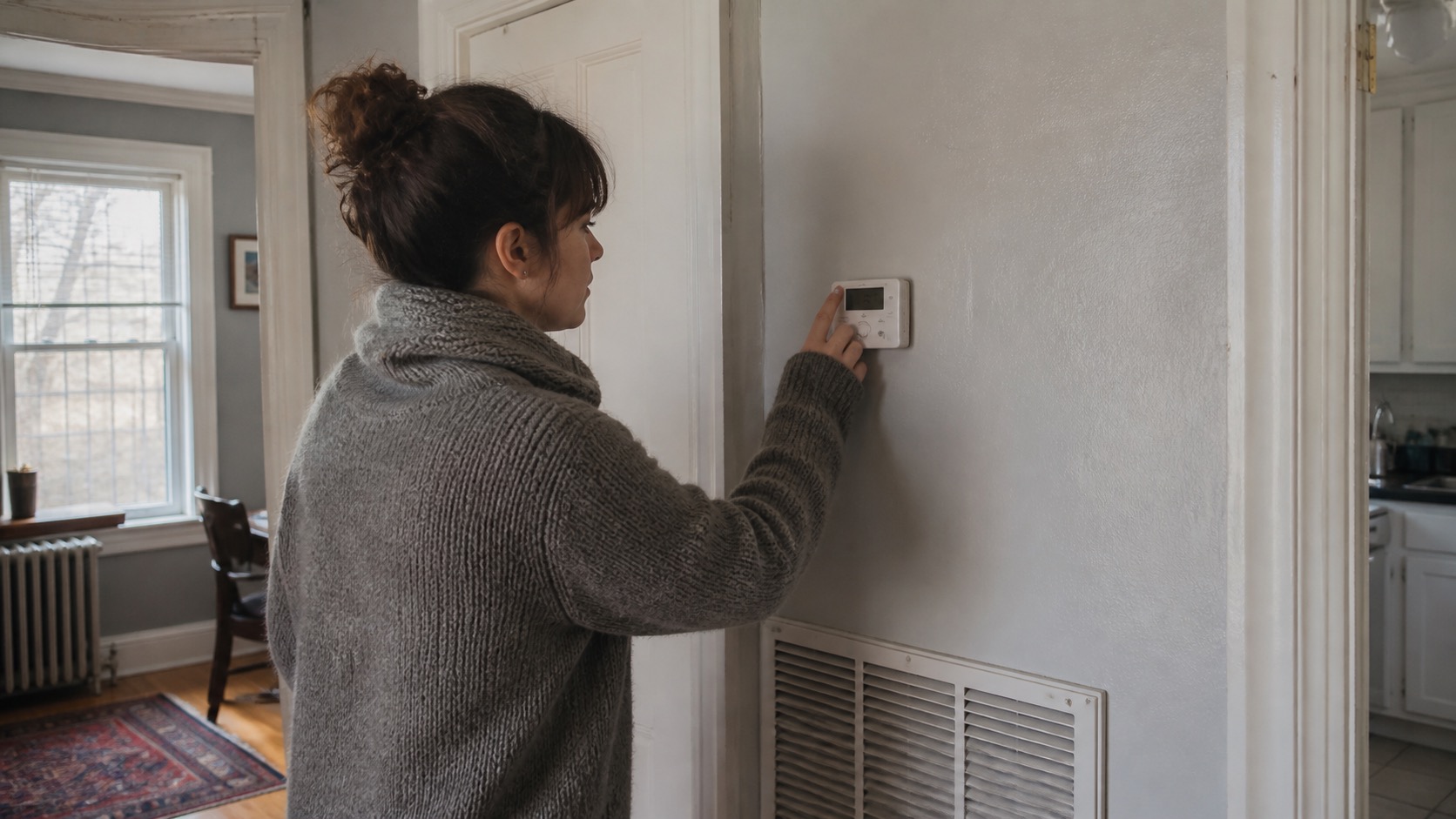
If the heat in your Richmond rental is not working, start by taking a clear photo of the thermostat with the numbers visible. That single photo helps show the current indoor temperature, set temperature, operating mode, and often whether the thermostat itself is calling for heat.
You can then work through a few safe checks without opening the furnace, manipulating gas controls, relighting a pilot, removing HVAC panels, or working on wiring. If the problem remains, submit a maintenance request through Rentvine.
Key Takeaways
- Check Heat mode, the set temperature, Fan Auto, accessible filters, and open vents first.
- A heat pump can sometimes produce air that feels less hot than furnace air, and a brief defrost cycle can temporarily feel cooler.
- A short dusty odor when heat first starts for the season can be different from a persistent burning-plastic, electrical, gas, or smoke condition.
- Do not open furnace panels, relight pilots, manipulate gas valves, or perform electrical or internal HVAC work.
In This Guide
- Stop for safety first
- Heat will not turn on
- System runs but air is not warm
- Intermittent or short-cycling heat
- Heat-pump air feels cool
- Odor, noise, or a system that will not stop
- What to send us if the problem continues
Stop for Safety First
If you smell natural gas or a rotten-egg odor, hear an active carbon monoxide alarm, see smoke or sparking, or smell a strong electrical or melting-plastic odor, stop ordinary heating troubleshooting. Follow the appropriate instructions in our Emergency vs. Urgent vs. Routine Maintenance guide.
Do not search for a gas leak, relight a pilot, remove a furnace door, adjust gas controls, or open electrical or HVAC compartments.
Heat Will Not Turn On
Start with the thermostat:
- Take a photo showing the current temperature, set temperature, and mode.
- Confirm it is set to Heat.
- Set the heating temperature above the current room temperature.
- Set the fan to Auto.
- If the thermostat uses ordinary resident-serviceable batteries and they appear low, replace them with the correct type.
If the display says Wait, Waiting for Equipment, or shows a similar equipment-delay message, leave the settings alone for several minutes. Many thermostats temporarily delay equipment startup to prevent rapid cycling.
Check whether an accessible HVAC filter is heavily dirty and confirm that supply vents are open. If airflow itself is weak or uneven, use the HVAC airflow and filter guide.
If you can safely access the electrical panel and there is no electrical warning sign, you may check whether the clearly labeled furnace, air-handler, or HVAC breaker is tripped. Reset a tripped breaker once only. If it trips again, stop resetting it and submit a maintenance request.
If the home uses gas heat and the gas account is a resident-held utility, you may confirm through the utility provider that service is active. Do not manipulate gas valves, pilots, or appliance internals to test the service.
System Runs but Air Is Not Warm
First determine whether air is actually moving from the vents. If there is little or no airflow, check the accessible filter, open supply registers, and unobstructed returns. Persistent weak airflow belongs in the airflow troubleshooting guide.
If airflow is normal but the home is not warming, send us the thermostat photo and describe whether the air feels warm, cool, or roughly room temperature. Do not remove furnace covers or try to determine which internal component is failing.
For a heat pump, the temperature of the supply air can feel different from the hotter air people often associate with a gas furnace. The next section explains what to watch for.
Intermittent or Short-Cycling Heat
If the system starts and stops repeatedly, check the thermostat mode and setpoint, Fan Auto, accessible filter, and open vents. Avoid rapidly changing the thermostat back and forth to force another cycle.
A thermostat protection delay immediately after a cycle or power interruption can be normal. Repeated starts and stops that continue after the basic checks should be reported.
If the heating system does not respond normally to the thermostat at all, use the thermostat troubleshooting guide.
Heat-Pump Air Feels Cooler Than Expected
Heat pumps do not always feel like furnaces. Carrier notes that heat-pump supply air may naturally feel cooler than the more intense heat from a gas furnace. A heat pump can also enter a normal defrost cycle to clear frost from the outdoor coil, which can temporarily change how the air feels indoors.
Check the overall result rather than judging only by how hot the air feels at your hand:
- Is the thermostat in Heat mode?
- Is Fan set to Auto?
- Is the indoor temperature holding or rising toward the setpoint?
- Is the cooler-feeling air brief, or does it continue cycle after cycle?
- Is there only a light temporary frost outside, or is heavy ice continuing to build?
If the home continues getting colder, the air remains cool through repeated heating cycles, the system repeatedly starts and stops, or heavy ice persists, submit a maintenance request.
Odor, Noise, or a System That Will Not Stop
A dusty smell at first seasonal use
When heat is first used after a long off-season, accumulated dust can sometimes produce a brief burnt-dust smell. Trane notes that this type of odor should dissipate relatively quickly.
That is different from a persistent or worsening burning smell, melting-plastic or electrical odor, visible smoke, or a rotten-egg gas odor. Those conditions should not be treated as ordinary seasonal dust.
Unusual heating noise
Report a new grinding, screeching, repeated banging, strong buzzing, or other clearly abnormal noise. If the equipment sounds mechanically severe, turn the system off rather than repeatedly running it to reproduce the sound.
Heat or fan will not stop
First check whether the fan is set to On rather than Auto. Fan On can create continuous airflow even between heating cycles.
If the thermostat reaches the set temperature but active heating continues, or the equipment does not respond to an ordinary Off command, use the thermostat guide and report the unresolved problem.
What to Send Us if the Problem Continues
If the safe checks do not restore normal heating, submit a maintenance request through Rentvine. Include:
- a clear thermostat photo with the numbers visible;
- the current indoor temperature and set temperature;
- whether the thermostat is in Heat mode and Fan Auto;
- whether air is moving and whether it feels warm, cool, or room temperature;
- whether the problem is constant or intermittent;
- any visible display message or error code;
- any unusual noise or odor;
- visible ice if the home uses a heat pump; and
- which safe checks you already completed.
Frequently Asked Questions
Is 65°F considered the normal heating benchmark?
No. For residential properties where heat is furnished, the current Virginia property-maintenance provision generally uses a minimum of 68°F in habitable rooms, bathrooms, and toilet rooms from October 15 through May 1. The rule contains an exception when outdoor conditions fall below the locality's winter outdoor design temperature and the system is operating at full design capacity. You can review the current provision in 13VAC5-63-540.
If your home is not maintaining heat, send the actual thermostat reading and report the problem. The 68°F maintenance benchmark is not the same thing as PMI James River's after-hours emergency classification.
Is loss of heat automatically an after-hours emergency?
No. PMI James River does not classify loss of heat by itself as an after-hours maintenance emergency. Report the heating failure promptly through the normal maintenance process. A separate active hazard such as a suspected gas leak, active carbon monoxide alarm, smoke, sparking, or another immediate safety condition follows the applicable emergency route.
Why does my heat-pump air feel cooler than furnace air?
That can be normal. Heat pumps typically deliver heat differently from combustion furnaces, and a normal defrost cycle can temporarily make the supply air feel cooler. What matters is whether the home is actually warming and whether the cooler-air condition is brief or persistent.
Is a burning smell normal the first time I use the heat?
A brief dusty smell at the first seasonal startup can occur and should fade. A persistent burning odor, melting-plastic or electrical smell, visible smoke, or gas odor should not be treated as normal first-use dust.
Continue Through the Heating & Cooling Guides
For a thermostat display, setting, app, or control problem, use the thermostat troubleshooting guide. For weak or uneven airflow, use the airflow and filter guide. For cooling problems, use the AC troubleshooting guide.
You can also return to the resident troubleshooting library or the broader Resident Maintenance hub.
Published: September 2, 2026